Mercato Centrale Florence: Hours, Stalls & What to Eat
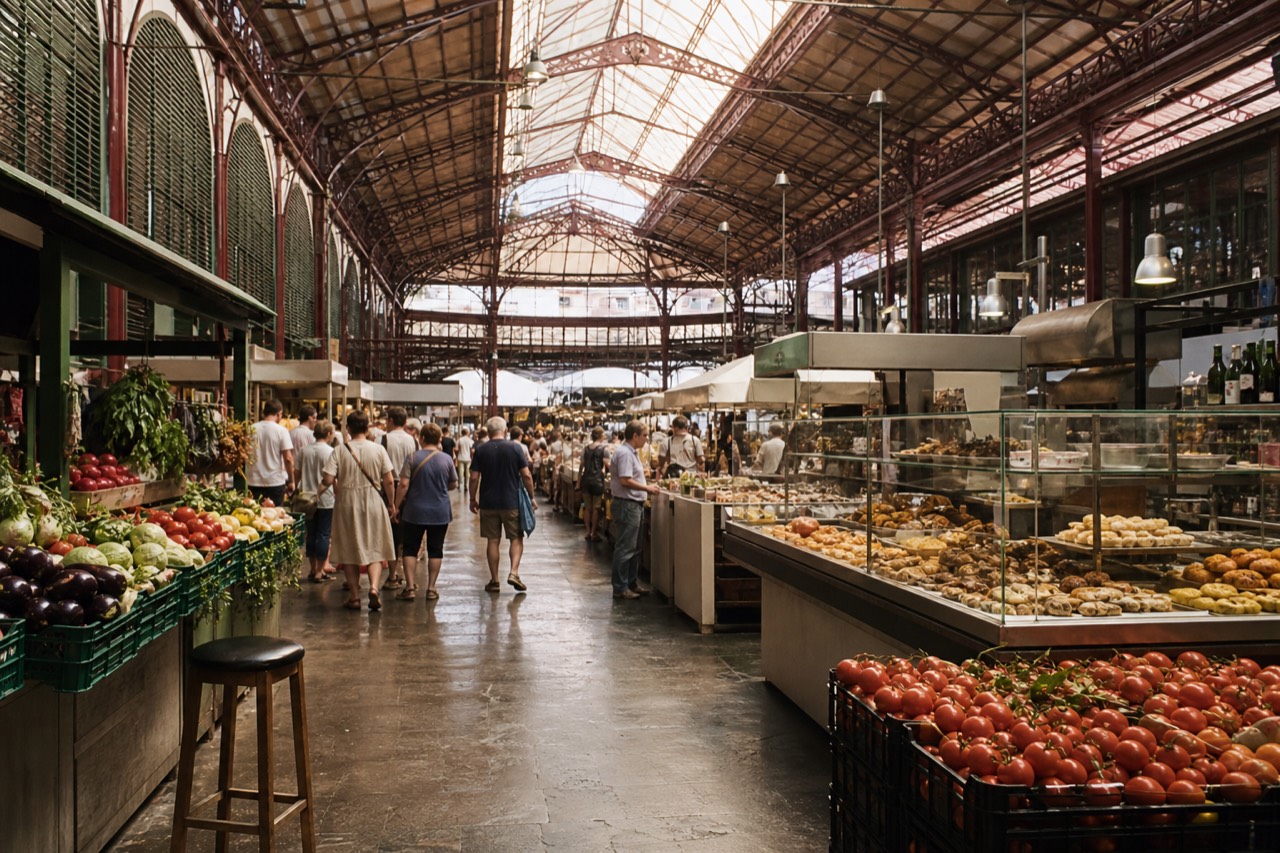
Mercato Centrale is not one market but two, stacked on top of each other with separate hours and a completely different feel. The ground floor is a working fresh-produce market that closes by mid-afternoon and all day Sunday. The first floor is a modern food hall open every day until 11pm. And a short walk east, Sant'Ambrogio market is where Florentines actually do their shopping.
Short answer
Mercato Centrale is Florence's two-in-one food market: the ground floor is a historic fresh-produce market open weekday mornings, while the first floor is a modern food hall open daily until late. The ground floor closes on Sundays and by mid-afternoon; the upstairs food hall serves from 9am to 11pm every day. Sant'Ambrogio market, a short walk east, is the one locals prefer for everyday shopping.
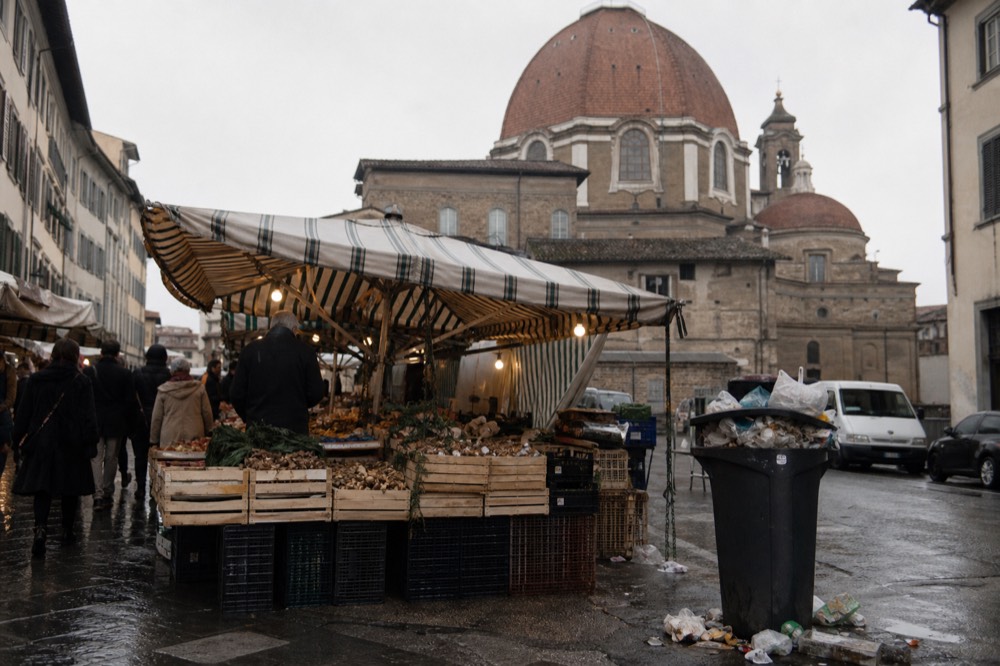
Florence's most famous food market is actually two completely separate operations under one roof. The ground-floor Mercato di San Lorenzo (the historic covered market) and the first-floor Mercato Centrale food hall run on different clocks, sell different things, and appeal to different crowds. If you show up on a Sunday afternoon expecting to browse the butchers and fishmongers, you will find locked shutters. If you arrive at 8am hungry, the food hall upstairs will not be open yet. Understanding the split is the single most useful thing to know before you go.
As Best Restaurants in Florence has detailed in our restaurant guides, the city's food culture starts with its markets. The produce, the meats, the cheeses, and the street food all begin here. The markets are the foundation, and once you understand their rhythms, you understand why certain dishes appear on restaurant menus and why the best trattorie shop at Sant'Ambrogio, not at the tourist-facing stalls.
What is Mercato Centrale and how does it work?
Mercato Centrale is a two-storey market building near the Duomo. The ground floor is a historic fresh-produce market run by independent traders; the first floor is a modern food hall with cooked-food stalls, a pizzeria, and a wine bar. The two floors have different hours and are managed separately, so treat them as two distinct destinations.
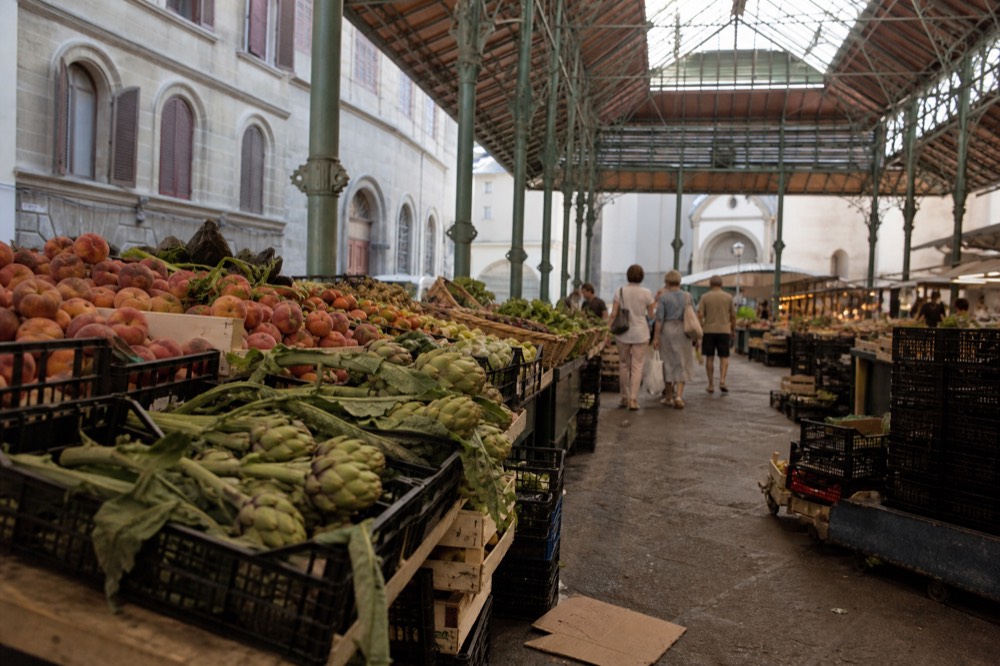
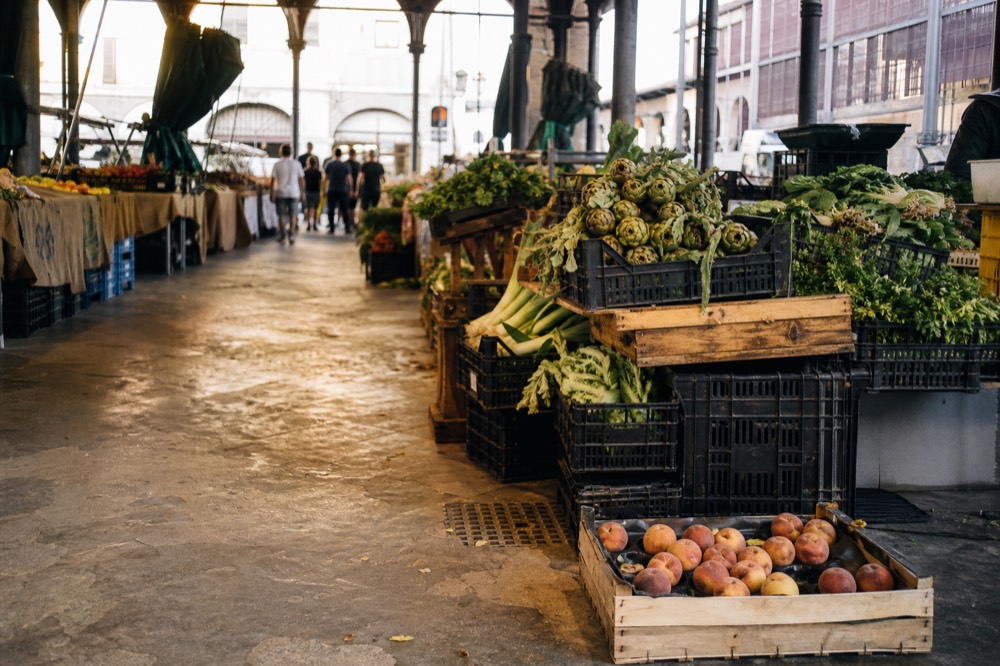
The building itself dates from the late 19th century, part of the same wave of iron-and-glass market halls that gave Paris its Les Halles. The ground floor still feels like a traditional Italian market: butchers in white coats, fish on ice, pyramids of artichokes, and the constant call of "ragazzi, cosa vi do?" The first floor, added in the last decade, is a contemporary food court with communal tables, craft beer, and a DJ on weekends. Both have their place, but they serve different needs.
The split is not just aesthetic; it is operational. The ground floor is run by the traders' association, the first floor by a private company. Their websites are different, their hours are different, and a ticket to the food hall does not get you into the historic market. This guide will walk you through each floor, the other markets worth your time, and the best ways to eat your way through them.
Ground floor: the historic market (Mercato di San Lorenzo)
The ground floor is a working fresh-produce market open Monday to Friday from 7am to 3pm, and Saturday from 7am to 5pm. It is closed all day Sunday. Here you will find butchers, fishmongers, greengrocers, cheese stalls, and a handful of historic food counters including Da Nerbone, which has served lampredotto since 1872. This floor is for buying ingredients, not for sitting down to a meal, though a few counters offer standing-room snacks.
The hours are the key detail. The traders' own site lists Monday to Friday 7:00 to 15:00 and Saturday 7:00 to 17:00, closed Sunday (checked September 2026). A Sunday-afternoon visitor will find nothing but locked gates. Arrive by mid-morning for the best selection; by early afternoon, many stalls are already packing up. The fishmongers are particularly time-sensitive: they close by 2pm or earlier if they sell out.
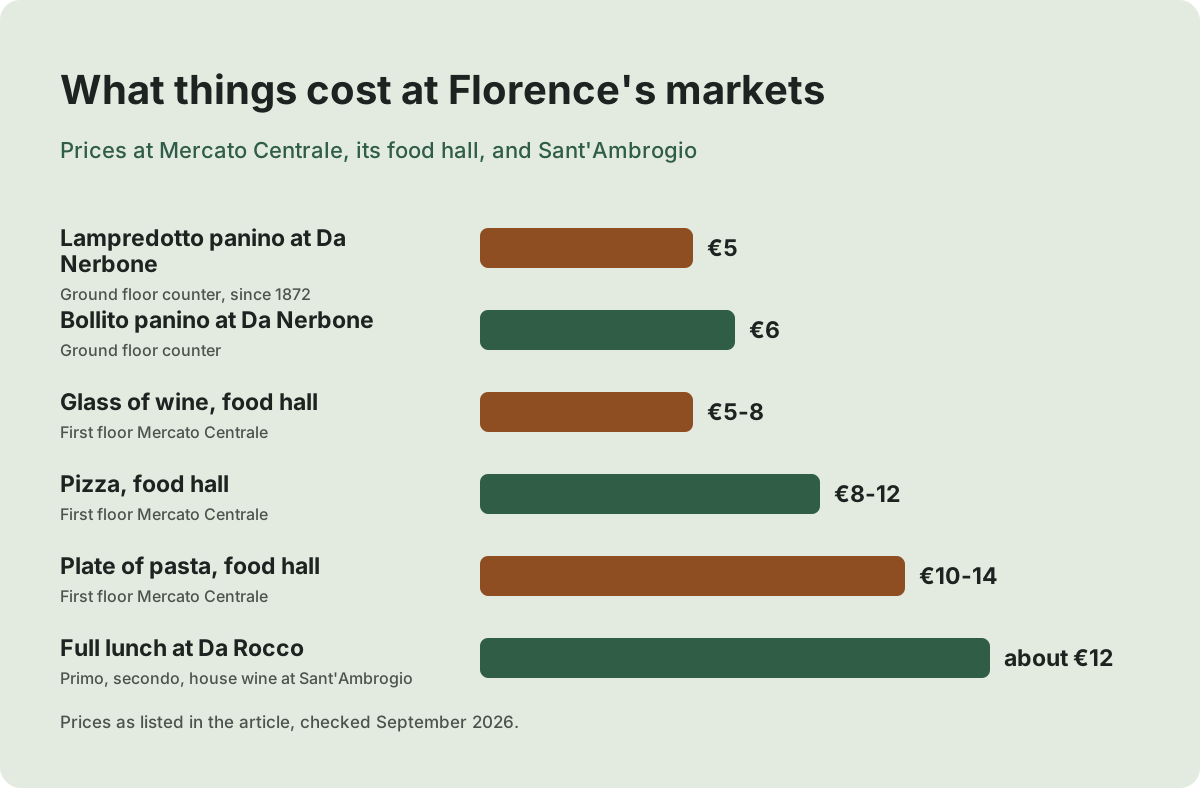
The star of the ground floor is Da Nerbone, a counter near the centre of the market that has been in the same spot since 1872. It serves two things: lampredotto (the fourth stomach of a cow, slow-cooked and sliced into a roll, dipped in broth) and bollito (boiled beef). A lampredotto panino costs €5, a bollito panino €6 (checked September 2026). The queue moves fast, but it can reach 20 minutes at peak lunchtime. Da Nerbone is open Monday to Saturday roughly 9am to 2pm, though it sometimes closes earlier if the food runs out. There is no seating; you eat standing at the counter, which is part of the experience.
Other notable stalls include Baroni for fresh pasta and sauces, Conti for Tuscan cheeses, and several butchers who will vacuum-pack bistecca alla fiorentina for travel. The ground floor is also where you will find the market's original tripe stand, Il Trippaio di San Lorenzo, for those who want lampredotto without the Da Nerbone queue. The butchers sell by weight, and many speak enough English to handle a transaction, but knowing the Italian for "mezzo chilo" (half a kilo) helps.
| Stall | What to buy | Notes |
|---|---|---|
| Da Nerbone | Lampredotto panino (€5), bollito panino (€6) | Since 1872, standing-room only, cash preferred |
| Baroni | Fresh pasta, sauces | Good for take-home ingredients |
| Conti | Tuscan cheeses, cured meats | Vacuum-packing available |
| Il Trippaio di San Lorenzo | Lampredotto, tripe | Less crowded alternative to Da Nerbone |
| Butchers (various) | Bistecca alla fiorentina, fresh meat | Can vacuum-pack for travel |
The ground floor is not a tourist attraction; it is a working market. The floors are wet, the fishmonger area smells strongly in summer, and the traders are busy. They will not mind you taking a photo, but they will mind if you block the aisle. Dress for a market, not a restaurant.
Exploring the ground floor on your own is perfectly doable, but a guided market tour can unlock the best stalls and explain what you are looking at. The trio of tours above all include a market visit, either at Mercato Centrale, Sant'Ambrogio, or both. The market-tour-and-cooking-class option even lets you shop for ingredients and then cook them, which is the closest you will get to a Florentine nonna's kitchen.
First floor: the food hall (Mercato Centrale Firenze)
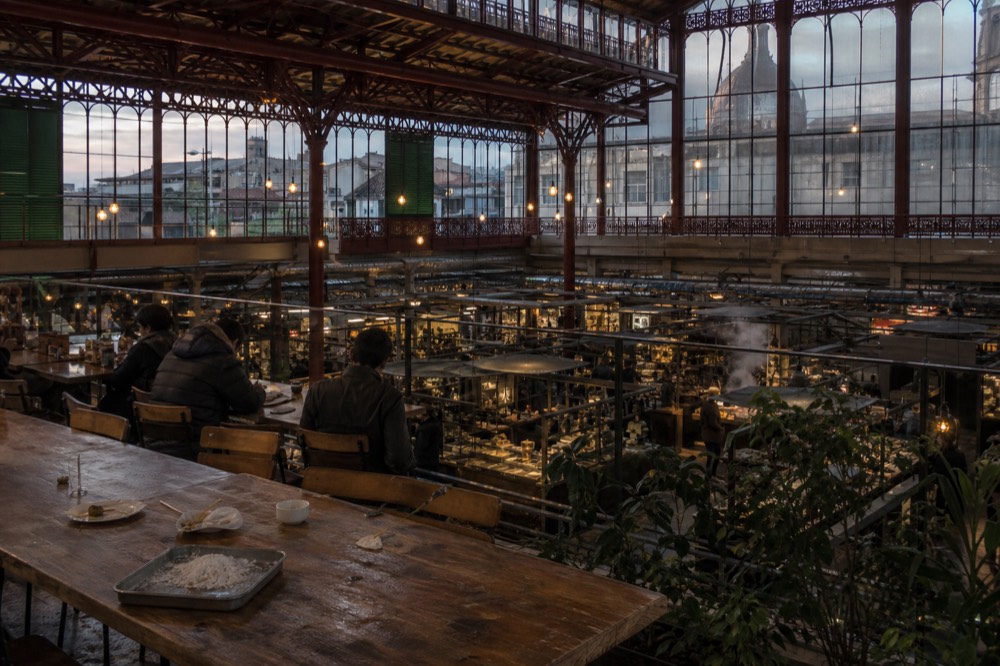
The first floor is a modern food hall open every day from 9am to 11pm, including Sundays and most holidays. It houses around a dozen artisan food counters selling everything from fresh pasta and pizza to lampredotto, sushi, and craft beer. This is where you come to eat, not to shop for groceries. Seating is communal, the atmosphere is lively, and it stays open long after the ground floor has closed.
The food hall's own site confirms the daily 9:00 to 23:00 hours (checked September 2026). It is the reliable evening option when the ground floor is shut and most restaurants have not yet opened their kitchens. The space is large, air-conditioned in summer, and family-friendly. On weekend evenings, a DJ plays, and the communal tables fill with a mix of tourists and young Florentines.
The stalls rotate occasionally, but long-standing favourites include Il Pastaio for fresh pasta dishes, La Pizzeria for wood-fired pizza, Il Tartufo for truffle-topped everything, and La Macelleria for burgers and steak. There is also a wine bar with a good by-the-glass list, a craft beer stand, and a coffee bar that opens earlier than the rest of the hall. A cooking school, La Scuola di Cucina, runs classes on the mezzanine level, though those must be booked separately.
The food hall is not a cheap eat. A plate of pasta costs around €10-14, a pizza €8-12, and a glass of wine €5-8. It is more expensive than the street-food carts outside, but the quality is generally good and the convenience is hard to beat. The communal seating means you can try several stalls in one visit without committing to a full restaurant meal.
One thing the food hall does not have is the same character as the ground floor. It is a curated, tourist-friendly experience, not a working market. The traders downstairs are independent; the stalls upstairs are part of a managed concept. Both are valid, but they are different things. If you want to see a real Florentine market, go downstairs. If you want to eat a good meal in a lively setting, go upstairs.
For a deeper dive into the food hall with a guide who knows the best stalls, the Central Market Food Tour with Eating Europe is a 3-hour walk that includes multiple tastings. It is a newer listing with limited reviews but is run by the same company behind the highly rated sunset food tour.
The tour covers both the ground floor and the food hall, which is helpful because a first-time visitor can easily miss the best counters. Check the live listing for availability, as group sizes are capped.
Sant'Ambrogio: the market locals actually use
Sant'Ambrogio market, a 10-minute walk east of Santa Croce, is the daily food market that Florentines use for their own shopping. It is smaller, less touristy, and more authentic than Mercato Centrale. Inside the covered hall you will find a handful of produce stalls, a butcher, a fishmonger, and the beloved lunch-only trattoria Da Rocco. Outside, a daily outdoor market sells fruit, vegetables, clothing, and household goods.
Sant'Ambrogio is open Monday to Saturday from roughly 7am to 2pm, though the outdoor stalls pack up earlier. It is not a destination for a full meal in the way the Mercato Centrale food hall is, but it is the place to see a real Florentine market in action. The indoor hall is compact: maybe a dozen stalls, with the butchers and fishmongers along the back wall and the produce in the centre. The atmosphere is quieter, the traders are more likely to chat, and the prices are lower than at the central market.
The main reason to visit Sant'Ambrogio at lunchtime is Da Rocco, a tiny trattoria inside the market that serves a daily-changing menu of Tuscan classics. There are no reservations, the tables are shared, and the menu is written on a chalkboard. A full lunch of primo, secondo, and a glass of house wine is cheap by city-centre standards. It is one of the best-value meals in Florence, and the queue forms early. Arrive by 12:30 if you want a table.
Sant'Ambrogio is also where Stanley Tucci filmed for Searching for Italy in 2021, shopping with chef Fabio Picchi for bistecca ingredients. The market has not changed much since then, which is exactly the point. The surrounding streets are full of bakeries, delis, and wine bars that serve the neighbourhood rather than tourists. After the market, walk a few blocks to Le Volpi e l'Uva for a glass of wine and a cheese board, or to Semel for a creative panino (lunch only, closed Sundays).
A guided food tour of Sant'Ambrogio is the most efficient way to experience the market, because the best stalls are not obvious from the outside. The tour visits ten or more food stops, including Da Rocco, a tripe stand, a wine bar, and several bakeries and delis in the surrounding streets.
Other Florence food markets worth knowing
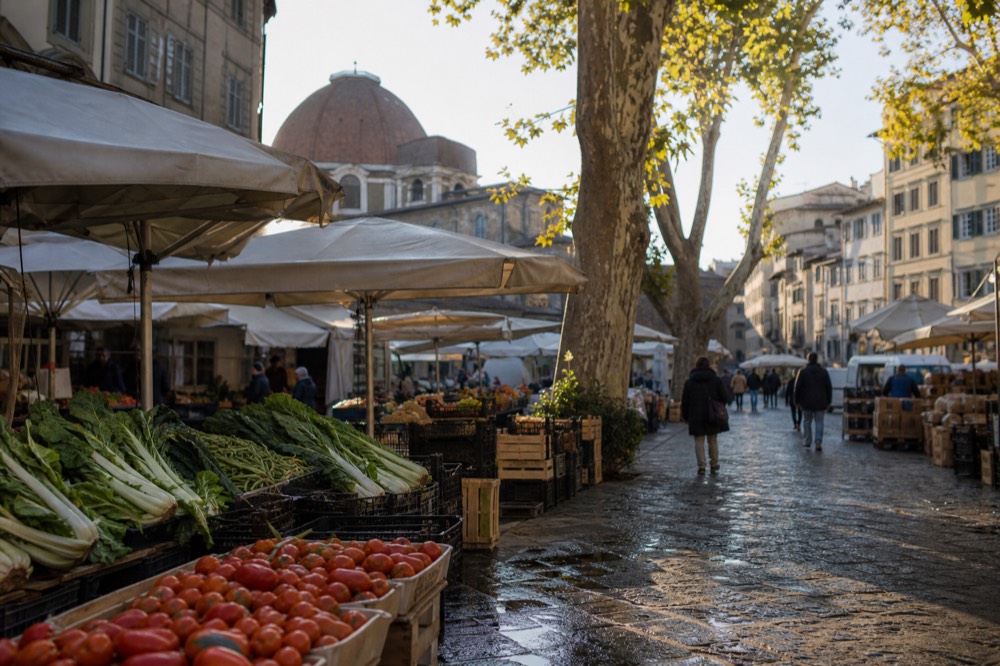
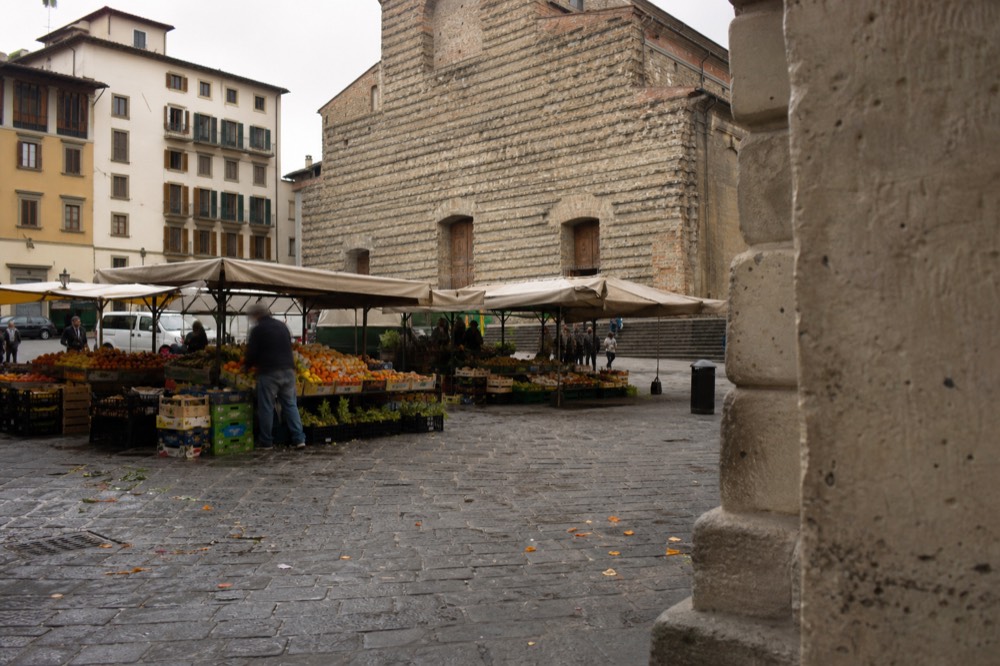
Beyond Mercato Centrale and Sant'Ambrogio, Florence has several smaller markets that are worth a visit for specific items or a different atmosphere. The San Lorenzo outdoor market surrounds the Mercato Centrale building and sells leather goods, clothing, and souvenirs, not food. The Santo Spirito market in the Oltrarno is a small daily produce market with a few food stalls, and the monthly antique market in Piazza Santo Spirito is a good place for browsing, not eating.
The San Lorenzo outdoor market is a tourist bazaar, not a food market. Do not confuse it with the indoor market. The stalls sell belts, scarves, and leather bags; the food options are limited to a few snack carts. If you want to eat, go inside the building or walk to the nearby trattorie.
Santo Spirito market, in the piazza of the same name, runs weekday mornings and has a handful of fruit and vegetable stalls, a cheese van, and sometimes a porchetta truck. It is not a destination market, but it is a pleasant stop if you are already in the Oltrarno. On the second Sunday of the month, the piazza hosts a large antique and craft market that is more about browsing than buying food, though the surrounding bars and restaurants are lively.
Mercato delle Cascine, in the Parco delle Cascine, is Florence's largest open-air market, running every Tuesday morning. It is where locals go for cheap clothing, household goods, and a few food stalls. It is a 30-minute walk from the centre, and it is not a food-focused market, but it is the most genuinely local market experience in the city.
Market tours and cooking classes: the best way to eat your way through
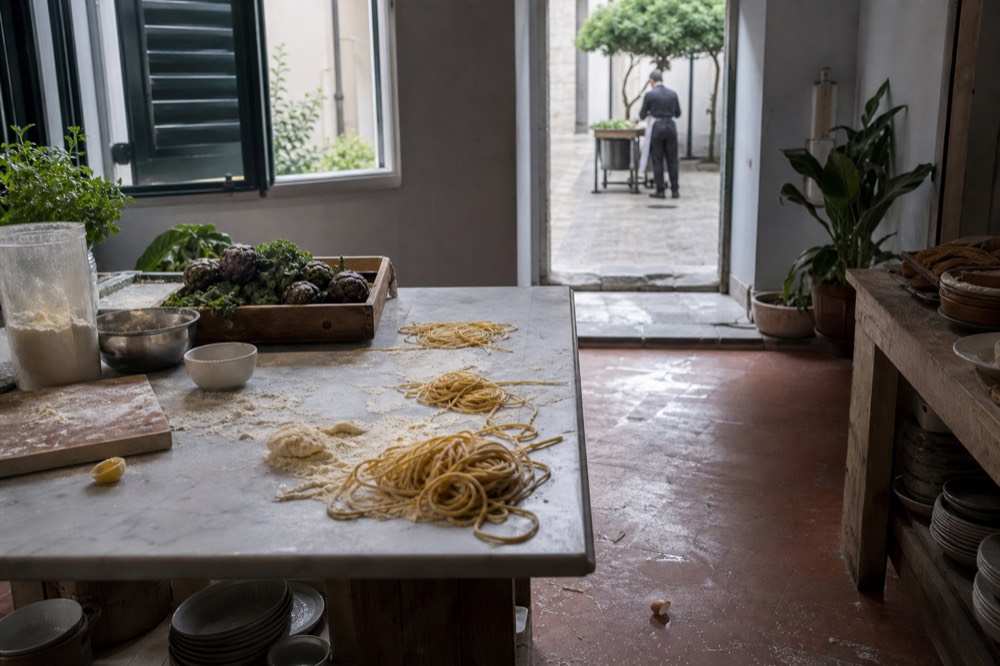
Combining a market visit with a cooking class is one of the most popular food experiences in Florence. Several tours start with a guided walk through Mercato Centrale or Sant'Ambrogio to buy ingredients, then move to a kitchen to prepare a multi-course Tuscan meal. These tours typically last three to four hours and include lunch or dinner with wine.
The Florence Cooking Class: Market Tour & Lasagna or Fresh Pasta is a well-reviewed option that begins with a tour of Mercato Centrale to select ingredients, then moves to a nearby kitchen to make fresh pasta or lasagna from scratch. It is rated 4.9 across 425 reviews and starts at $55 per person (checked September 2026). The market visit is a highlight because the instructor explains how to choose the best produce, which is a skill you can take home.
For a shorter market-focused tour without the cooking, the Central Market Food Tour with Eating Europe and the Sant'Ambrogio Market Food Tour are both excellent. The Eating Europe tour covers the Mercato Centrale's two floors and includes tastings of lampredotto, cheese, wine, and gelato. The Sant'Ambrogio tour focuses on the smaller market and its surrounding food shops.
| Tour | Duration | Rating | Price (from) | Includes |
|---|---|---|---|---|
| Sant'Ambrogio Market Food Tour | ~3 hours | 4.7 (24 reviews) (checked September 2026) | $116 | 10+ tastings, local guide, small group |
| Central Market Food Tour with Eating Europe | ~3 hours | Too few reviews | $109 (checked September 2026) | Tastings across both floors, guide |
| Market Tour & Cooking Class | ~4 hours | 4.9 (425 reviews) | $55 | Market visit, cooking class, meal with wine |
All three tours offer free cancellation on the live listing, and the Sant'Ambrogio tour is capped at a small group, which matters in the narrow market aisles. The cooking class is the best value if you want a hands-on experience and a full meal.
The market tours are a good way to orient yourself on your first day in Florence, because they give you a framework for understanding the city's food culture. After a tour, you will know which stalls to return to, which cheeses to buy, and how to order a lampredotto like a local.
Practical tips for shopping and eating at Florence markets
Bring cash, arrive early, and know the hours. Most market stalls, especially on the ground floor, prefer cash, though the food hall upstairs accepts cards. The best produce is available in the morning, and the cooked food counters are busiest between 12:30 and 2pm. If you want to eat at Da Nerbone or Da Rocco, aim for 11:45 or 13:30 to avoid the worst of the queues.
Other practical points: the ground floor of Mercato Centrale has no seating, so if you buy a sandwich from Da Nerbone you will eat it standing at a counter. The food hall upstairs has plenty of communal seating, but it fills up at peak times. Both markets are wheelchair-accessible via lifts. The ground floor can be slippery when wet, and the fishmonger area has a strong smell in summer, which is normal for a working market.
If you are buying produce to cook, bring your own bag. The traders will give you a plastic bag, but a reusable one is more practical. For cheese and cured meats, ask for a vacuum pack if you plan to travel with them; most butchers and cheese stalls offer this service for a small fee.
The outdoor San Lorenzo market is a separate entity and is not a food market. Do not be misled by the leather stalls; the real market is inside the building. If a vendor outside offers you a "special price" on a leather jacket, it is not a food tip.
| Market | Location | Hours | Best for |
|---|---|---|---|
| Mercato Centrale (ground floor) | Via dell'Ariento | Mon–Fri 7am–3pm, Sat 7am–5pm, closed Sun | Fresh produce, meat, fish, Da Nerbone lampredotto |
| Mercato Centrale (first floor) | Via dell'Ariento | Daily 9am–11pm | Cooked food, pizza, wine, communal dining |
| Sant'Ambrogio market | Piazza Ghiberti | Mon–Sat 7am–2pm (approx) | Local produce, Da Rocco trattoria, authentic feel |
| Santo Spirito market | Piazza Santo Spirito | Weekday mornings | Small produce market, cheese van, local vibe |
| San Lorenzo outdoor market | Around Mercato Centrale | Daily, daytime | Leather goods, souvenirs (not food) |
The table above summarises the key differences. The hours are from official sources and trader listings, checked September 2026, though individual stall hours can vary slightly. Always confirm with the stallholder if you are visiting near closing time.
For more on what to eat at Florence's markets, see our guide to Florence street food and lampredotto. If you are planning a meal out, our what to eat in Florence guide covers the city's essential dishes. And for a look at where Florentines actually eat, read where locals eat in Florence.
Common questions about Florence food markets
What are the opening hours of Mercato Centrale?
The ground floor is open Monday to Friday 7am to 3pm, Saturday 7am to 5pm, and closed Sunday. The first-floor food hall is open daily 9am to 11pm, including Sundays and most holidays (checked September 2026).
Is Mercato Centrale open on Sunday?
The first-floor food hall is open on Sundays, but the ground-floor fresh-produce market is closed. If you visit on a Sunday, you can still eat at the food hall, but you cannot shop for groceries.
Which is better, Mercato Centrale or Sant'Ambrogio market?
It depends on what you want. Mercato Centrale is larger and has a food hall for eating, but it is more touristy. Sant'Ambrogio is smaller, more authentic, and has the excellent lunch trattoria Da Rocco, but it closes earlier and has no evening food hall.
What should I eat at Mercato Centrale?
On the ground floor, the essential stop is Da Nerbone for a lampredotto panino. Upstairs, try fresh pasta from Il Pastaio, pizza from La Pizzeria, or truffle dishes from Il Tartufo. The wine bar and craft beer stand are also worth a visit.
Do I need to book a market tour in advance?
It is not strictly necessary, but the best tours, especially the Sant'Ambrogio food tour, often sell out. Booking a day or two ahead is recommended, particularly in peak season (April–May and September–October).
Are there any other food markets in Florence?
Yes. Santo Spirito market in the Oltrarno is a small daily produce market, and the monthly antique market in the same square is a popular browse. The Mercato delle Cascine, held every Tuesday morning in the park, is the city's largest open-air market, though it is more about household goods than food.
Choose Your Florence Food Experience
Initial editorial recommendation
Florence Food Tastings Walk
Try lampredotto and other Tuscan specialties with a local guide, choosing the San Lorenzo or Sant'Ambrogio route. Check your travel date before arranging your other meals.
3 hours, English guide. Menus and meeting points depend on the route; contact the operator about dietary needs. Tips and private transport excluded.
Compare The Formats And Adjust Your Choice
Treat the market floors as separate visits and check trader hours. Guided tasting routes and cooking classes need their own booking.
Sant'Ambrogio Chef-Led Market Walk: Explore the grocery market with a chef, with market tastings, espresso, wine and gelato. 3 hours, English-speaking chef. Market visit, tastings and two glasses of wine included. Confirm the meeting point on your booking.
Pasta Or Lasagna Cooking Class: Make fresh pasta, or choose the longer market, lasagna and tiramisu option; then eat what you prepared. Pasta option: 3 hours. Market, lasagna and tiramisu: 5 hours. English instruction, meal and equipment included. Market closed Sundays; not suitable for coeliac guests.
No verified recommendation meets these choices. Adjust the time or experience, or reset. For dietary, age or access requirements, obtain the operator's confirmation before booking.
Choose a date to see Viator's scheduled departures. Availability and final price are confirmed on Viator.