Where Locals Eat in Florence: Neighbourhood Trattorie, Small Rooms and Real Policies
Florentines do not eat in a hidden parallel city. They eat in small rooms with strict, sometimes odd, booking policies, in three working neighbourhoods a visitor can walk to in ten minutes, and the difference between a local spot and a tourist one is a closing day and a phone number, not a secret address.
Short answer
Locals eat in three areas: the Oltrarno around Santo Spirito, the Sant'Ambrogio market quarter, and the San Lorenzo streets behind the Duomo. The rooms are small, several take no bookings at all, and the working lunch spots close by 15:00. A pasta cooking class runs from $44 per person (checked September 2026), a foodies' walking tour from $92.
Florentines eat dinner at 20:00 to 21:00, and a good trattoria does not fill up until after 20:15. Turn up at 18:30 and the only doors open are the tourist-facing ones on the main drags, which is exactly the wrong filter if you came looking for where locals eat. This guide works the other way round: it starts from the rooms Florentines themselves book, queue for or walk into, and it lists each one's real policy, because in a city of thirty-seat dining rooms the policy is the whole game.
The site behind this page, Best Restaurants in Florence, is built on exactly that idea: queue reports and opening hours straight from the venues' own sites, never from listicles. Everything below follows the same rule.
Where do locals actually eat in Florence?
Locals eat in three working neighbourhoods: the Oltrarno around Santo Spirito and San Niccolò, the Sant'Ambrogio market quarter east of the centre, and the San Lorenzo streets immediately behind the Duomo and the Mercato Centrale. None of these is hidden, and two of them are in the most visited square mile of the city, which is the first surprise.
The second surprise is how small the rooms are. Osteria Vini e Vecchi Sapori has about ten tables a minute from Piazza della Signoria. Buca dell'Orafo is a cellar of roughly 35 seats a few metres from the Ponte Vecchio. Zeb is counter seating only, seventeen stools along a central galley plus four more. When a dining room is that size, the booking policy matters more than the menu, and Florentines plan around it the way they plan around a bus timetable.
The third thing to understand is the clock. Lunch for the working spots runs roughly 12:00 to 15:00, and several of the best close the kitchen at 14:30 sharp. Dinner service starts 19:30 to 20:00 in most places, with tourist-facing rooms opening earlier, around 19:00. If your question is really about timing rather than geography, the guide to dinner hours in Florence covers the clock in detail.
Which Oltrarno trattorie do Florentines keep for themselves?
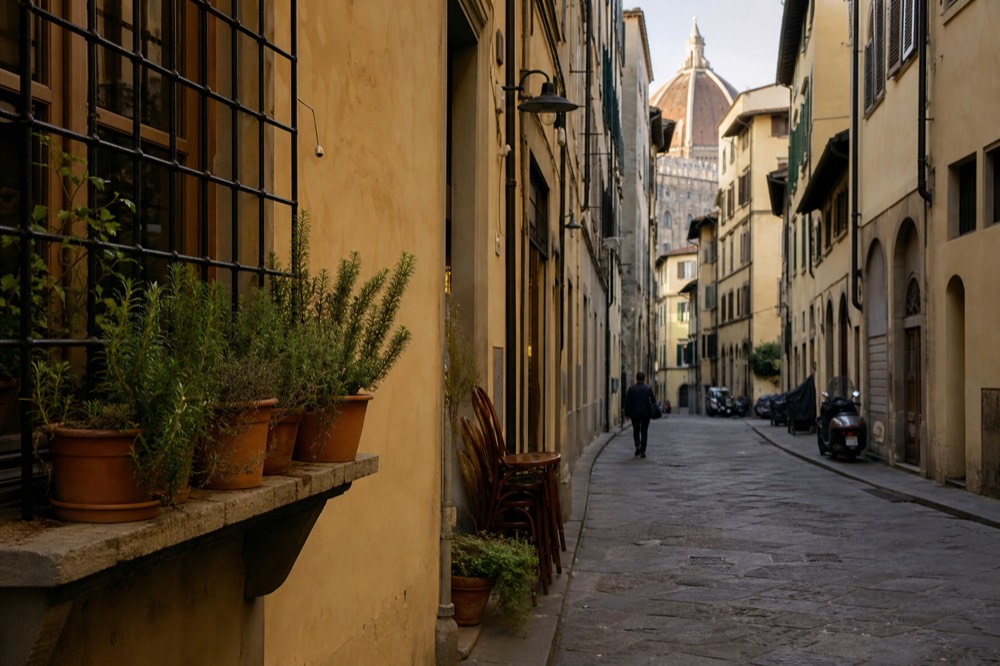
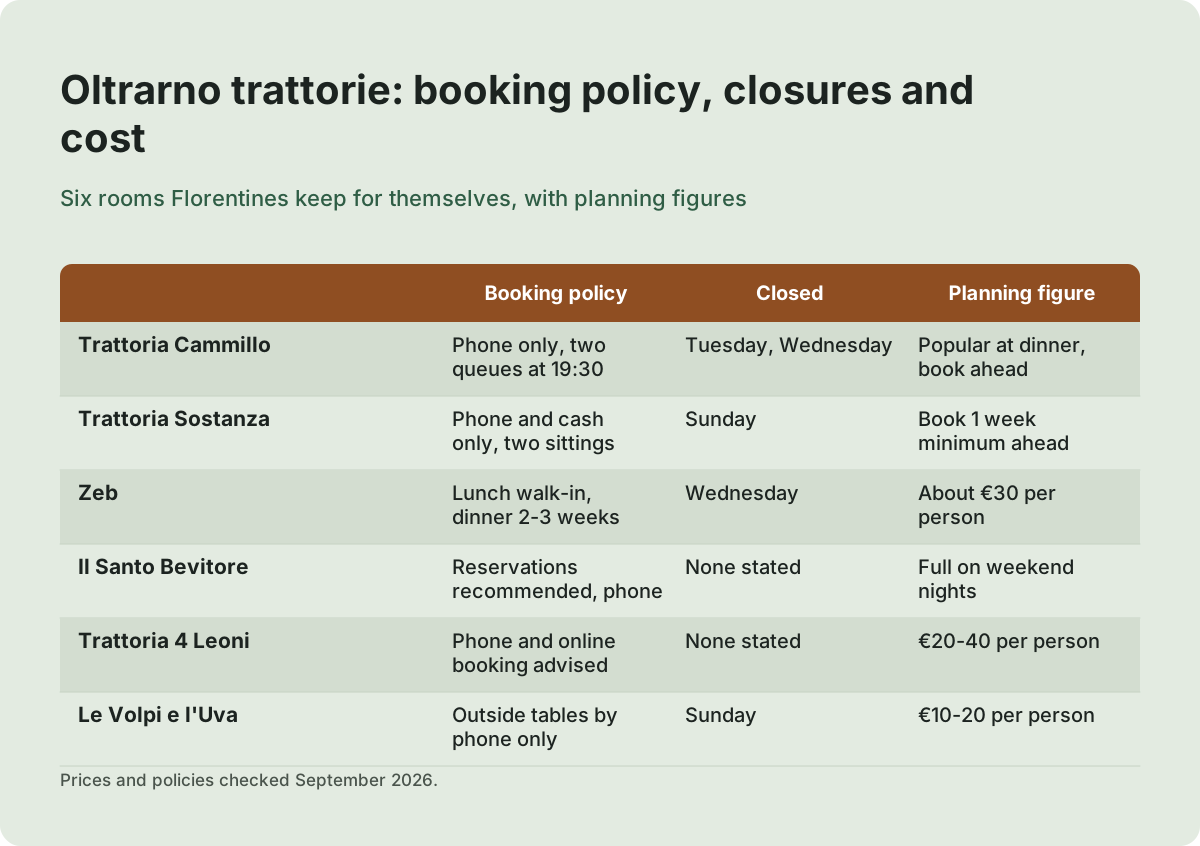
The Oltrarno locals' shortlist is Trattoria Cammillo, Trattoria Sostanza, Zeb, Il Santo Bevitore, Trattoria 4 Leoni and Le Volpi e l'Uva. Cammillo and Sostanza take phone bookings only, Zeb takes no lunch bookings at all, and Le Volpi e l'Uva reserves only its few outside tables by phone, so the neighbourhood rewards planning more than wandering.
Start with Cammillo, because it teaches you how the Oltrarno works. It has no website, takes bookings by phone only, and closes Tuesdays and Wednesdays. At the 19:30 dinner opening two separate queues form outside: one for reservation holders and one for everyone else. That two-queue system, which Trattoria Za Za also runs on a much larger scale, is the honest picture of a popular Florentine room: a reservation moves you from one line to a shorter line, not past the line entirely.
Sostanza, the butter-chicken institution known as Il Troia, is stricter still. Phone only, cash only, two dinner sittings, closed Sundays, and regulars call several weeks ahead; one 2026 guide says book a minimum of one week ahead (checked September 2026). Zeb, the Bib Gourmand counter spot near San Miniato, runs the opposite policy: no reservations at lunch, walk-in only, closed Wednesdays, and dinner needs booking two to three weeks ahead (checked September 2026). Around €30 per person is a fair planning figure there (checked September 2026).
Il Santo Bevitore and Trattoria 4 Leoni both take bookings and both fill up on weekends. Le Volpi e l'Uva, the wine bar on Piazza dei Rossi, is the neighbourhood's easiest stop: a tagliere and a glass runs €10 to 20 per person (checked September 2026), stools are first-come, and only the outside tables are reservable, by phone.
| Oltrarno room | Booking policy | Closed | Planning figure |
|---|---|---|---|
| Trattoria Cammillo | Phone only, two queues at 19:30 opening | Tuesday, Wednesday | Popular at dinner, book ahead |
| Trattoria Sostanza | Phone only, cash only, two sittings | Sunday | Book 1 week minimum ahead (checked September 2026) |
| Zeb | No bookings at lunch, dinner booked 2-3 weeks ahead | Wednesday | About €30 per person (checked September 2026) |
| Il Santo Bevitore | Reservations recommended, phone | None stated | Full on weekend nights |
| Trattoria 4 Leoni | Phone and online booking recommended | None stated | €20-40 per person (checked September 2026) |
| Le Volpi e l'Uva | Phone only for outside tables, stools first-come | Sunday | €10-20 per person (checked September 2026) |
Why is Sant'Ambrogio the locals' market?
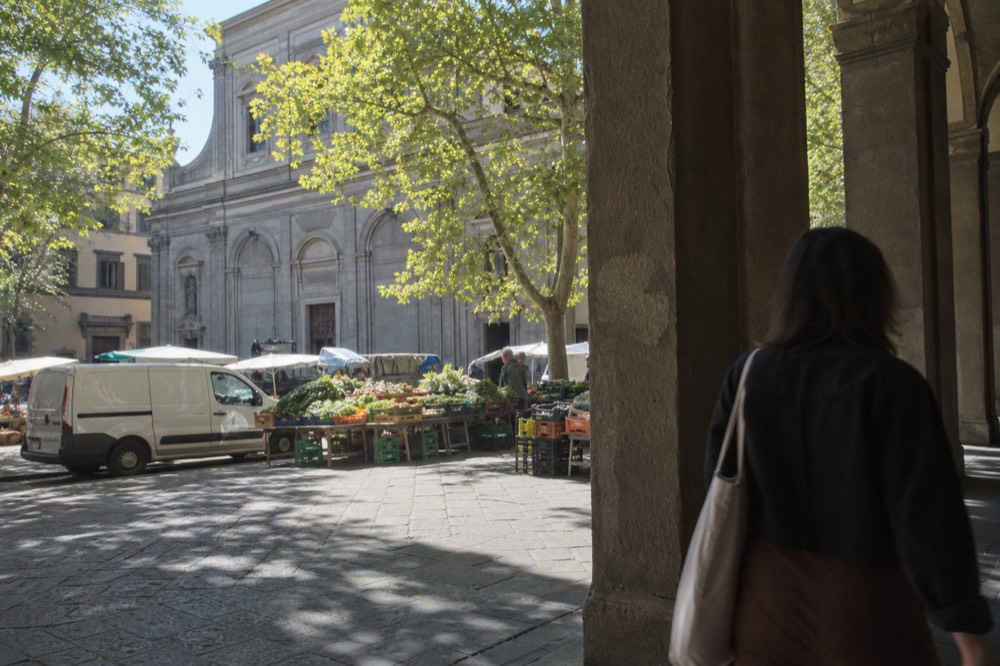
Sant'Ambrogio is the market quarter Florentines actually shop in, and its eating spots are market stalls and counters rather than restaurants: Da Rocco inside the market, Semel for panini, the Tripperia Pollini lampredotto cart, and the Cibreo group's trattoria, which now takes bookings by email. The whole quarter is lunch-shaped, and most counters close by 14:30.
Da Rocco is the purest version: a trattoria inside the market itself, open Monday to Saturday 11:30 to 14:30, no reservations, with a daily menu around €8 to 12 (checked September 2026). The 2026 guides all say the same thing, get there by 13:00 if you want a table. Semel, the panino spot on Piazza Ghiberti, runs 11:30 to 14:30, closed Sundays, with almost nowhere to sit. The Tripperia Pollini cart is where Stanley Tucci ate lampredotto in the 2025 series, and it needs no policy at all: you queue, you eat standing.
The Cibreo group is the quarter's institution, the family of the late Fabio Picchi. Its trattoria, once famously walk-in only, now takes bookings by email and serves lunch 12:30 to 14:30 and dinner 19:00 to 22:30 daily (checked September 2026). His son Giulio's Ciblèo, the Tuscan-Japanese counter Tucci praised in his own words in 2025, is a few doors away.
The market quarter also feeds the street-food and lampredotto trail that runs across the city, and it is the one part of local Florence where spending nothing on planning is genuinely fine: everything except Cibreo is counter service, and the only mistake is arriving after the market winds down.
Where do people who work near the Duomo eat?
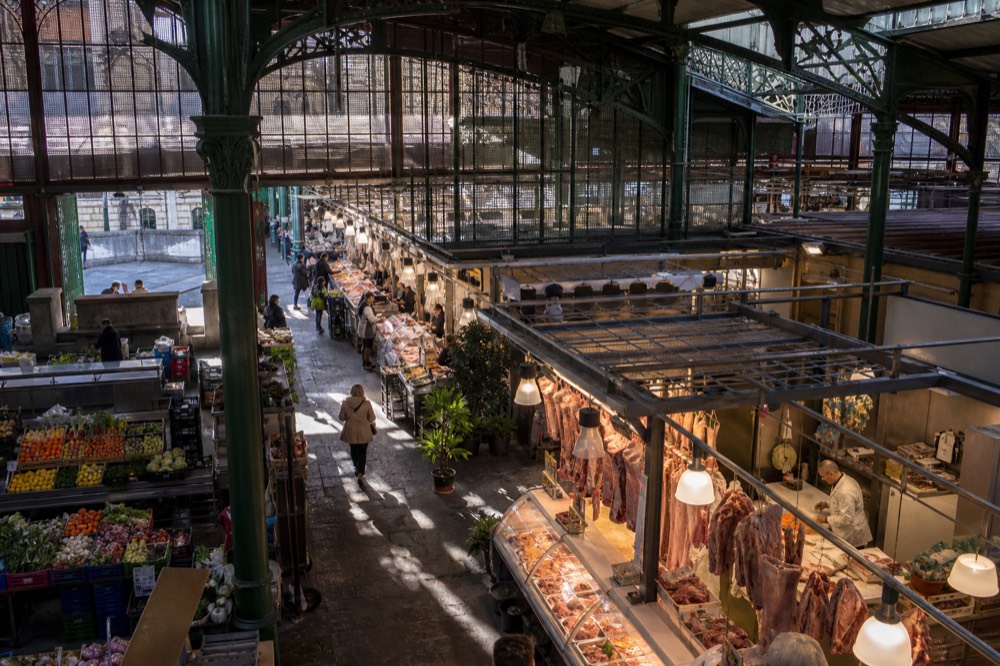
The workers' lunch spots sit in San Lorenzo, immediately behind the Duomo's tourist tide: Trattoria Sergio Gozzi and Trattoria Mario, both lunch only, both closed Sundays, plus the Da Nerbone lampredotto counter in the Mercato Centrale ground floor at €5 to 6 a sandwich (checked September 2026). Gozzi takes no bookings at all; Mario takes them by phone in the morning only.
Sergio Gozzi is the policy in its purest form: lunch only, 12:00 to 15:00, Monday to Saturday, no reservations, first come first served, closed Sunday. Dated reports describe waits of 10 to 45 minutes depending on when you arrive, and the fix is unglamorous: get there before noon. Mario, around the corner from the market since 1953, is more complicated than the lore suggests. Its own site takes phone bookings between 7:00 and 11:00 or by email, while several 2025-2026 guides still say walk-in only and cash only. The honest reading: phone in the morning if you want a table, bring cash regardless, and expect a queue either way.
Da Nerbone has operated continuously at the same spot since 1872, and its lampredotto panino at €5 and bollito at €6 (checked September 2026) is the cheapest real lunch in the historic centre. It runs Monday to Saturday roughly 9:00 to 14:00, closed Sunday, with queues at the 12:30 to 14:00 peak. The ground-floor market around it closes at 15:00 on weekdays and 17:00 on Saturday, while the food hall upstairs stays open to 23:00 daily; the Mercato Centrale guide untangles the two.
This is the neighbourhood that disproves the idea that you must cross the river to eat well. Two of the city's most stubbornly local lunch institutions sit within five minutes' walk of the busiest tourist streets in Tuscany.
| San Lorenzo spot | Hours | Booking | Closed |
|---|---|---|---|
| Trattoria Sergio Gozzi | Lunch 12:00-15:00 Mon-Sat (checked September 2026) | None, walk-in | Sunday |
| Trattoria Mario | Lunch Mon-Sat, dinner Friday | Phone 7:00-11:00 or email | Sunday |
| Da Nerbone | Mon-Sat ~9:00-14:00 (checked September 2026) | None, counter | Sunday |
| Semel | 11:30-14:30 (checked September 2026) | None, walk-in | Sunday |
Which two pieces of received wisdom are now wrong?
First, that spring is a quiet time to visit and small rooms will be easy: the city's own figures show April and May had the highest overnight stays of 2025, so spring is when the thirty-seat rooms are hardest. Second, that locals' Florence is only the Oltrarno: the strictest walk-in lunch institutions are in San Lorenzo and Sant'Ambrogio, on the same streets as the Duomo crowds.
The visitor numbers come from the Centro Studi Turistici, published by the city itself: more than 4 million arrivals and 9.7 million overnight stays in the first ten months of 2025, up 7.1 and 8.5 percent on 2024, with April and May named as the busiest months for stays. The Comune di Firenze release states it directly. What that means for eating is counter-intuitive: a trattoria with ten tables is harder to get into in May than in the August heat, when many family-run places simply close for a stretch around Ferragosto. Buca dell'Orafo posts its own August closure on its own site, and Le Volpi e l'Uva closes 10 to 16 August (checked September 2026). No one can honestly give you a percentage of restaurants that shut, because no such figure exists; plan on the pattern, not a number.
The second correction is geographic. The Oltrarno is genuinely local, but the working lunch economy of San Lorenzo, the market culture of Sant'Ambrogio and the Santo Spirito square scene are three different kinds of local, and treating the Oltrarno as the only one sends you across a bridge for a table you could have walked into at noon behind the Duomo.
How do the small rooms' booking policies actually work?
Florence's local rooms sort into four policy types: no bookings at all (Gozzi, Sabatino, Da Rocco, Zeb at lunch), phone only (Sostanza, Cammillo, Mario in the morning, Vini e Vecchi Sapori), online booking now available (Cibreo trattoria, 4 Leoni, Antico Ristoro di Cambi), and walk-in with queue (Za Za, whose online booking is suspended and whose phone line is the only route). Match the policy, not the reputation.
The no-booking rooms are the easiest to plan once you accept the rule: arrive before the rush or queue. Trattoria Sabatino in San Frediano is the model, a €12 daily menu (checked September 2026), no reservations, closed weekends, and reports telling you to arrive 30 minutes before opening to make the first sitting. Osteria Santo Spirito, on the square itself, is closed Tuesdays and famous for its truffle gnocchi.
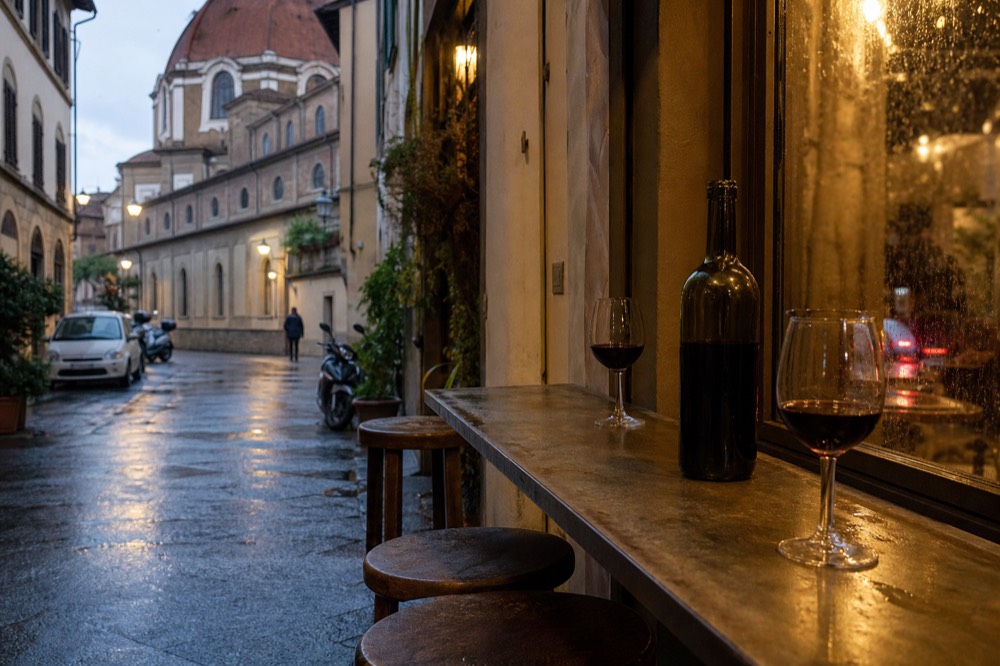
The phone-only rooms are where visitors lose tables. Sostanza and Cammillo have no online route at all. Vini e Vecchi Sapori, ten tables near Piazza della Signoria, takes reservations in person or by telephone only, and one diner reported booking a month ahead by phone. If your hotel concierge offers to call, that is not a luxury in Florence, it is the mechanism.
The online-bookable group has grown: Cibreo's trattoria now takes email bookings, Antico Ristoro di Cambi in the Oltrarno has a booking button on its own site and opens daily 12:00 to 14:30 and 18:00 to 22:30 (checked September 2026), and 4 Leoni books by phone or online. Za Za, the highest-volume name in the city, sits in the awkward fourth category: its own reservations page says online booking is suspended and gives a phone number, and dated 2025-2026 reports describe confirmed bookings still queuing 20 to 30 minutes. The reservation question has a longer answer of its own elsewhere on this site, and so does the no-reservation strategy, but the short version is the table below.
| Policy type | Rooms | What you actually do |
|---|---|---|
| No bookings | Sergio Gozzi, Sabatino, Da Rocco, Zeb at lunch, Gusta Pizza | Arrive early or queue |
| Phone only | Sostanza, Cammillo, Mario (mornings), Vini e Vecchi Sapori, Le Volpi e l'Uva | Call days ahead, or ask your hotel to |
| Bookable online or by email | Cibreo trattoria, 4 Leoni, Antico Ristoro di Cambi | Book direct before you travel |
| Booking suspended, phone line only | Trattoria Za Za | Call 055 21 54 11, expect a short queue anyway |
What does eating like a local cost?
Eating on the locals' side of Florence is cheap: a market lunch at Da Rocco or Da Nerbone runs €5 to 12, a no-bookings trattoria lunch such as Sabatino has a €12 daily menu, and a full dinner at a serious neighbourhood room such as Zeb or Antico Ristoro di Cambi plans out around €30 per person (all checked September 2026). The expensive mistake is not the food, it is the wrong room at the wrong hour.
The floor of the whole local scene is Da Nerbone's €5 lampredotto panino. Above that sit the market counters and lunch trattorie in the €8 to 18 band, then the likes of Sergio Gozzi where reviewers report €18 to 30 per person (checked September 2026), then the bookable dinner rooms at €30 to 40, and then the steak houses, where a bistecca is priced per kilo and the bistecca alla fiorentina guide covers that ladder separately.
One cost that surprises visitors is the coperto, the per-person cover charge that is legal in Tuscany (Lazio banned it; Tuscany did not) and must be printed on the menu before you order. It typically runs about €1 to 3 per person across Italy, up to around €5 at smarter places, and no official Florence figure or cap exists. Tipping on top is not expected: Italians round up or leave a euro or two in cash where service is not already itemised.
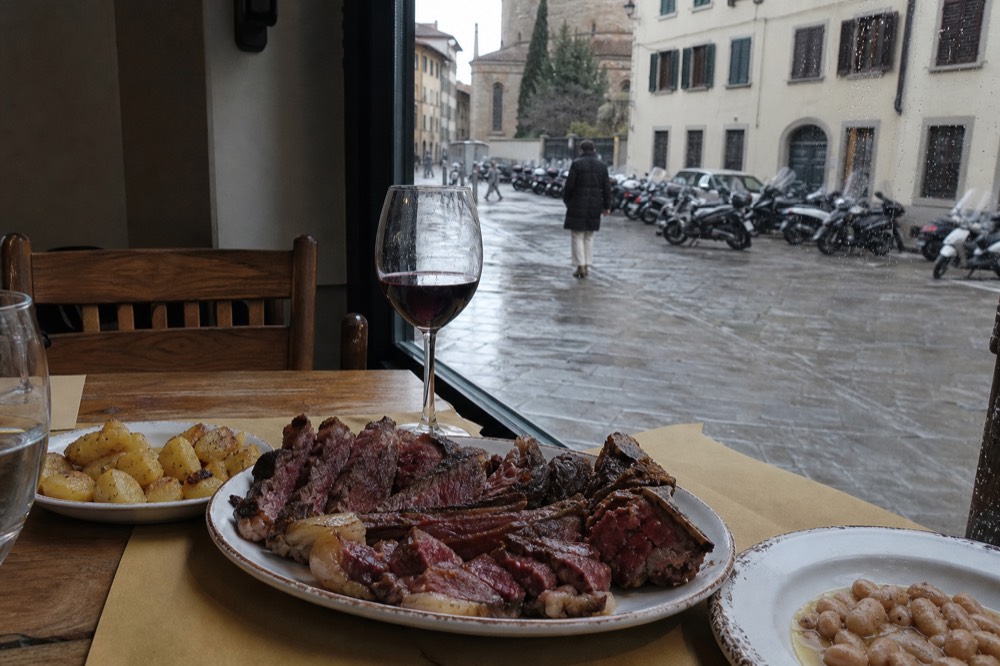
Can a food tour substitute for local knowledge?
A good food tour can compress the neighbourhood learning curve into three hours: the foodies' walk covers Tuscan flavours and fine wine for $92 per person, the chef-led Sant'Ambrogio market tasting runs from $79.32, and a private ten-tastings tour with locals costs from $148 (all checked September 2026). None of them replaces a phone call to Sostanza, but all of them put you in the right rooms with someone who knows the closing days.
The honest division of labour for a trip: book one guided walk for orientation and the tastings you would never order alone, then spend the rest of the week using the policies above. Call Sostanza on your first morning. Queue at Gozzi before noon. Take the €12 menu at Sabatino and the lampredotto at Nerbone without thinking about it. That combination is what eating like a local in Florence actually consists of, and none of it requires a secret address.
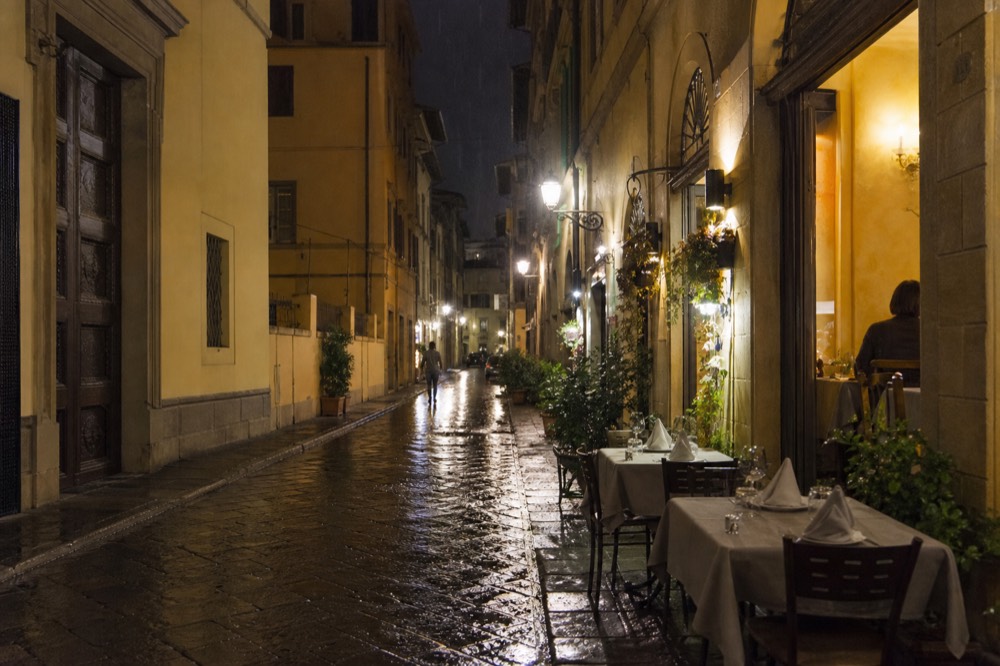
Florentines queue, phone ahead and eat late, and the questions below are the ones visitors ask most: which neighbourhood, which rooms need a call, what dinner costs and what closes in August. Each answer is short, because the policies themselves are short.
Common questions about where locals eat in Florence
Where do locals eat in Florence?
In three working neighbourhoods: the Oltrarno around Santo Spirito (Cammillo, Sostanza, Zeb, Il Santo Bevitore), the Sant'Ambrogio market quarter (Da Rocco, Semel, the Cibreo group) and San Lorenzo behind the Duomo (Sergio Gozzi, Trattoria Mario, Da Nerbone). None of these is hidden; two sit inside the most visited square mile of the city.
Do I need a reservation to eat where locals eat?
It depends entirely on the room. Several of the most local spots take no bookings at all: Sergio Gozzi, Sabatino, Da Rocco and Zeb at lunch are first-come. Others are phone only, such as Sostanza and Cammillo, and one, Za Za, has suspended online booking and takes calls only. Check each room's policy before you go.
Is the Oltrarno the only local neighbourhood?
No. The Oltrarno is genuinely local, but San Lorenzo's lunch institutions and Sant'Ambrogio's market counters are equally local and sit on the same streets as the main sights. Treating the Oltrarno as the only option means queuing for a bridge to reach food you could have walked into at noon.
What time do locals eat dinner in Florence?
Roughly 20:00 to 21:00, and a good trattoria is not full until after 20:15. Dinner service in most rooms starts 19:30 to 20:00; tourist-facing places open earlier, around 19:00. Arriving at 18:30 filters you into exactly the wrong rooms.
Is it expensive to eat where locals eat?
No, it is the cheap side of the city. A lampredotto panino at Da Nerbone is €5, market lunch menus run €8 to 12, and a bookable dinner room such as Zeb plans out around €30 per person (checked September 2026). Expect a coperto of roughly €1 to 3 per person printed on the menu, the usual range across Italy.
Do local restaurants close in August?
Many family-run places close for a stretch around Ferragosto, in the region of 8 to 20 August, though no verified percentage exists. Two closures are confirmed from the venues' own sites: Buca dell'Orafo posts an August closure and Le Volpi e l'Uva closes 10 to 16 August. Check your specific room before an August trip.
Choose Your Florence Food Experience
Initial editorial recommendation
Sant'Ambrogio Chef-Led Market Walk
Explore the grocery market with a chef, with market tastings, espresso, wine and gelato. Check your travel date before arranging your other meals.
3 hours, English-speaking chef. Market visit, tastings and two glasses of wine included. Confirm the meeting point on your booking.
Compare The Formats And Adjust Your Choice
Explore Oltrarno, Sant'Ambrogio and San Lorenzo using each restaurant's own policies. Guided walks add orientation without reserving those rooms.
Private Six Or Ten Tastings Walk: Choose six or ten local food and drink tastings with a guide dedicated to your party. 3 hours, English available. Choose the six- or ten-tasting option; meeting points differ. Hotel transfers and attraction admission excluded.
Sunset Food And Wine Walk: Taste Tuscan dishes across Oltrarno, including wine-window stops and a Negroni lesson. 3.5 hours, English guide. Tastings and listed drinks included; extra drinks and tips excluded. Stops can change.
No verified recommendation meets these choices. Adjust the time or experience, or reset. For dietary, age or access requirements, obtain the operator's confirmation before booking.
Choose a date to see Viator's scheduled departures. Availability and final price are confirmed on Viator.