Where to Find the Best Gelato in Florence
Florence is home to some of Italy's finest gelato, but not every colorful shop window delivers the real thing. Learn the three visual tells that separate artisanal gelato from the tourist traps, and discover the gelaterie that Florentines actually recommend.
Short answer
The best gelato in Florence is made with natural ingredients, no artificial colors, and stored in covered metal tubs rather than mounded display cases. Look for muted pistachio, not bright green, and banana that is off-white, not yellow. Gelateria della Passera holds the Gambero Rosso Tre Coni, the city's highest award, while Gelateria dei Neri and Vivoli are local favorites. Avoid any shop where the gelato is piled high and brightly colored.
Skip the queues and judge gelato by what is in the case: muted colors, covered metal tins, and a short flavor list. Find sit-down spots via Best Restaurants in Florence. Florence has dozens of gelaterie, and many of the most famous ones are not the best. The difference comes down to three simple visual signs: color, coverage, and shape. Once you know them, you can walk past a shop window and decide in seconds whether to step inside.
How to spot real gelato in Florence
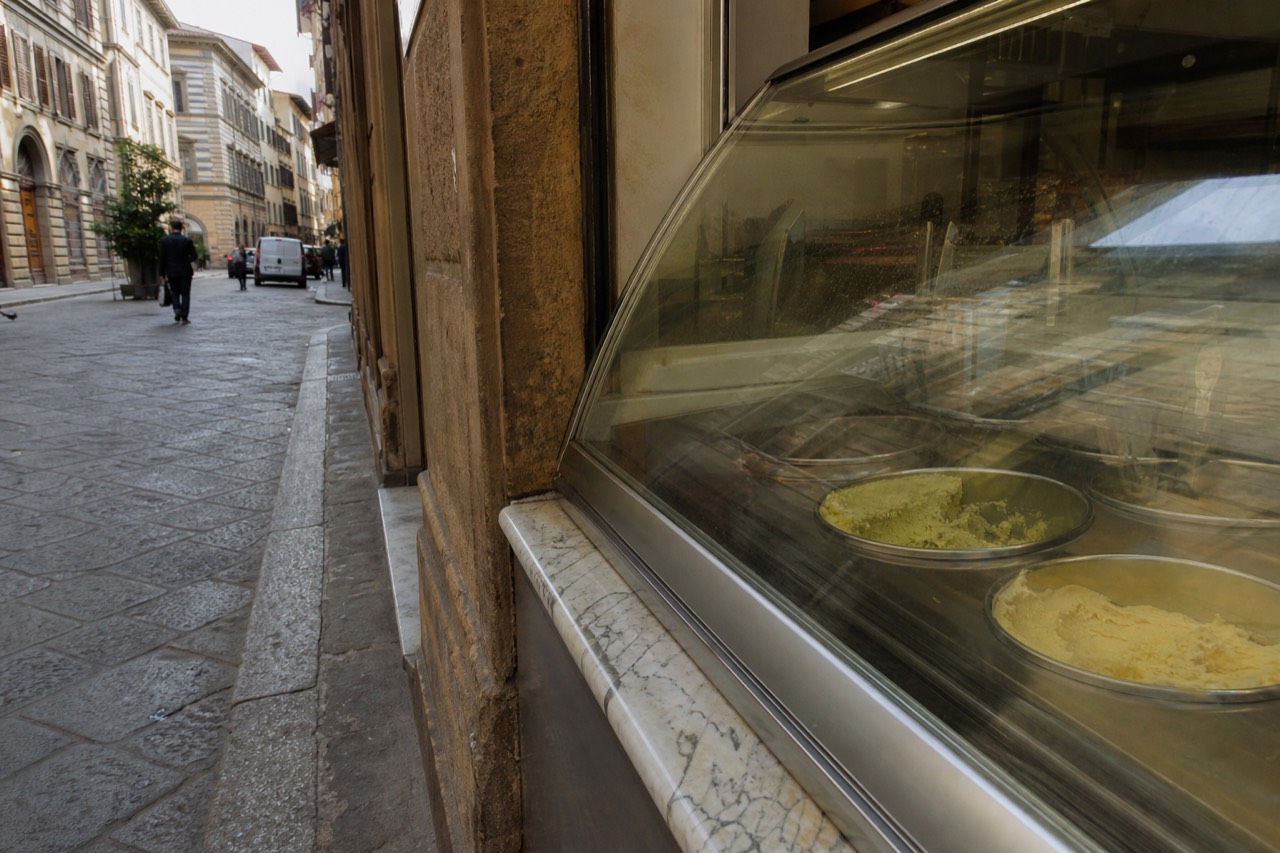
Real gelato is never piled high, never brightly colored, and never stored in open tubs. Look for muted, natural shades: pistachio should be a dull brown-green, banana an off-white, and fruit flavors the color of the actual fruit. The tubs are covered, often with metal lids, and the gelato sits flat, not mounded. These three signs, color, coverage, and shape, are the quickest way to separate artisanal gelato from the mass-produced imitations.
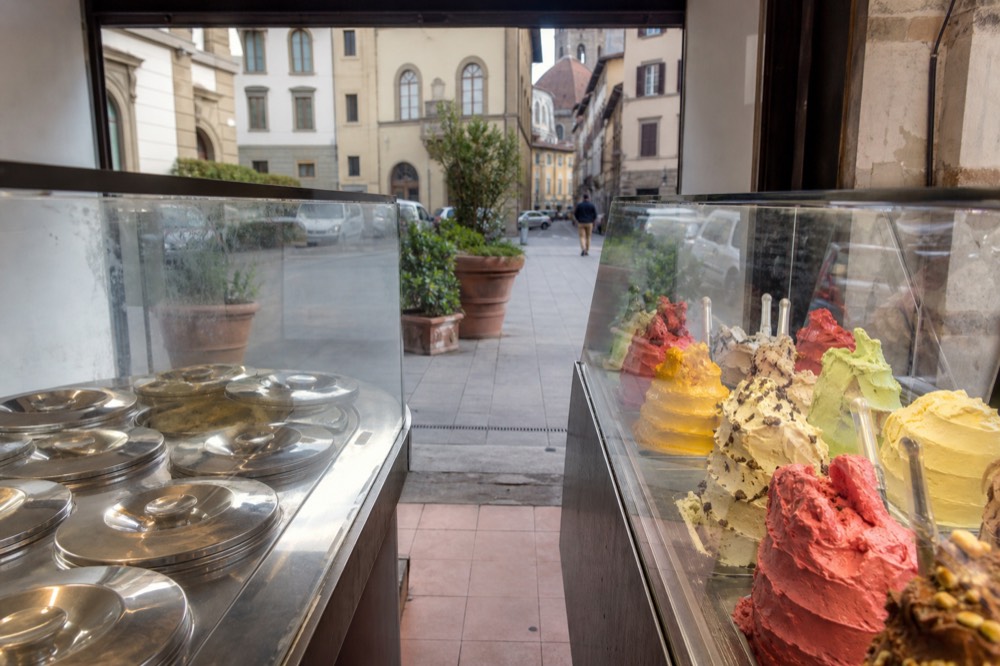
The first tell is color. Artisanal gelato uses only natural ingredients: fruit, nuts, milk, sugar. Pistachio gelato made from real pistachios is a dull, muddy green-brown, never the vivid emerald you see in tourist traps (see Avoiding Tourist Traps). Banana gelato is off-white, because real bananas turn pale when blended, not bright yellow. Strawberry is a soft pink, not neon red. If a flavor looks like it belongs in a candy wrapper, walk away.
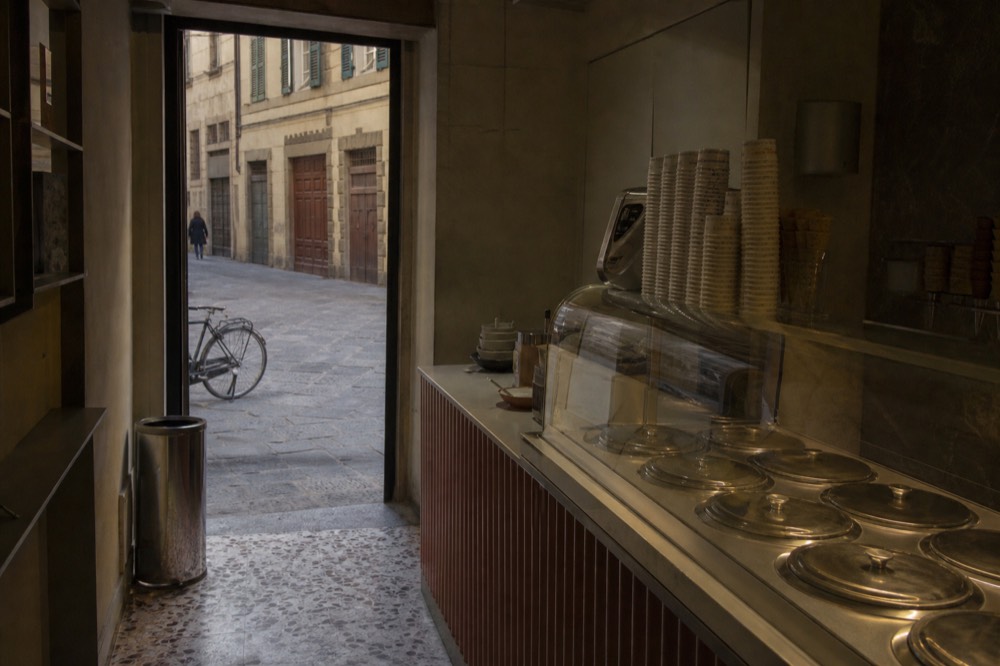
The second tell is how the gelato is stored. Real gelato is kept in covered metal tubs, often inside a temperature-controlled pozzetti (round wells with lids). The lids are lifted only when someone orders, which keeps the gelato at the correct serving temperature and prevents it from drying out. Open, mounded displays mean the gelato is likely over-aerated and loaded with stabilizers to hold that shape.
The third tell is the shape itself. In a traditional gelateria, the gelato sits flat inside the tub, never piled into a mountain. Mounded gelato is a sign that air has been whipped in to increase volume, which dilutes flavor and gives a lighter, less creamy texture. A properly made gelato is denser than industrial ice cream, which is pumped with air to stretch the volume, so it looks denser and sits lower in the tub.
| Tell | Real gelato | Tourist-trap gelato |
|---|---|---|
| Color | Muted, natural shades (dull pistachio, off-white banana, pale pink strawberry) | Bright, artificial colors (neon green, vivid yellow, electric red) |
| Storage | Covered metal tubs or pozzetti with lids | Open, often plastic tubs, gelato exposed to air |
| Shape | Flat, level surface inside the tub | Mounded, piled high, often with decorative peaks |
These three signs work together. A shop that displays bright green pistachio in an open, mounded tub is almost certainly serving industrial gelato, no matter how many tourists are queuing outside. A shop with covered metal tubs and muted colors is worth your time.
Now that you know what to look for, the next step is knowing where to go. Florence's best gelaterie are spread across the city, each with its own specialties and closing days. The list below focuses on shops that pass the three-tell test and are consistently recommended by locals and food guides.
The best gelaterie in Florence, neighborhood by neighborhood
Florence's top gelaterie include award-winning Gelateria della Passera (Tre Coni) in Oltrarno, Gelateria dei Neri near Santa Croce with its crema fiorentina, Vivoli in Santa Croce for its affogato bar and no-cone policy, and La Carraia on the river for value. Each has a closing day: della Passera open daily, dei Neri closes Tuesday, Vivoli Monday, La Carraia open daily. All use covered tubs and natural colors.
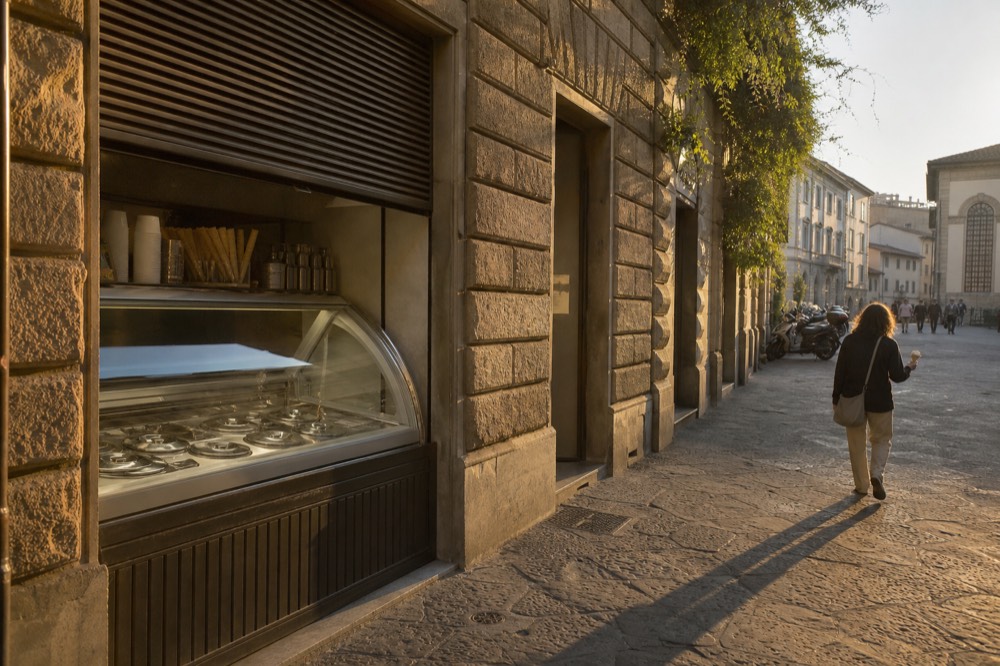
The gelaterie below are the ones that consistently appear in local guides and hold awards from Gambero Rosso or other Italian food authorities. They all display gelato in covered tubs, use natural colors, and serve at the correct temperature. The table includes each shop's closing day, so you can plan your visit accordingly.
| Gelateria | Area | Closing day | Signature flavor or feature |
|---|---|---|---|
| Gelateria della Passera | Oltrarno / San Frediano | Open daily | Tre Coni award; classic and creative flavors |
| I Gelati del Bondi | Oltrarno | Open daily | Tre Coni award; traditional Tuscan flavors |
| Gelateria dei Neri | Santa Croce | Tuesday | Crema fiorentina, riso, dark chocolate |
| Vivoli | Santa Croce | Monday | Affogato bar; no cones, cups only; gran crema al caffè |
| La Carraia | Oltrarno (Ponte alla Carraia) | Open daily | Value-focused; creamy pistachio, hazelnut, stracciatella |
| Perché No! | Centro Storico / Duomo | Tuesday (seasonal) | Pistacchio di Bronte; creative daily flavors |
| Gelateria La Sorbettiera | Oltrarno / San Frediano | Saturday (unconfirmed) | Artisanal since 1934; high-cocoa chocolate, mattonella format |
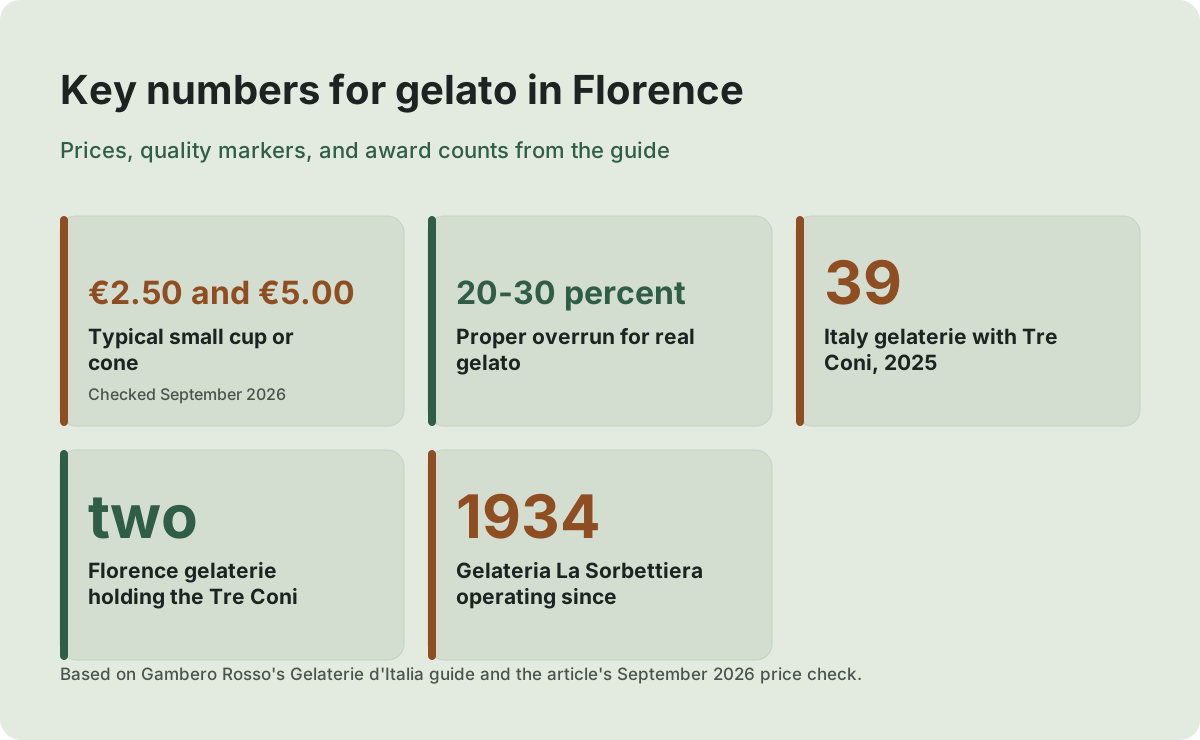
A few notes on the table. Vivoli serves no cones, a deliberate choice the founder believed preserved flavor; you order a cup instead. Gelateria della Passera and I Gelati del Bondi are the only two Florence gelaterie to hold the Tre Coni, Gambero Rosso's highest award, confirmed again for della Passera in the 2027 guide published in June 2026. La Carraia is often the most affordable option, with small cones starting around €1.50 (checked September 2026). Perché No! is the city's pistachio specialist, with pistacchio di Bronte that many consider the best in town. All prices are approximate and should be verified on the operator's live listing. For a broader view of where Florentines eat, including these gelaterie, see our guide to where locals eat in Florence.
Florence's award-winning gelato: the Gambero Rosso Tre Coni
Only two gelaterie in Florence hold the Gambero Rosso Tre Coni, the highest rating in the annual Gelaterie d'Italia guide: Gelateria della Passera and I Gelati del Bondi. Gelateria della Passera has held the award consecutively and was confirmed again in the 2027 edition, while I Gelati del Bondi also holds the Tre Coni for its traditional Tuscan flavors. No other Florence gelateria has achieved this recognition, including the more famous names on the tourist circuit.
The Tre Coni is Italy's most respected gelato award, judged by Gambero Rosso's panel of food critics. It is not a popularity contest or a reader poll; it is an expert assessment of ingredient quality, technique, and flavor. In the 2027 guide, 39 gelaterie in Tuscany received the Tre Coni, and Florence claimed two of them.
The fact that neither della Passera nor I Gelati del Bondi is on the main tourist trail is itself a useful filter. Both are in the Oltrarno, the quieter south bank of the Arno, away from the Duomo crowds. Della Passera is a tiny shop on Via Toscanella, named after the piazza it faces. I Gelati del Bondi is on Via Nazionale, up by the station in the San Lorenzo area. Neither has the long queues of the center, and both serve gelato that is unmistakably artisanal: muted colors, covered tubs, flat surfaces.
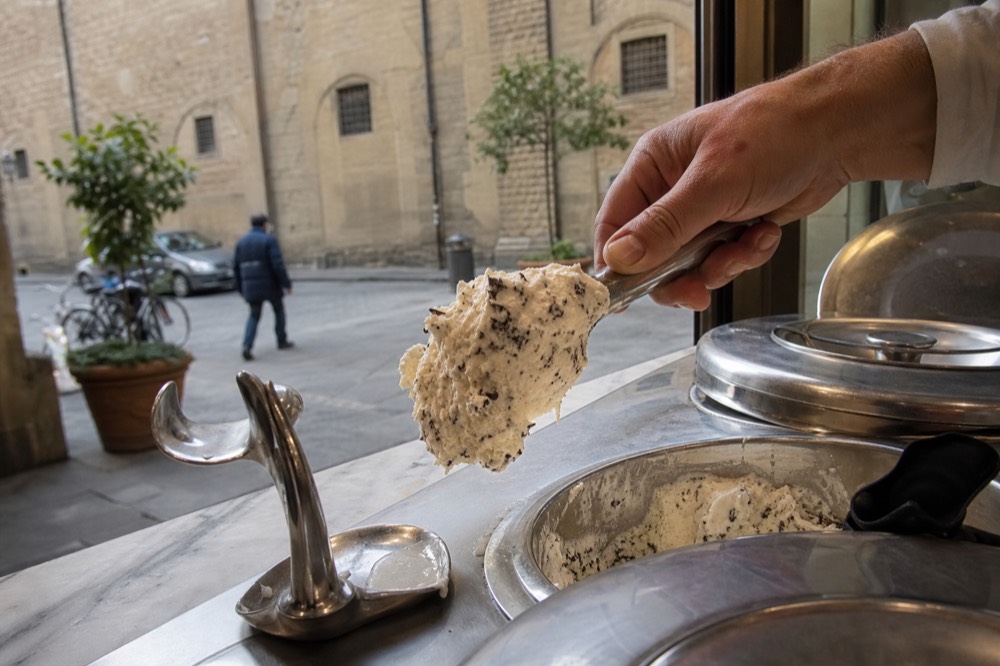
The class is capped at six people, so you get direct instruction from a master gelatiere. You will make a flavour from scratch, practise scooping and taste your creation. It is the most practical way to train your palate for the rest of your trip.
What to order: classic flavors and seasonal specials
A great gelateria will always have the classics: crema (a rich egg custard), pistachio, stracciatella (fior di latte with chocolate shards), and cioccolato fondente (dark chocolate). Seasonal fruit flavors like fragola (strawberry) in spring and melone (melon) in summer are also good signs, because they mean the shop works with fresh produce. Avoid any gelateria that lists dozens of novelty flavors but has no pistachio or crema; that is a red flag.
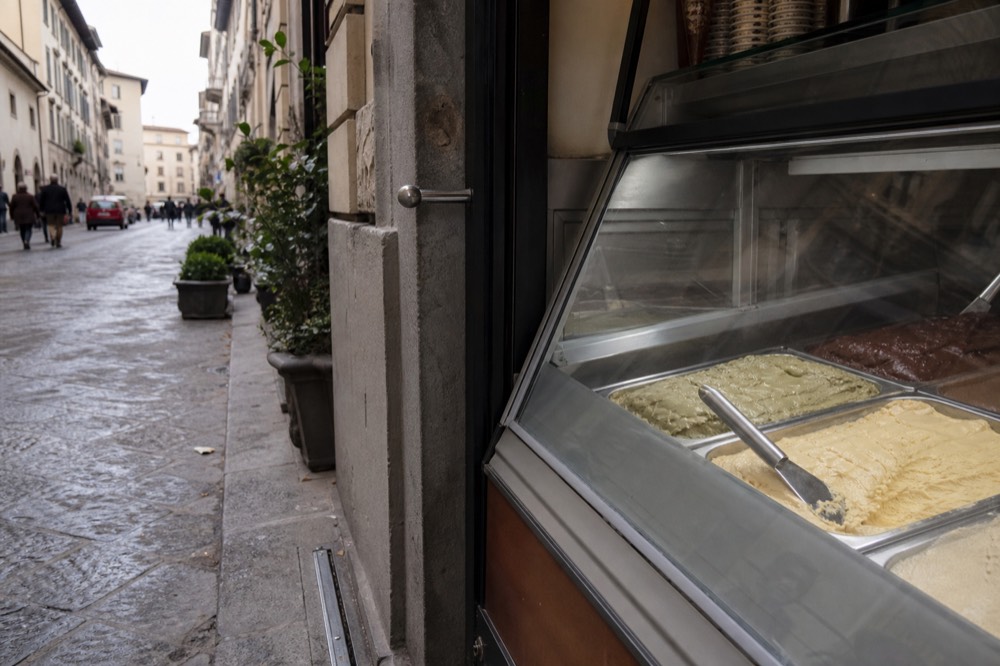
The flavor board is another tell. A traditional gelateria offers ten to twenty flavors, with a core of classics that never change and a few seasonal rotations. Pistachio should always be present, and its color is your instant quality check. Crema is the Italian answer to vanilla: if it is bright yellow, it is made with powdered mix; if it is pale cream, it is made with fresh eggs and milk. Gelateria dei Neri also serves creative flavors like gorgonzola with walnuts, which showcases the versatility of artisanal gelato.
| Flavor | What to look for | What to avoid |
|---|---|---|
| Pistachio | Dull brown-green, intense nutty taste | Bright green, bland, or almond-extract aftertaste |
| Crema | Pale cream color, rich egg-custard flavor | Bright yellow, overly sweet, synthetic taste |
| Stracciatella | White fior di latte base with irregular dark chocolate shards, not chips | Uniform chips, overly sweet base |
| Fruit sorbets | Color of the real fruit, slightly icy texture from water content | Neon colors, perfectly smooth (sign of added gums) |
| Cioccolato | Dark, almost black, intense cocoa flavor | Light brown, milky, sweet |
Seasonal fruit flavors are a sign of a serious gelateria. Strawberry in May, peach in July, fig in September: these appear for a few weeks and then vanish. If a shop offers strawberry in December, it is using frozen purée or artificial flavoring, which is not necessarily bad but is not the same as fresh. If you're interested in tasting gelato as part of a guided food walk, our Florence food tours guide covers several tours that include gelato stops.
Gelato with a view: where to enjoy your scoop
The best place to eat gelato in Florence is on a bench in a piazza, by the river, or while walking through the Oltrarno. Avoid eating while sitting on church steps or monuments, and be mindful that the city introduced a street-eating ban on Via de' Neri and the Uffizi area in 2018; its current status is unconfirmed, so it is safer to eat while standing or walking away from those specific streets.
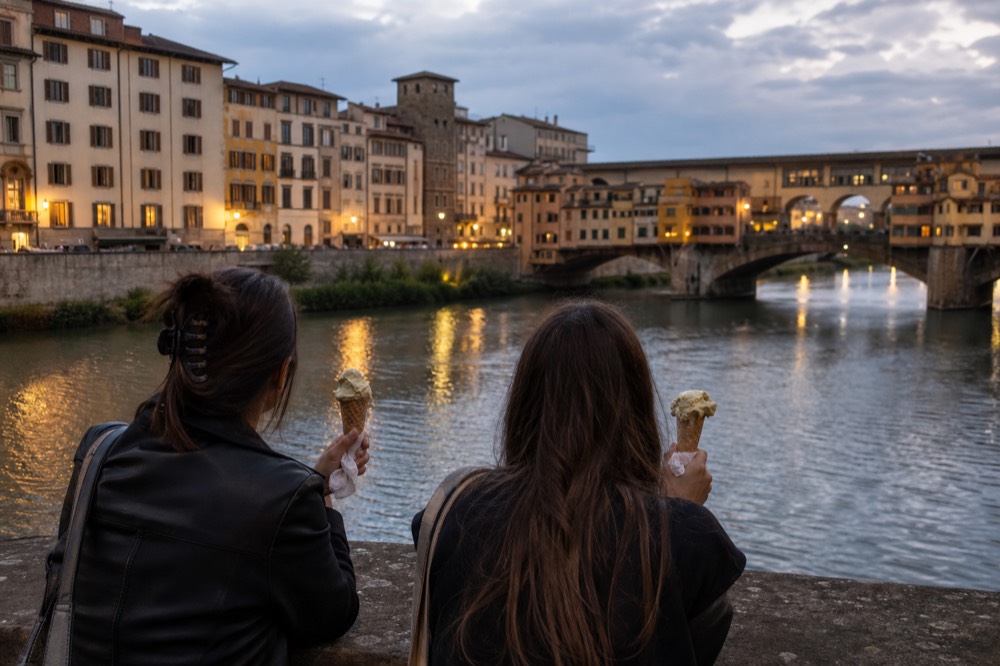
Florence is a walking city, and gelato is a walking food. The Italian tradition is to eat it while strolling, not sitting at a table. Most gelaterie have no seating, or only a few stools, so you take your cup or cone and go.
A few scenic routes: from La Carraia, walk across the Ponte alla Carraia and eat your gelato looking back at the Oltrarno. From Gelateria dei Neri, walk two minutes to the Arno and sit on the riverbank steps. From Vivoli, walk to Piazza Santa Croce and find a bench away from the church facade. From della Passera, the tiny Piazza della Passera itself is a perfect, quiet spot.
This private tour visits several artisanal coffee shops and gelaterie, pairing single-origin espresso with seasonal gelato flavors. It is a two-hour walk that covers the history of Italian coffee culture and the craft of gelato making.
The art of chocolate and gelato: a masterclass
Florence has a strong chocolate tradition, and several gelaterie incorporate high-quality chocolate into their gelato. Venchi, the historic Piedmontese chocolatier, runs a gelato and chocolate masterclass in Florence where you can learn to make both. The class is capped at a small group and includes a tasting of single-origin chocolate alongside gelato.
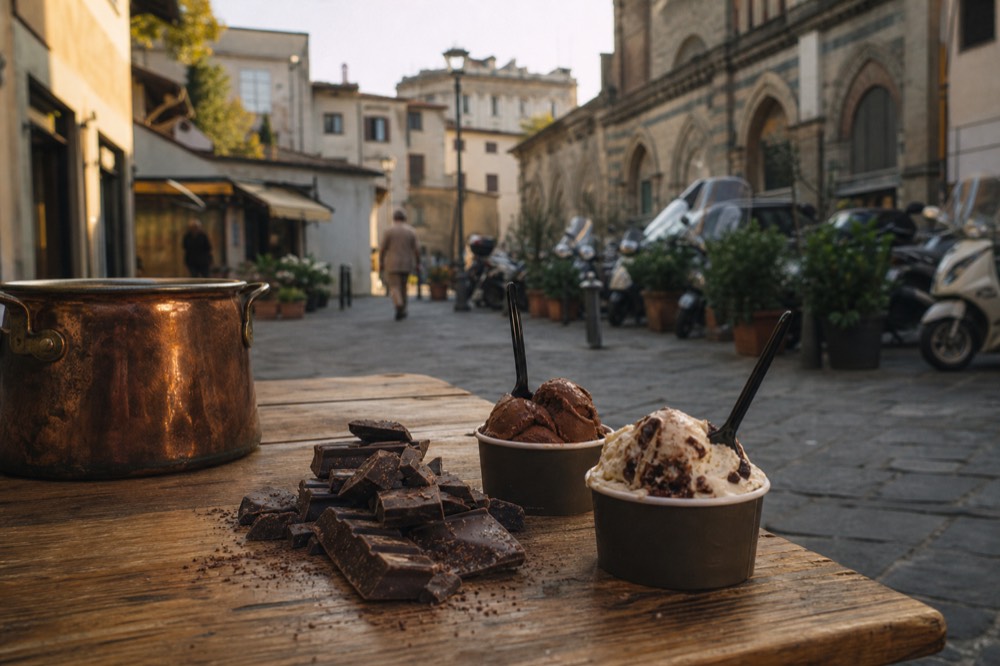
Chocolate gelato is one of the hardest flavors to get right, because the cocoa butter content affects texture. A good cioccolato fondente should be almost black, intensely bitter, and melt slowly. Venchi's workshop lets you personalise a chocolate bar and decorate a gourmet cone; it does not promise gelato-making from a base.
The Venchi workshop includes making a personalised chocolate bar and decorating a gourmet gelato cone. It is a good choice if you want a focused chocolate-bar and gourmet-cone workshop; confirm the duration for your selected option.
Gelato-making at home: what you learn in a class
A gelato-making class in Florence teaches the fundamental science: the balance of sugars, fats, and solids that determines texture, the role of air incorporation, and why gelato is served at a higher temperature than ice cream. You learn to make a base from scratch, flavor it with natural ingredients, and churn it. The small-group format means you can ask questions and taste as you go.
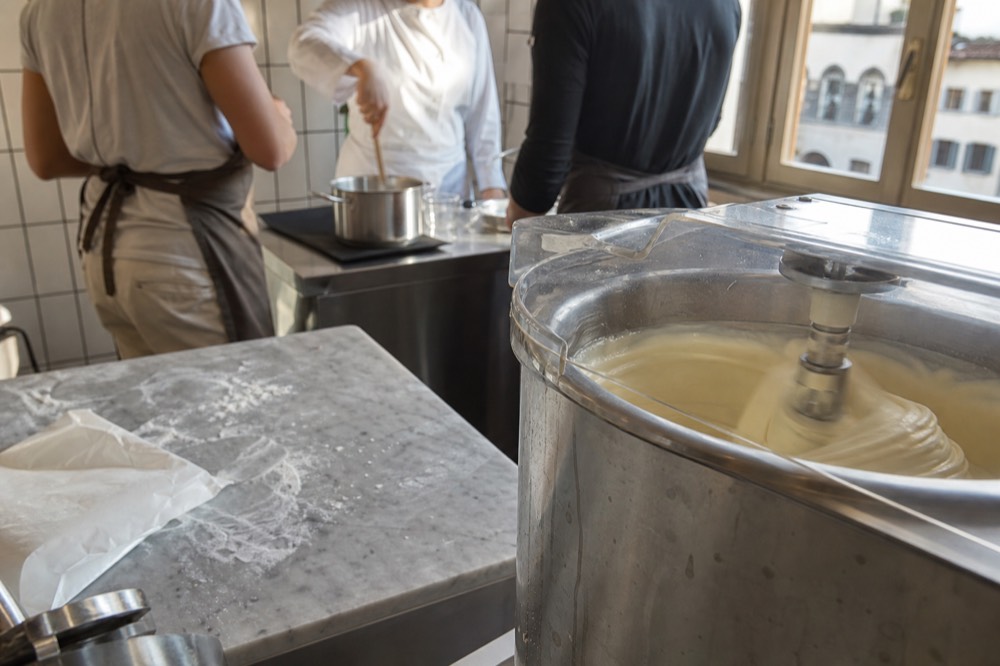
The most practical takeaway from a class is the ability to judge gelato anywhere. Once you have made it yourself, you understand why real pistachio gelato is brown-green, not green, and why a mounded display is a warning sign. The class also covers the history of gelato in Florence, from the Medici court to the modern gelateria. The instructor will also explain the difference between gelato and sorbetto, and how fruit sorbets achieve creaminess without dairy.
This class is capped at six participants, so you get hands-on attention from the instructor. you make a flavour from scratch, practise scooping and taste your gelato.
How to avoid tourist-trap gelato in Florence
The simplest rule is to walk away from any gelateria that displays bright green pistachio, open tubs, or mounded gelato. Also avoid shops directly on the main tourist thoroughfares: Via dei Calzaiuoli, Piazza del Duomo, and the immediate area around the Uffizi. The best gelaterie are often a five-minute walk from the crowds, in the Oltrarno, Santa Croce, or San Frediano.
Another red flag is the price. At Vivoli a small cup runs about €2.50 to €5.00, and prices across the city vary widely. If a shop charges significantly more, especially in a prime location, it is likely targeting tourists rather than locals. If it charges significantly less, it may be using lower-quality ingredients. The sweet spot is the middle range, where the price reflects the cost of good ingredients without the tourist markup.
Finally, check the closing day. A gelateria that is open seven days a week, 365 days a year, in a high-rent location, is almost certainly a tourist operation. The best artisanal shops close one day a week, usually Monday or Tuesday, to rest and prepare. That weekly closure is a sign that the gelato is made fresh, not from a central factory. Keep an eye out for shops that post their seasonal hours honestly; those that adjust closures for holidays or deep cleaning are often the ones worth visiting.
Florence gelato questions often center on spotting real gelato, the city's top-rated shops, classic flavors, vegan choices, the difference from ice cream, and local etiquette for enjoying it on the street. The answers below are based on current information (checked September 2026) and the guidance of Italian food authorities like Gambero Rosso.
Common questions about gelato in Florence
How can you tell if gelato is real?
Look for three signs: muted, natural colors (dull pistachio, off-white banana, pale pink strawberry); covered metal tubs rather than open displays; and flat, level gelato rather than mounded peaks. If all three are present, the gelato is likely artisanal.
Which gelateria has won the most awards in Florence?
Gelateria della Passera and I Gelati del Bondi are the only two Florence gelaterie to hold the Gambero Rosso Tre Coni, the highest award in Italian gelato. Della Passera has held it consecutively and was confirmed again in the 2027 guide.
What is the most popular gelato flavor in Florence?
Pistachio, crema, and stracciatella are the classic choices. Seasonal fruit flavors like fragola (strawberry) and melone (melon) are popular in summer. Avoid any shop that does not have pistachio; it is the most reliable quality indicator.
Can you get vegan gelato in Florence?
Yes. Fruit sorbets are naturally vegan, and many gelaterie offer dairy-free chocolate or nut-based flavors. Gelateria dei Neri has a dedicated vegan range, and La Carraia labels its dairy-free options clearly.
What is the difference between gelato and ice cream?
Gelato has less butterfat (4–8% vs. 10–18%), less air (20–30% overrun vs. up to 50%), and is served at a warmer temperature (around -12°C vs. -18°C). This gives it a denser, creamier texture and more intense flavor.
Is it rude to eat gelato while walking in Florence?
No, it is the traditional way to eat it. The city introduced a street-eating ban on Via de' Neri and the Uffizi area in 2018, but its current status is unconfirmed. To be safe, avoid sitting on church steps or monuments while eating.
Choose Your Florence Food Experience
Initial editorial recommendation
Small-Group Gelato Workshop
Make a gelato flavour from scratch, practise scooping and taste your creation. Check your travel date before arranging your other meals.
1 hour. Meet at Gelateria Bondi, Via Nazionale 63R. Normally six participants, with rare exceptions to keep families together. Extra food, transfers and tips excluded. Check minimum adult party on Viator.
Compare The Formats And Adjust Your Choice
Taste independently using the shop guide, learn gelato-making in a workshop, or explore coffee and sweets on a private walk.
Private Coffee And Sweets Walk: Discover coffee, pastries and artisan chocolate, ending with gelato or affogato. 2 hours, English available. All tastings included; hotel pickup excluded. This is a tasting walk, not a Vivoli reservation.
No verified recommendation meets these choices. Adjust the time or experience, or reset. For dietary, age or access requirements, obtain the operator's confirmation before booking.
Choose a date to see Viator's scheduled departures. Availability and final price are confirmed on Viator.