What do you actually cook in a Florence cooking class?
The real menu of a Florence cooking class: fresh egg pasta, a Tuscan main, tiramisu, and the market and farmhouse formats that sit behind the listings.
 By Giulia Conti, Florence Food Tour Specialist and Culinary Guide
What do you actually cook in a Florence cooking class?
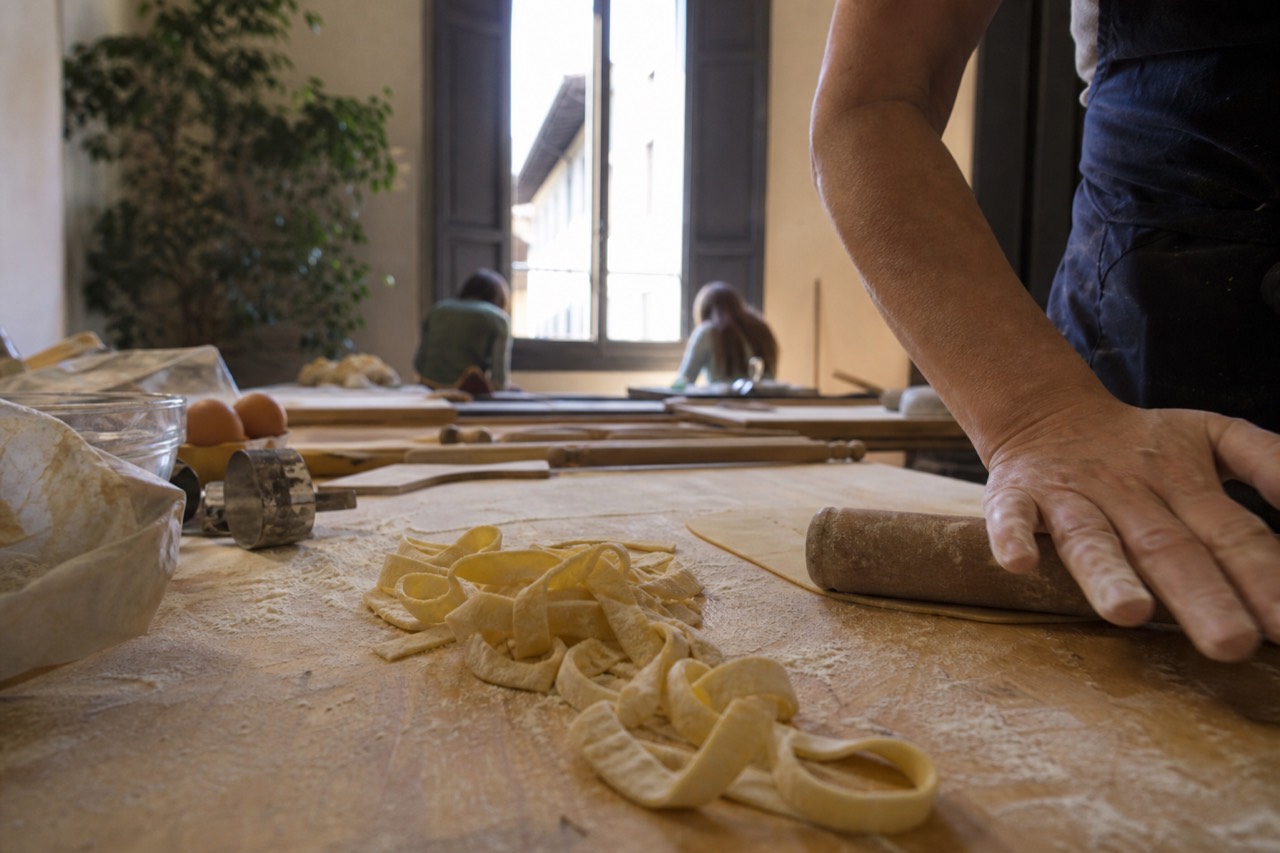
In a typical Florence class you make fresh egg pasta by hand, usually tagliatelle, pici or ravioli, then a Tuscan main such as ragù or a bistecca tasting, and you finish with tiramisu or cantucci. Pizza and gelato classes exist as a separate format. The menu follows Tuscan cuisine rather than a generic Italian script, and that is the whole point.
That is the short version. The longer version is that Florence has built a genuinely consistent class format over the past decade, and the product pages of the classes themselves tell you what it is. Nearly every listing centres on fresh pasta made from scratch, a Tuscan main course, and a dessert, with wine poured while you work. Some classes bolt a market walk onto the front. A smaller set moves the whole thing out to a farmhouse in the Chianti hills with transport included.
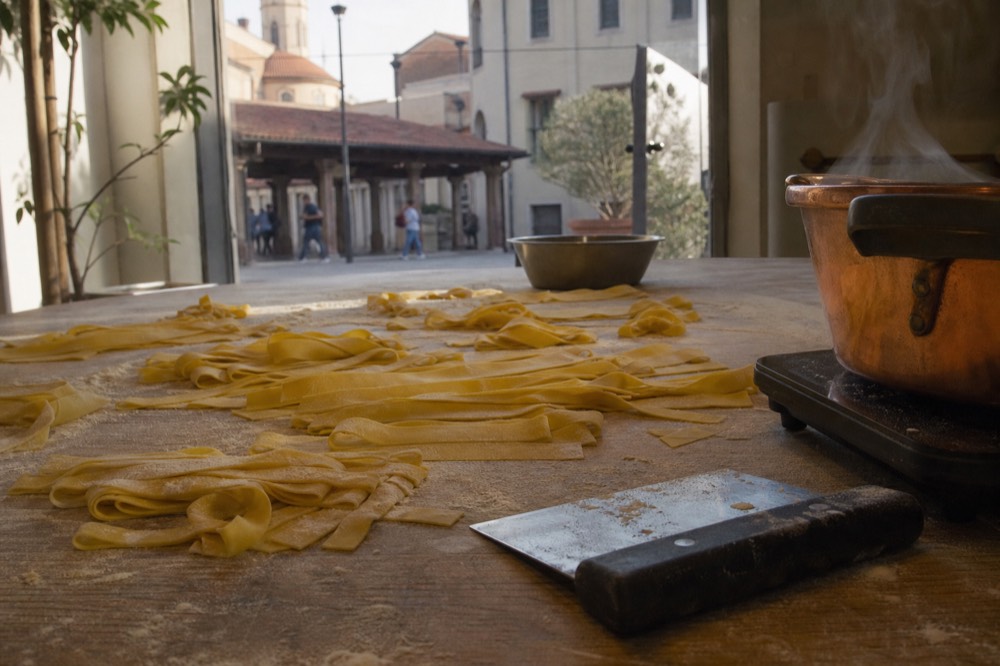
What you will not find, if you read the listings carefully, is much overlap with the Roman canon. No carbonara, no cacio e pepe, no amatriciana. That is not a coincidence and it is not an oversight. The repertoire follows the region, which in Florence means egg pasta, hearty vegetable cooking, steak and simple desserts. A fuller walk-through of the formats and operators is in our Florence cooking classes guide, and the question of whether the whole thing justifies its price is covered separately in are cooking classes in Florence worth it.
The rest of this page goes dish by dish, format by format, using only what the class listings and verified Florence sources actually say.
Which pasta shapes do Florence classes teach?
Fresh pasta is the core of nearly every Florence class: tagliatelle, pici and ravioli are the shapes taught most often, because they need nothing more than flour, eggs and a rolling pin, and they carry Tuscan sauces well. Some classes add lasagna sheets or potato gnudi. Dried pasta dishes like carbonara belong to a Roman repertoire, and no Florence class in the listings teaches them.
The reasoning is practical as much as cultural. Egg pasta dough is forgiving. A beginner with no kitchen experience can knead it, roll it and cut it inside an hour, and the result is impressive enough to feel like an achievement. That makes it ideal teaching material for a three-hour class where most participants have never made pasta before.
Tagliatelle is the most common shape because it is the fastest to teach: roll the sheet, cut the ribbons, done. Pici, the hand-rolled thick spaghetti of southern Tuscany, appears in classes that lean into the rustic side of the repertoire, and it is arguably the better spectacle because every strand is rolled under the palm of the hand. Ravioli show up where the class wants a filling step, usually ricotta and spinach or a meat ragù.
| Dish | What it is | Where it appears |
|---|---|---|
| Tagliatelle | Rolled and cut egg pasta ribbons | The default in most classes |
| Pici | Thick hand-rolled spaghetti, no egg | Rustic and Tuscan-themed classes |
| Ravioli | Filled pasta, often ricotta and spinach | Classes with a filling and shaping step |
| Lasagna | Layered pasta sheets with ragù and béchamel | The alternative menu in split-format classes |
| Gnudi | Ricotta and spinach dumplings | Occasional, in farmhouse-format classes |
Lasagna deserves a note, because several Florence listings offer it as an either-or menu: pasta or lasagna, sometimes with tiramisu and a market walk attached. The lasagna version takes longer to assemble but less knife skill, which is why some operators run it as the family-friendly branch of the same class.
Do Florence cooking classes include a market visit?
Some classes pair the cooking with a guided walk through Mercato Centrale or the Sant'Ambrogio market, usually in the morning, shopping for ingredients before the lesson starts. Others go straight to the kitchen. The reviewed market, lasagna and tiramisu option runs five hours; its pasta-only alternative runs three, and it is the format to pick if shopping is half the fun for you.
The market walk is not a gimmick bolted onto the listing. It changes what the class is. You see the produce stalls, the butchers and the cheese counters, the instructor buys what you will cook, and the lesson starts from raw market ingredients rather than pre-portioned trays. For visitors who also want to understand how Florentines shop, it is the more complete experience, and the extra hour is real teaching time, not transit.
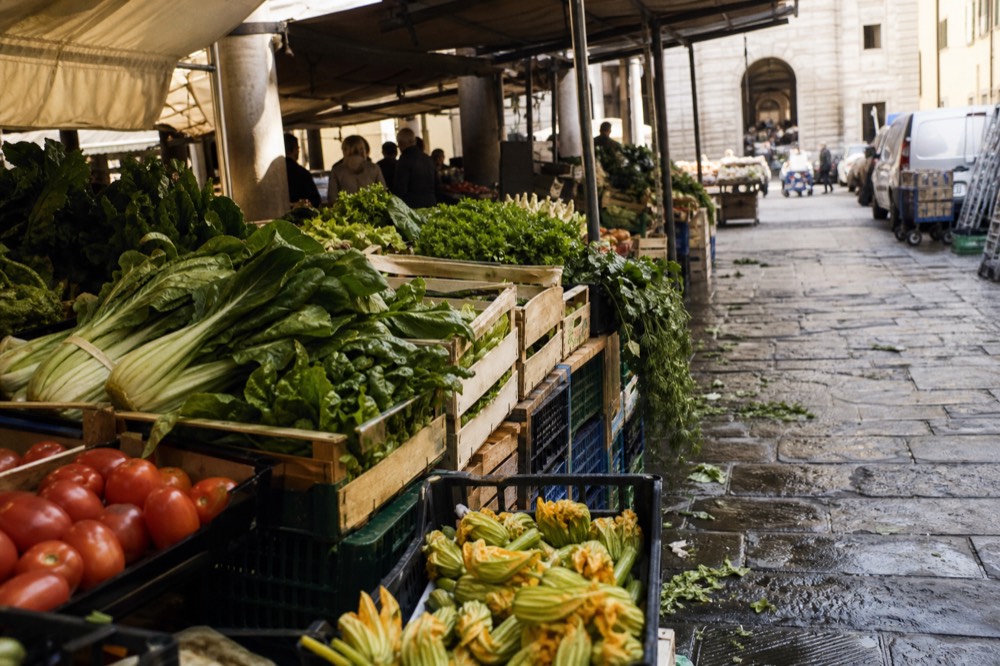
One planning detail matters more than people expect: the two markets run on different clocks. The Mercato Centrale food hall upstairs is open every day from 09:00 to 23:00, but the traditional ground-floor market below it is a morning operation, Monday to Friday 07:00 to 15:00 and Saturday 07:00 to 17:00, closed on Sundays. These ground-floor hours come from the traders' own site and may vary slightly. Sant'Ambrogio is a neighbourhood market in the same rhythm. This is why almost every market-tour class on the roster is a morning class: the afternoon versions would be walking through a market that has already packed up.
What is the Chianti farmhouse cooking class format?
A second Florence format moves the class out to a farmhouse or agriturismo in the Chianti hills, with transport included: the same repertoire of fresh pasta and a Tuscan main, but cooked in the countryside with wine from the surrounding estate. It costs more and takes longer. The city kitchen class and the farmhouse class are the two real formats on offer, and the choice between them is a choice of setting.
The farmhouse version is the one thing that genuinely distinguishes Florence's class scene from other Italian cities, and the evidence supports saying exactly that and nothing more. The dishes are the same dishes. What changes is the frame: a Tuscan country kitchen, an estate's own wine, and a drive through the hills to get there. Rome's classes are overwhelmingly city-centre studios; Florence has a real rural branch to its offering because Chianti is on the doorstep.
Getting there under your own steam is possible but limited, and it is worth knowing before you book anything. The core Chianti towns have no railway at all. Autolinee Toscane's 365 bus reaches Greve in Chianti in about 1 hour 10 minutes from Florence, per Florence Tourism, with reduced or absent weekend service, and no Chianti estate could be documented as within walking distance of a bus stop. The classes that include transport are not a luxury in this case, they are the practical route.
How long is a Florence cooking class and what does it cost?
Most Florence classes run about three hours and cost from $44 to $89 per person (checked September 2026) depending on format and inclusions, with market-tour versions and specialty classes at the higher end of that band. Wine is poured throughout, and most listings describe it as unlimited. Prices are per person and move with the season, so treat the band as a planning range and confirm on the live listing.
The cheapest real class on the site is the pasta class with unlimited wine at $44 per person, with the standard pasta-plus-tiramisu format at $49 and the pasta-or-lasagna-with-market-tour format at $56.02. The pizza and gelato class runs $89. The longer market-tour formats fill the middle of the band. The table below shows the current roster figures.
| Class format | Length | Rating and reviews | From, per person |
|---|---|---|---|
| Pasta class with unlimited wine | ~3 hours | 4.9, 15,180 reviews (checked September 2026) | $44 |
| Pasta and tiramisu class | ~3 hours | 4.9, 8,316 reviews | $49 |
| Pasta, lasagna or market tour class | ~3 hours | 5, 886 reviews (checked September 2026) | $56.02 |
| Market tour and cooking class | ~4 hours | 4.9, 425 reviews | $55 |
| Pizza making with gelato and wine | ~3 hours | 4.9, 1,377 reviews | $89 |
All figures checked September 2026. Two booking realities are worth acting on. Several of the most-booked listings carry a "Likely to sell out" badge on the operator's listing, and one market-tour listing pairs Sant'Ambrogio stalls with a local chef, which is the same lead time a good Florence restaurant table needs. Also, do not assume August is the crunch month. The city's own tourism data shows April and May were the heaviest months for overnight stays in 2025, with more than 4 million arrivals and 9.7 million stays in the first ten months of 2025, per the Comune di Firenze release. Spring classes fill first.
If the classic format is what you want, the Florence Pasta Making Class or Lasagna, Tiramisu & Market Tour offers a three-hour pasta lesson or a five-hour market, lasagna and tiramisu option, rated 5 stars across 886 reviews, from $56.02 per person (checked September 2026) (see Michelin Stars in Florence).
Do you cook dessert too: tiramisu, cantucci and gelato?
Yes, almost every Florence class ends with dessert, and tiramisu is the default: you whip the cream, soak the savoiardi, assemble the layers and eat the result before you leave. Cantucci with Vin Santo appear in some Tuscan-themed classes, and gelato-making exists as its own one-hour format aimed at families. Dessert is part of the class, not an add-on.
Tiramisu works as a teaching dessert for the same reason tagliatelle works as a teaching pasta: no oven, no pastry technique, and a result that tastes far better than the effort suggests. It is also the dish most participants actually make again at home, which is presumably why it has become the standard closing act across so many listings.
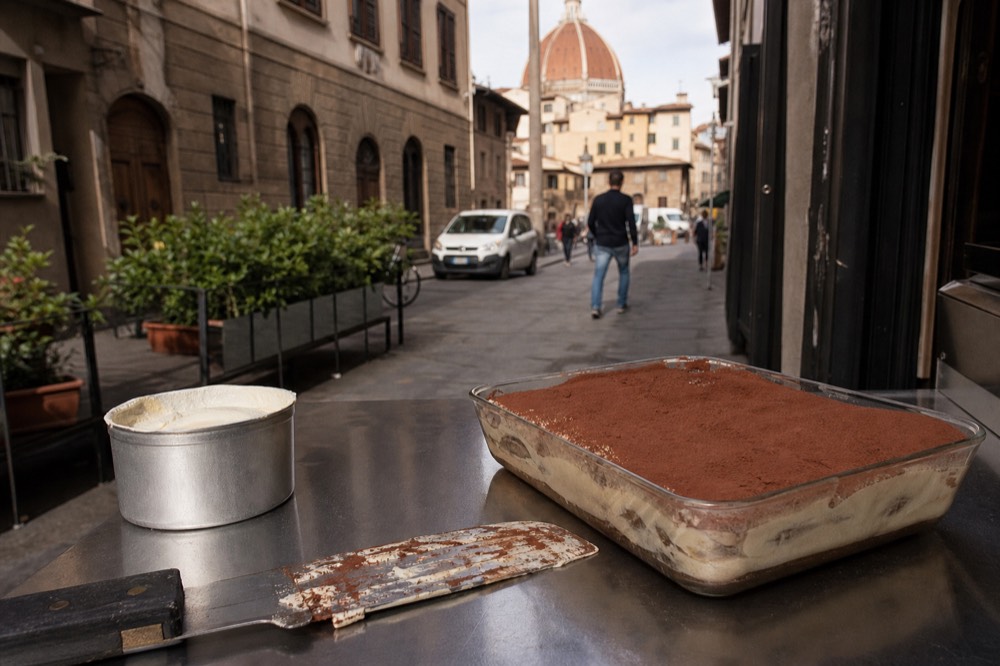
Cantucci, the twice-baked almond biscuits of Tuscany, show up less often, usually in classes that lean on the farmhouse format where the biscuits and the Vin Santo to dunk them in both make sense. If the dessert matters to you as much as the pasta, check the listing's menu section before booking, because it is the one part of the repertoire that genuinely varies between operators.
Is a Florence cooking class worth it for a non-cook?
For a non-cook, yes, because the class is built around dishes that forgive beginners: egg pasta needs flour, eggs and patience, tiramisu needs no oven, and the instructor handles the knife work. Ratings across the roster sit between 4.7 and 5 stars across thousands of reviews. You leave with a recipe, a full meal and wine, not a certificate.
The format is designed for people who cannot cook, which is worth stating plainly because nervous participants often assume the opposite. Nobody is handed a whole fish or asked to time a steak to the degree. The hard steps, the sauce reductions and any carving, are done by the instructor or prepped in advance. Your job is the kneading, the rolling, the cutting and the eating, in that order.
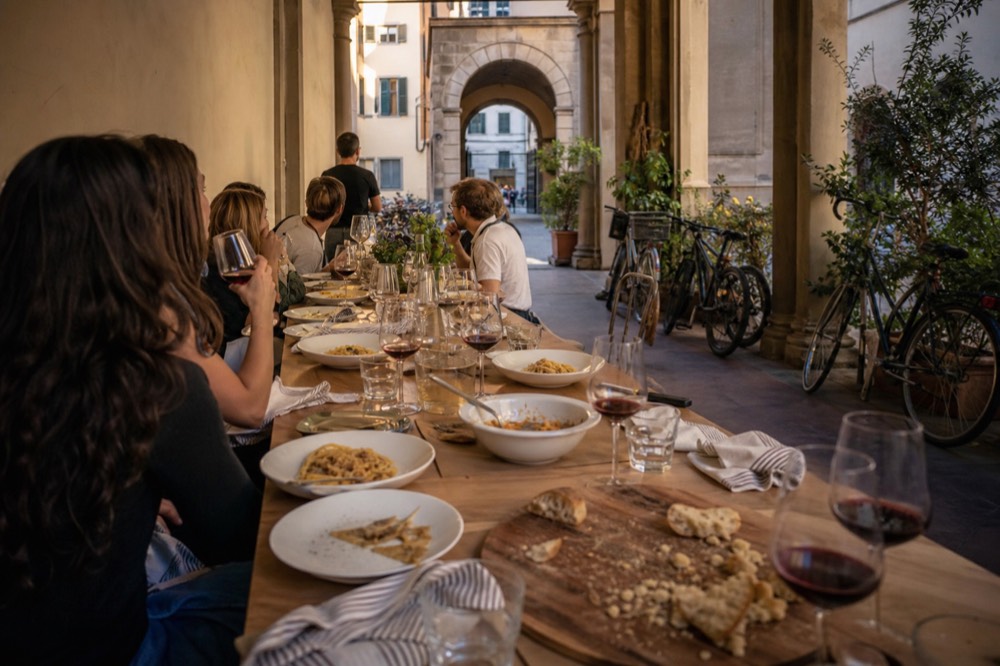
The eating is not an afterthought either. The class ends with the group sitting down to the meal it has cooked, with the wine that has been flowing since the first kneading. In practice this is the part people remember, and it is why the three-hour format feels short rather than long. If you want the fuller verdict on value, the worth-it question has its own page, and the site behind it, Best Restaurants in Florence, exists to answer exactly this kind of question with sourced facts rather than listicle lore.
One last practical note: book the class for an evening slot and you have solved dinner. Florentine restaurants do not fill until after 20:00, and dinner service generally starts between 19:30 and 20:00, so a class that eats at 20:30 slots neatly into the city's real rhythm instead of fighting it.
These are the questions readers ask most often about the dishes, the formats and the practical details of a Florence cooking class, answered from the class listings and verified Florence sources rather than listicle repetition. Each answer keeps to what the evidence supports.
Common questions about cooking classes in Florence
What do you actually cook in a Florence cooking class?
Fresh egg pasta, usually tagliatelle, pici or ravioli, a Tuscan main such as ragù or a bistecca tasting, and tiramisu for dessert, with wine served throughout. Pizza and gelato classes follow a separate menu. The repertoire is Tuscan, not a generic Italian one.
Do Florence cooking classes include wine?
Yes, in nearly all cases, and most listings describe it as unlimited while you cook and eat. The pasta class with unlimited wine starts from $44 per person (checked September 2026). Confirm the exact pour on the operator's live listing.
Can children join a Florence cooking class?
Most pasta and tiramisu classes welcome children, and the gelato small-group class, capped at six people and about an hour long, is built with families in mind. Pizza and gelato formats are the other family-safe option. Check the listing's age policy before booking.
Is the market tour version worth the extra hour?
If you enjoy food shopping, yes. The reviewed market, lasagna and tiramisu option runs five hours, while the pasta option runs three and starts from the raw ingredients you buy together at Mercato Centrale or Sant'Ambrogio. Book a morning slot, because the traditional market stalls close in the mid-afternoon and are shut on Sundays.
Do you eat what you cook?
Yes. The class ends with the group eating the full meal it has prepared, dessert included, with wine. This is standard across the roster and is effectively your dinner for the evening.
Choose Your Florence Food Experience
Initial editorial recommendation
Pasta Or Lasagna Cooking Class
Make fresh pasta, or choose the longer market, lasagna and tiramisu option; then eat what you prepared. Check your travel date before arranging your other meals.
Pasta option: 3 hours. Market, lasagna and tiramisu: 5 hours. English instruction, meal and equipment included. Market closed Sundays; not suitable for coeliac guests.
Compare The Formats And Adjust Your Choice
Choose the dishes first: pasta, pizza, steak and farmhouse classes teach different menus. Market visits are option- and day-dependent.
Pizza Class With Gelato And Wine: Make your own pizza and watch an artisan gelato demonstration, then enjoy pizza and unlimited gelato. 3 hours, English, maximum twenty. Via Panicale 43R, arrive 15 minutes early. Wine for adults, soft drinks for children. Children need an adult; not suitable for coeliac guests.
Tuscan Farmhouse Cooking Day: Cook pasta and tiramisu at a countryside farmhouse, with a meal, wine and transport from Florence. About 5 hours; confirm the selected market option and total duration. English. Meet by Santa Maria Novella taxi stand; return near Santa Croce. Ages 8+. Alternative diets and walking impairments cannot be accommodated.
Florentine Steak Masterclass: Learn Florentine steak technique with a chef, then share the steak with wine over lunch or dinner. 4 hours, English guide. One kilogram of steak per two people, equipment and wine included. Market visit only on morning departures, except Sundays and bank holidays.
No verified recommendation meets these choices. Adjust the time or experience, or reset. For dietary, age or access requirements, obtain the operator's confirmation before booking.
Choose a date to see Viator's scheduled departures. Availability and final price are confirmed on Viator.