Are cooking classes in Florence worth it?
An honest verdict on whether a Florence cooking class deserves a slot in your trip, with real prices, what you actually cook, and when to skip one.
 By Giulia Conti, Florence Food Tour Specialist and Culinary Guide
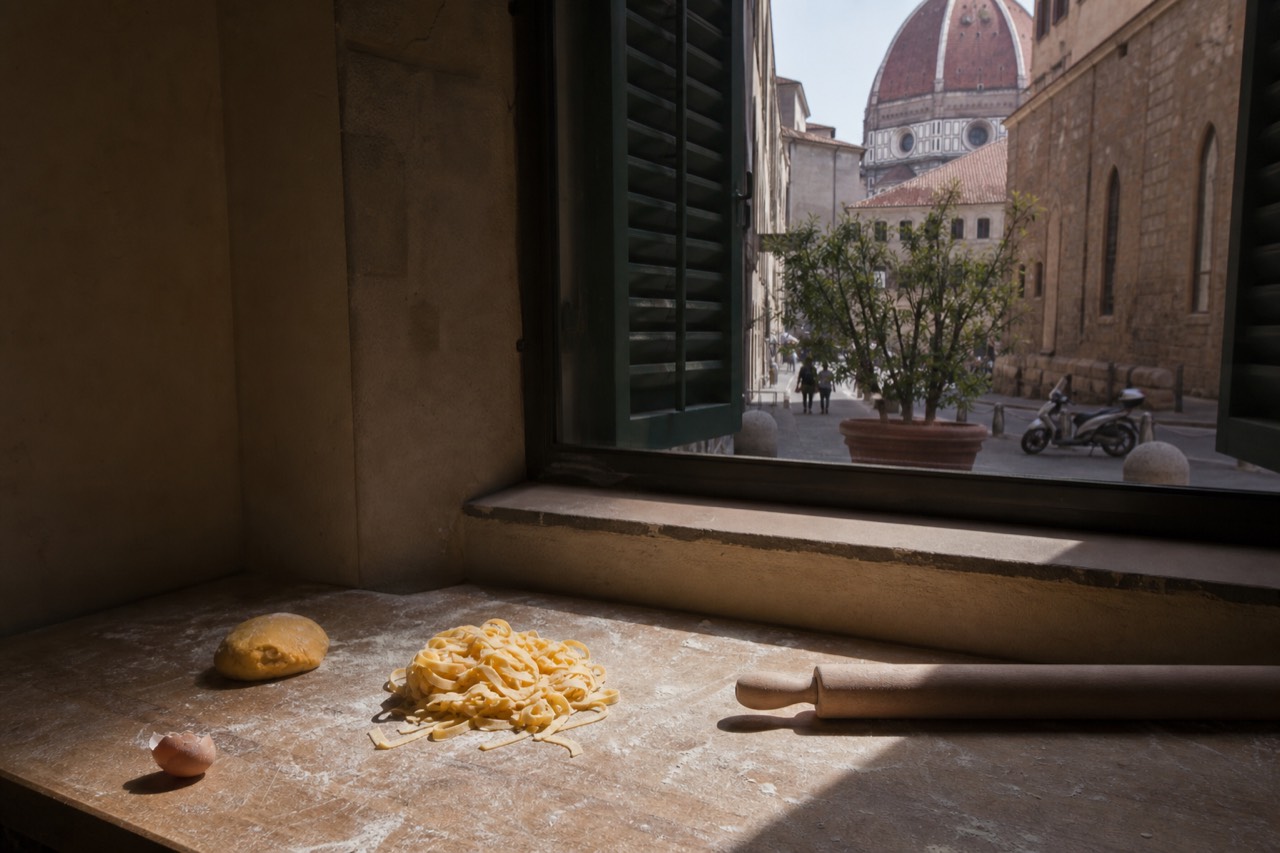
Yes, for most travellers a Florence cooking class is worth the money and the evening, because the city's best classes cost from $44 to $55 per person (checked September 2026), run about three hours, and send you home with a skill you will use again. The honest exception: if you have one single night in Florence, a proper trattoria dinner with bistecca alla fiorentina is the rarer experience, and the class can wait for your next visit.
That is the short version. The longer version depends on what kind of trip you are building, how many nights you have, and whether you would rather eat a meal or learn to make one. This page works through the real numbers, the real formats, and the one scenario where the honest answer flips to no.
Florence is a strong pick for a pasta-and-wine cooking class. The format here is unusually generous: most classes include unlimited wine during the session, the repertoire is the Tuscan canon of fresh pasta, and the price floor is lower than almost anywhere else in the country. The cheapest real experience on this site's whole roster is a pasta class at $44 per person (checked September 2026), which is less than many sit-down dinners in the historic centre.
There is a counter-argument worth taking seriously, and it is not the price. It is the opportunity cost. A class occupies a three-hour block, usually in the evening, and evenings in Florence are finite. If your trip is two nights long, spending one of them rolling dough means not spending it at Trattoria Sostanza or Osteria Vini e Vecchi Sapori. That trade is not always worth making, and the section on when to skip a class below spells out exactly when it is not.
For everyone else, the class is one of the highest-value things you can book in this city. Here are the three formats that cover most travellers, from the budget pasta evening to the market-included morning.
What does a Florence cooking class actually cost?
Real prices in 2026 run from $44 (checked September 2026) to about $164 per person depending on format: a basic pasta-and-wine evening sits at $44 to $49, a pizza-and-gelato class around $89, and the premium steak-focused experiences climb to $164.18. Duration varies: short gelato sessions take about an hour, while market-and-cooking options can take five, so what you are really paying for is the menu and the group size.
The price ladder is easy to read once you see it laid out. The floor is the plain pasta class, which teaches fresh dough, a sauce, and pours house wine without limit while you work. The mid-band adds a second dish, usually tiramisu, or a market visit before the cooking starts. The top band is the specialist class: Florentine steak, small-group sessions, a chef walking you through the bistecca rather than the pasta.
| Class format | Typical price (checked September 2026) | Length | What you get |
|---|---|---|---|
| Pasta class with unlimited wine | from $44 per person | ~3 hours | Fresh pasta, a sauce, unlimited wine |
| Pasta and tiramisu class | from $49 per person | ~3 hours | Pasta plus tiramisu, unlimited wine |
| Market tour plus cooking class | from $55 per person (checked September 2026) | ~4 hours | Market shopping, then lasagna or fresh pasta |
| Pizza and gelato class | from $89 per person | ~3 hours | Pizza dough, unlimited gelato, wine |
| Florentine steak masterclass | from $164.18 per person | ~4 hours | Bistecca technique, small group |
Two things stand out in that table. First, the gap between the cheapest and second-cheapest option is five dollars, so the tiramisu add-on is close to free. Second, the market-tour format is only about eleven dollars more than the plain class and gives you an extra hour, which makes it the best value-per-hour on the list if your morning is free.
Here are the three formats that cover most travellers, from the budget pasta evening to the market-included morning.
When is a cooking class the wrong choice?
Skip the class if you have only one or two nights in Florence, if your priority is eating the city's signature dishes rather than cooking them, or if your group contains someone who genuinely does not want to be there. A class is a three-hour commitment of your evening, and on a short trip that block competes directly with the best restaurant meal you will ever have in Tuscany.
The honest no is the short-trip scenario. Say you have one evening. You could spend it making pici by hand, which is genuinely fun, or you could spend it at a trattoria eating bistecca alla fiorentina, which is a dish you cannot replicate at home in most of the world because the cut, the breed and the charcoal grill are all local facts. The steak is roughly a kilo of Chianina-lineage beef, cut three to four fingers thick, priced by weight at around EUR 40 to 60 per kilo in many Florentine restaurants, with historic-centre spots often charging more (checked September 2026). One steak feeds two people. You will not learn to make it in a three-hour class, and you cannot order it in most cities back home.
That is the trade in its plainest form: the class teaches you something portable, the dinner gives you something unrepeatable. On a one-night trip, take the unrepeatable thing. On a three-night trip, you have room for both, and the question dissolves.
The second honest no is the reluctant participant. A cooking class is participatory. Someone who wanted a museum evening will spend three hours being talked through flour ratios, and the wine helps but does not fix it. If half your party wants the class and half does not, the half that does not will be visible in every group photo.
The third is subtler: the class is an indoor, seated, structured activity. If your trip is in late spring, when the city's own figures say the crowds peak, and you have a rooftop aperitivo or an Oltrarno evening on your list, weigh the class against those. Florence evenings are the product. Spend them deliberately.
What do you actually make in a Florence cooking class?
The core of almost every Florence class is fresh egg pasta: you mix, knead and roll the dough, then shape it by hand into tagliatelle, pici or ravioli, and finish with a simple Tuscan sauce. Beyond that the menu branches: tiramisu in the dessert classes, pizza and gelato in the family classes, and bistecca technique in the small premium sessions.
The repertoire is regional, which sounds obvious until you see it in practice. A Florence class is not a generic Italian pasta course. The sauces lean Tuscan, the dessert is tiramisu or cantucci, and the market-included formats take you through the San Lorenzo or Sant'Ambrogio stalls first so you shop like a Florentine before you cook like one. The full breakdown of dishes, kitchen by kitchen, is in our guide to what you actually cook in a Florence class, which is the companion piece to this verdict.
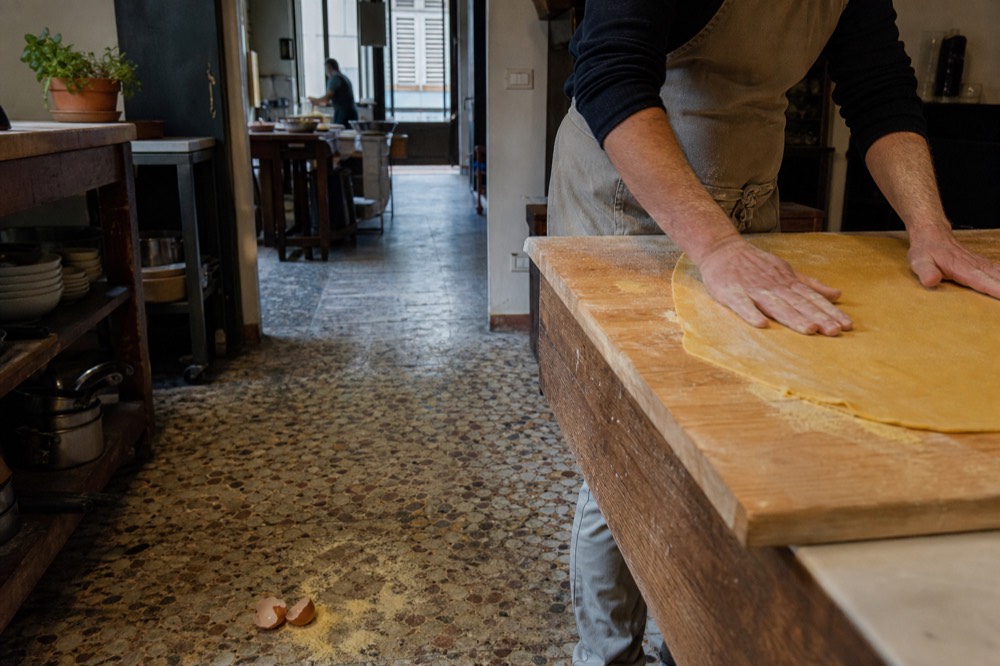
What surprises most first-timers is how much of the three hours is the pasta itself. Kneading and resting the dough takes real time, and the shaping is the whole point: pici are rolled by hand into thick irregular strands, tagliatelle are cut from a rolled sheet, ravioli are filled and crimped one by one. You are not watching a demonstration. You are doing it, and the instructor's job is to fix your mistakes as they happen.
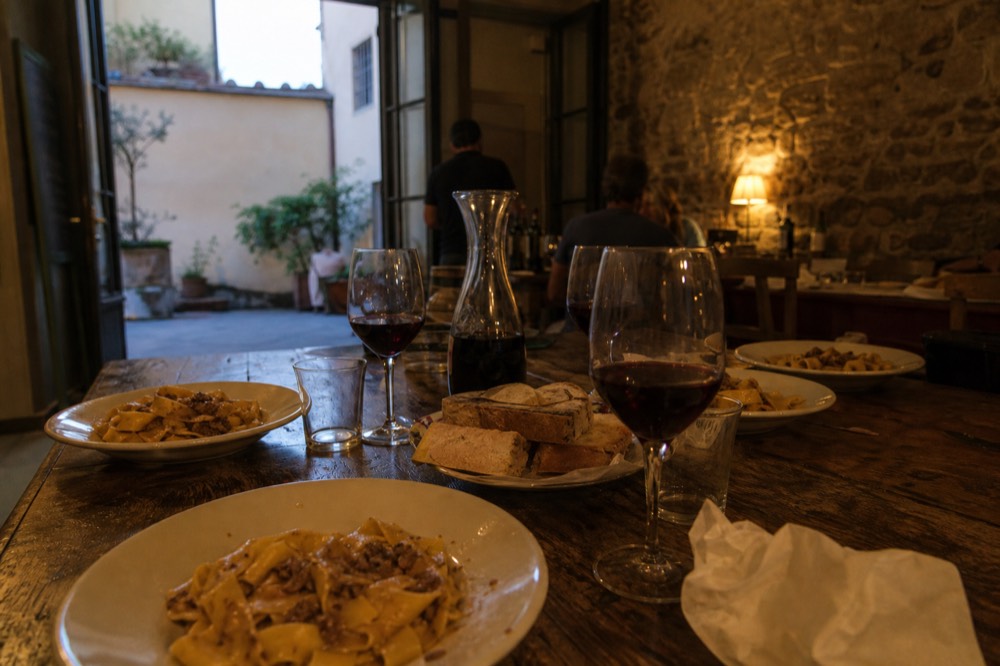
The eating is the last forty minutes. Everything you made arrives at the table, usually with more wine, and the class becomes a dinner. This is why the value calculation works: the $44 (checked September 2026) class fee is effectively dinner plus tuition plus drinks, which is why the review counts on the top listings run into five figures.
How do you pick the right class for your trip?
Pick by group size and menu, not by price: the popular classes cluster close enough in cost that the real differences are whether tiramisu is included, whether a market walk precedes the cooking, and whether the session caps attendance. Families should lean pizza-and-gelato, food obsessives should lean the small-cap steak class, and everyone else should default to a pasta class.
Start with the honest default. For a first visit with no strong feelings either way, the plain pasta class with unlimited wine is the correct pick: a hands-on pasta lesson lasting about two to two-and-a-half hours, with techniques you can practise again at home. Fresh pasta needs no machine, no exotic ingredients and no Tuscan stove, which is more than can be said for most of what you will eat in restaurants here.
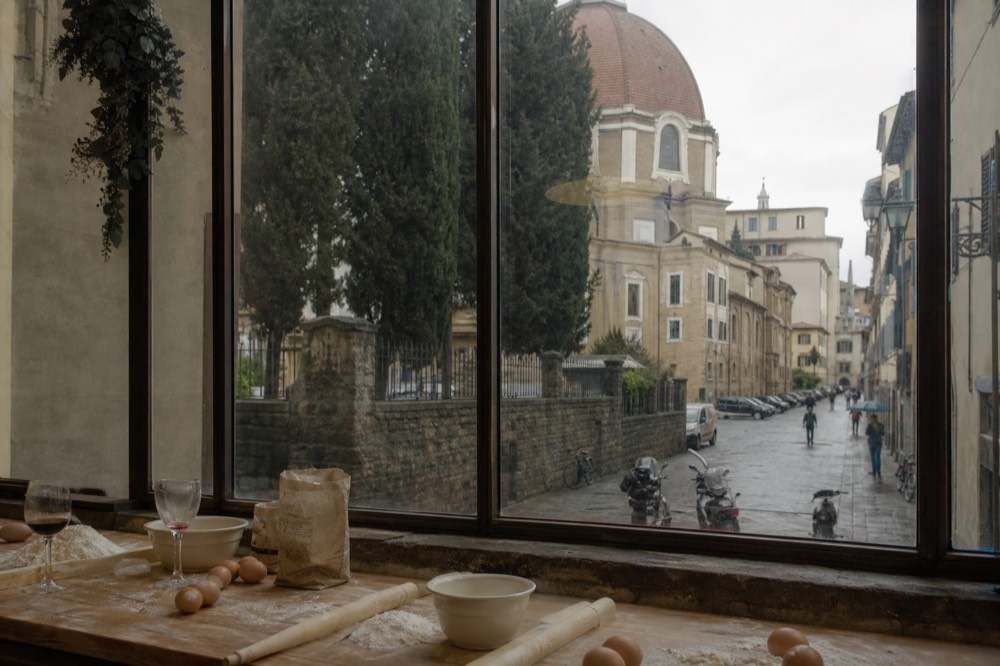
So is it worth it? The final verdict
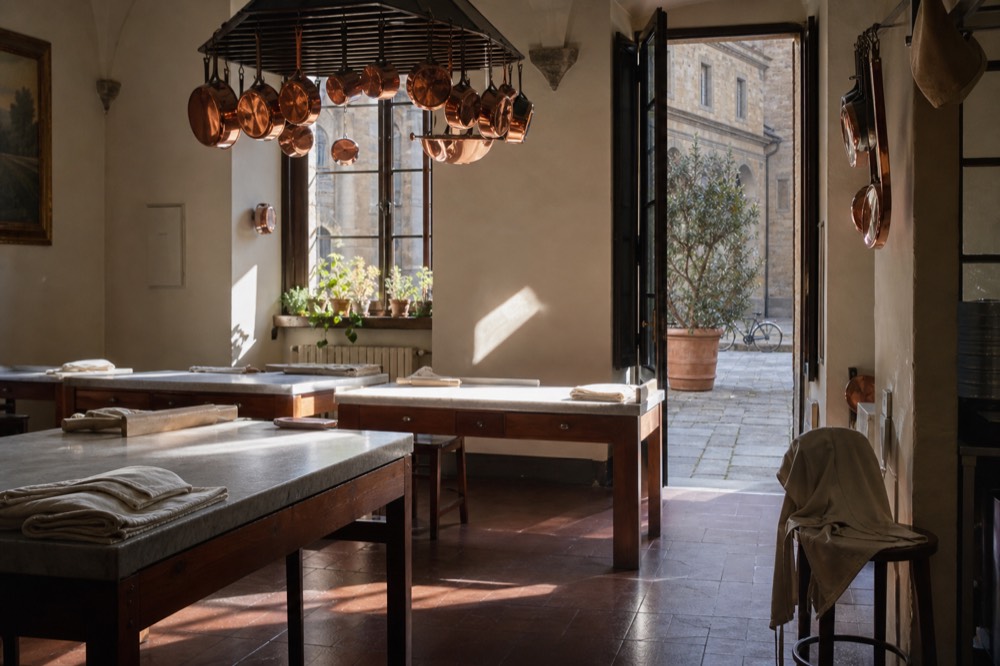
Worth it: yes, for any trip of three nights or more, for families, for anyone who cooks at home, and for anyone who wants a structured social evening that ends in dinner. Not worth it: on a one-night trip where the bistecca competes for the same hours, or for a group where half the table would rather be somewhere else. The price floor of $44 makes the downside small; the three-hour block makes the trade real. (checked September 2026)
The verdict really does come down to that arithmetic. A class costs about what a mid-range dinner costs, delivers a dinner, and leaves you with a skill. The cost is not money, it is an evening. On a long trip, evenings are cheap. On a short one, they are the whole currency of the visit, and a single evening spent cooking is an evening not spent at the places that made you come to Florence in the first place.
Our own recommendation, for what it is worth as the publisher of Best Restaurants in Florence: if this is your first visit, book the pasta class for your second or third evening and keep your first night for a proper trattoria. You will eat better on night one and cook better on night two, and the two experiences will explain each other. The comparison of every class format side by side, including the ones we did not have room for here, is in our Florence cooking classes guide, and the wider question of how food experiences fit into a Florence trip is covered in our Florence food tours guide.
Whatever you decide, decide before you arrive. The classes that are worth it are the same classes everyone else has found, and the spring peak is real.
A Florence cooking class costs from $44 per person (checked September 2026), runs about three hours, includes unlimited wine at the budget end, and finishes with you eating everything you made, so for most travellers the answer is yes. The exceptions are short trips, where the class competes with a once-in-a-trip restaurant dinner, and reluctant participants who would rather be elsewhere for the evening.
Common questions about cooking classes in Florence
Are cooking classes in Florence worth it?
For most travellers, yes. Classes start from $44 per person (checked September 2026), run about three hours, include unlimited wine at the budget end, and end with you eating what you made. The exception is a one-night trip: if you have a single evening, spend it on a restaurant meal, ideally a bistecca, and save the class for a longer visit.
How much do Florence cooking classes cost?
From $44 per person for a pasta class with unlimited wine, up to $164.18 for a premium Florentine steak masterclass (checked September 2026). The most popular formats cluster between $44 and $55, and almost all run about three hours.
What do you cook in a Florence class?
Fresh egg pasta is the core: tagliatelle, pici or ravioli, made by hand from dough, plus a simple Tuscan sauce. Depending on the class you may also make tiramisu, pizza and gelato, or work through Florentine steak technique in a small group.
Do Florence cooking classes include dinner?
Yes. The standard format is roughly two hours of cooking followed by eating everything you made, with wine served throughout. The class fee effectively covers tuition plus a full meal plus drinks.
Should I book a cooking class before my trip?
Yes, especially for April and May, which the city's own tourism data names as its busiest months for overnight stays. The popular pasta classes carry "Likely to sell out" badges on their listings, and the small-cap classes, like the eight-person steak masterclass, fill first.
Choose Your Florence Food Experience
Initial editorial recommendation
Pasta Or Lasagna Cooking Class
Make fresh pasta, or choose the longer market, lasagna and tiramisu option; then eat what you prepared. Check your travel date before arranging your other meals.
Pasta option: 3 hours. Market, lasagna and tiramisu: 5 hours. English instruction, meal and equipment included. Market closed Sundays; not suitable for coeliac guests.
Compare The Formats And Adjust Your Choice
Choose a class for the cooking skill and included meal. Compare the total cost with the dinner you would otherwise buy.
Pizza Class With Gelato And Wine: Make your own pizza and watch an artisan gelato demonstration, then enjoy pizza and unlimited gelato. 3 hours, English, maximum twenty. Via Panicale 43R, arrive 15 minutes early. Wine for adults, soft drinks for children. Children need an adult; not suitable for coeliac guests.
Tuscan Farmhouse Cooking Day: Cook pasta and tiramisu at a countryside farmhouse, with a meal, wine and transport from Florence. About 5 hours; confirm the selected market option and total duration. English. Meet by Santa Maria Novella taxi stand; return near Santa Croce. Ages 8+. Alternative diets and walking impairments cannot be accommodated.
No verified recommendation meets these choices. Adjust the time or experience, or reset. For dietary, age or access requirements, obtain the operator's confirmation before booking.
Choose a date to see Viator's scheduled departures. Availability and final price are confirmed on Viator.