What is coperto in Italian restaurants?
The coperto explained: what the cover charge on your Italian bill actually is, whether it is legal, what it costs in Florence, and how it differs from a tip or a servizio charge.
 By Giulia Conti, Florence Food Tour Specialist and Culinary Guide
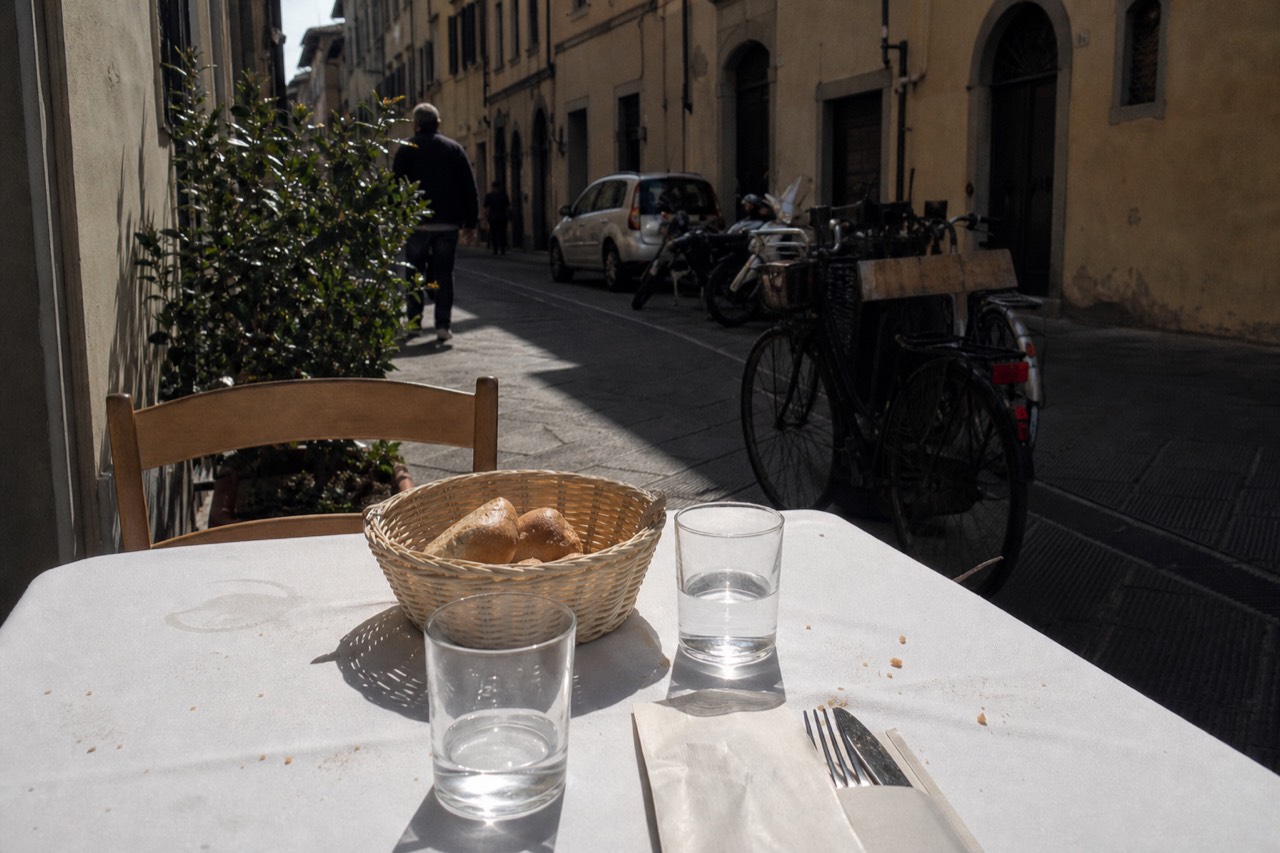
What is coperto in Italian restaurants?
The coperto is a per-person cover charge that Italian restaurants add to the bill for bread, cutlery, table linen and the table itself, and it is legal across almost all of Italy. It is not a tip and it is not a service charge. National law requires it to be shown on the menu or price list before you order, so a coperto that appears on the bill unannounced is a charge you can legitimately question.
It is the line on the bill that catches most first-time visitors off guard. You sit down, you eat, the bill arrives, and there it is: a euro or three per person for something you did not consciously order. The word itself comes from "coprire," to cover, and what it covers is the cost of setting and occupying a table. The bread basket, the paper or cloth placemat, the cutlery you used, the glassware: all of that has a cost, and Italian restaurants, unlike restaurants in the United States, are allowed to itemise it separately rather than fold it into menu prices.
The charge is usually small. Across most of Italy it runs about EUR 1 to 3 per person, rising to around EUR 5 in smarter places, and in heavily touristed areas including Florence it can climb higher. It is charged per person, not per table, so a family of four pays it four times. That is the arithmetic that turns a two-euro line item into eight euros and turns a pleasant surprise-free meal into a conversation at the table.
The important thing to understand is that it is not discretionary and it is not a judgement on you. The waiter is not adding it because you looked like a tourist. Every table in the room pays it, including the Florentine family at the corner table who eat there every Sunday. It is simply how the Italian restaurant industry prices the table.
Is the coperto legal in Italy?
Yes, the coperto is legal nationally in Italy, and there is no national law banning it. One region, Lazio, outlawed it by regional law 21/2006, so Rome restaurants fold the cost into menu prices instead. Tuscany passed no such law, which is why Florence restaurants charge the coperto openly and routinely, exactly as Italian consumer law allows them to.
The legal position is clearer than most people expect. The coperto sits on solid legal ground nationally, and the transparency rule that governs it goes back decades: the charge must be printed on the menu or the price list before you order. A restaurant cannot spring it on you at the end of the meal and treat it as a term you should have known about. If the menu says nothing about a coperto and the bill carries one, you have a real basis to ask for it to be removed, politely, and restaurants generally do remove it when challenged on those grounds.
The one regional exception is Lazio, which banned the direct coperto with regional law 21 of 29 November 2006. In Rome and the rest of Lazio, restaurants may still recover the same cost, they just have to build it into the prices on the menu rather than list it as a separate line. The practical difference for a diner is small: in Rome you pay it invisibly, in Florence you pay it in daylight. Some travellers prefer the Florence version precisely because you can see what you are paying for. The legal background is documented by Italian food-law reporting on the national position and the Lazio ban.
Tuscany never followed Lazio. So when you eat in Florence, the coperto appears as its own line, per person, on nearly every restaurant bill in the city, from a working-class trattoria near the Mercato Centrale to a smart dining room. It is not a Florence invention, it is not a tourist tax, and arguing with the waiter about it on legal grounds will not get far, because the law is on the restaurant's side here. The only argument that works is the transparency one: if it was not disclosed before you ordered, it should not be on the bill.
Should you worry about it before you book a food experience?
Not really, and here is the honest reassurance: a well-run food tour or a booked experience prices everything up front, so the coperto question answers itself. If you would rather have a full Tuscan meal arranged for you, with the charges already inside the ticket price, this is the tour the site would point you to first:
How much is the coperto in Florence?
No official Florence-specific coperto amount or cap exists, and any page that prints one is inventing it. What the evidence supports is a national band: roughly EUR 1 to 3 per person across Italy, rising toward EUR 5 in more refined places, with tourist-heavy spots tending to sit at the higher end. Check the menu, because the amount is set by each restaurant individually.
This is the part of the topic where the internet is full of confident wrong answers. You will find pages stating a precise "Florence coperto" figure as though the city had published a tariff. It has not. There is no municipal amount, no regional cap, no official schedule. Each restaurant decides its own coperto, prints it, and charges it, subject only to the national rule that it must be disclosed before you order.
What the sourcing does support is a range. Nationally, the charge runs about EUR 1 to 3 per person in ordinary places and up to about EUR 5 in smarter establishments, with heavy tourist areas able to climb higher. Florence sits inside that band, and each restaurant sets its own amount and prints it on the menu. The honest way to plan is to budget one to three euros per person, up to five at nicer places, and read the menu before ordering and then check the actual figure on the menu when you sit down.
| Situation | Typical coperto | What to check |
|---|---|---|
| Ordinary trattoria, anywhere in Italy | About EUR 1-3 per person | The menu's footnotes, before ordering |
| Smarter restaurant anywhere in Italy | Toward EUR 5 per person (checked September 2026) | The price list, sometimes on a separate card |
| Rome or anywhere in Lazio | No separate line, folded into prices | Nothing, the charge is built in |
| Menu says nothing about coperto | Charge should not appear | Question the bill politely if it does |
One instructive example from Florence: Restaurants are required to show the coperto on the menu or price list before you order, but the amount itself varies from place to place, and some menus list the line without printing a figure beside it. The restaurant's own menus therefore tell you the charge exists without telling you what it is on any given day. That is legal, since the amount must be disclosed before you order, but it is a good illustration of why the site's advice is always the same: read the menu before you sit down, not the bill after.
Coperto or servizio: what is the difference?
The coperto is a flat per-person charge for the table, bread and settings. The servizio is a percentage service charge, typically around 10 to 15 percent, calculated on the food and drink. They are different things, they can both appear on a Florence bill, and if a servizio line is present, no further tip is expected on top of it.
The confusion between the two is where most bill-reading arguments start. The coperto is fixed: two people, two charges, regardless of whether you ate a full tasting menu or one plate of pasta. The servizio, where a restaurant applies one, moves with your spend, which means it is the more expensive of the two on a big bill. Some Florence restaurants, especially those facing a tourist clientele, add a servizio line of roughly 10 to 15 percent. Others charge only the coperto. Some charge neither and price accordingly. There is no single city-wide pattern, which is exactly why the menu check matters.
The rule of thumb that keeps it simple: if you see a servizio on the bill, the service is already paid for, and adding a tip on top is genuinely optional. If you see only a coperto, the coperto covers the table, not the service, and a small cash gesture for good service is normal Italian behaviour, though never obligatory. This site keeps the full tipping question on a separate page, because what you give and what they charge are two different questions: see how tipping works in Florence restaurants for that half of the story.
Can you refuse to pay the coperto?
You can refuse it on one narrow ground: if it was never disclosed on the menu or price list before you ordered, the charge is not enforceable and you can ask for it to be removed. If it was disclosed, you cannot refuse it, in Florence or anywhere else in Tuscany, because the charge is legal there and you accepted it by ordering.
The distinction is worth being precise about, because travellers conflate two very different conversations. The first conversation is legitimate: "Your menu does not mention a coperto, so I would like this line removed." That is the transparency rule working as intended, and a restaurant that disclosed nothing has no basis to insist. The second conversation is a losing one: "I do not agree with the coperto as a concept." Tuscany never passed a Lazio-style ban, the charge is legal, and the waiter has neither the power nor the reason to waive it.
In practice, the disclosure rule does most of the consumer protection on its own. Reputable Florence restaurants print the coperto on the menu, often in the small print at the bottom of the page, sometimes on a separate price list. If you want to be certain before committing to a table, ask at the door: "C'è il coperto?" There is no social penalty for the question. It is a normal thing for Italians to ask too, and the answer settles the number before you have ordered anything.
A related habit worth importing: check the whole menu's small print, not just the dishes. Florence's dining scene rewards this generally, not only for the coperto. Bistecca alla fiorentina is priced per kilo, for example, and the per-kilo figure is the difference between a reasonable dinner and an unpleasant surprise, as the site's guide to bistecca in Florence sets out. The coperto is simply the smallest member of a family of charges that Italian menus disclose in fine print, and reading that print is the whole defence.
Does everywhere in Florence charge it?
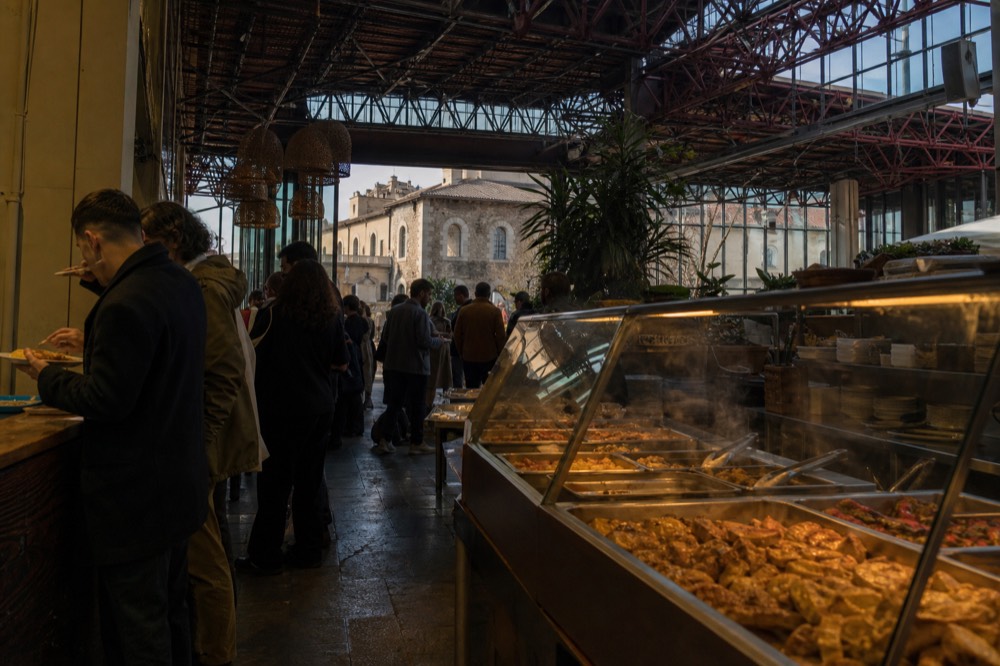
Almost every seated restaurant in Florence charges a coperto, but not every eating situation does. Counter service, market stalls, food-hall counters and takeaway spots generally do not, because you are not occupying a set table. The charge follows the table, so no table usually means no coperto.
This is the practical upside of understanding the charge: once you know it attaches to the table, you can predict where it appears. A stool at Da Nerbone's historic lampredotto counter inside the Mercato Centrale, a schiacciata eaten standing outside All'Antico Vinaio, a slice taken away from a market stall: none of these involve a set table, so none of these carry a coperto. The moment a waiter sets a table for you, brings bread, and seats you, the charge becomes normal.
For budget travellers this is genuinely useful arithmetic. The difference between a seated dinner with a coperto and a counter lunch without one is a few euros per person, which across a three-day trip is a real amount. The site's page on eating cheaply in Florence covers the wider strategy; the coperto rule is one of the simplest levers inside it. Note that the site's publisher, Best Restaurants in Florence, treats the charge as a fact of local dining rather than a defect in it, and the planning advice follows from that stance.
The coperto is a legal, disclosed per-person charge for the table, and almost every question travellers ask about it reduces to one of six practical points: what it is, whether it is a scam, how it interacts with tipping, when it can be challenged, why Rome differs, and where it does not apply at all. The answers below cover each in turn.
Common questions about coperto in Italian restaurants
What is coperto in Italian restaurants?
The coperto is a legal per-person cover charge for bread, table settings and the table itself. It must be shown on the menu or price list before you order. Across most of Italy it typically runs about EUR 1 to 3 per person, up to around EUR 5 at nicer restaurants, and it is not a tip or a service charge.
Is the coperto a tourist scam?
No. It is charged to every table, including locals, and it is legal across Italy except in Lazio, where regional law 21/2006 banned the direct charge. Tourist-facing restaurants may set it higher, but the charge itself is standard Italian restaurant practice, not a scam.
Do you still tip if you paid the coperto?
The coperto covers the table, not the service. If the bill also carries a servizio line of roughly 10 to 15 percent, service is already paid and no further tip is expected. If there is only a coperto, leaving a euro or two in cash for good service is normal but never obligatory.
Can you ask for the coperto to be removed?
Yes, if the menu never disclosed it. The legal requirement is disclosure before you order, so an undisclosed coperto can be challenged politely and removed. A disclosed coperto cannot be refused, because the charge is legal in Tuscany.
Why do restaurants in Rome not charge it?
Lazio, the region containing Rome, banned the direct coperto by regional law in 2006. Restaurants there fold the cost into menu prices instead. Tuscany passed no equivalent ban, so Florence restaurants list it openly as a separate line.
Do you pay the coperto at a market stall or takeaway counter?
Generally no. The charge follows the set table, so counter service, market stalls and takeaway spots usually do not apply it. The moment you are seated at a laid table in a restaurant, expect it to appear.
Choose Your Florence Food Experience
Initial editorial recommendation
Full Tuscan Meal Walk
Eat the equivalent of a full meal across at least four stops, with a local guide explaining the dishes. Check your travel date before arranging your other meals.
3.5 hours, English and Italian. Food, water and at least one alcoholic drink for adults included; gratuities excluded.
Compare The Formats And Adjust Your Choice
Read the restaurant menu for its cover charge. A tour is a separate purchase: compare only its stated inclusions and leave room for optional extras.
Evening Steak And Wine Walk: Combine a walk through Florence with a sit-down Florentine steak dinner and other tastings. 3.5 hours, English guide. Hotel transfers and optional tips excluded. Walking required; dietary needs need advance confirmation.
Sant'Ambrogio Chef-Led Market Walk: Explore the grocery market with a chef, with market tastings, espresso, wine and gelato. 3 hours, English-speaking chef. Market visit, tastings and two glasses of wine included. Confirm the meeting point on your booking.
No verified recommendation meets these choices. Adjust the time or experience, or reset. For dietary, age or access requirements, obtain the operator's confirmation before booking.
Choose a date to see Viator's scheduled departures. Availability and final price are confirmed on Viator.