What are the four food rules in Italy? A Florence dining guide
The four food rules in Italy are an English-language internet construct, not an Italian canon. Here is what is actually convention, what is disputed inside Italy, and which rules Florence itself breaks.
 By Giulia Conti, Florence Food Tour Specialist and Culinary Guide
What are the four food rules in Italy?
The four rules usually listed are: no cappuccino after 11am, no cheese on fish, never cut spaghetti with a knife, and never eat spaghetti with a spoon. The list itself is an English-language internet construction, not an Italian canon: no Italian source frames exactly four. Two of the underlying conventions are real, one is etiquette, and Florence quietly breaks more of them than the listicles admit.
That list has become one of the most repeated claims in English-language travel content about Italy. It shows up in YouTube videos, listicles and AI overviews, usually presented as a fixed code that Italians enforce. The reality is messier and more interesting. Search for the equivalent phrasing in Italian, "regole del cibo italiano" or "galateo a tavola", and you find general table etiquette from Italian newspapers and cooking magazines, not a canonical four. The English pages do not even agree with each other on which four rules make the cut.
This matters for a Florence visitor in a practical way. If you arrive believing there is a rigid code, you will spend your meal worrying about it, when the actual local conventions are fewer, softer and mostly about common sense. The genuinely useful Italian food etiquette for Florence, things like when dinner actually starts and what the coperto charge on your bill means, is covered elsewhere on this site. This page deals with the four rules specifically: where the framing came from, which parts are real, and where Florence itself declines to follow along.
The short version, before we go rule by rule: cappuccino timing is a real convention that Italians themselves openly dispute, no cheese on fish is a real convention with a stated rationale, and the two spaghetti rules are ordinary table etiquette that nobody in Italy frames as law. If you want to see the conventions in action rather than read about them, a guided eating walk through the city puts you at counters and tables with someone who can tell you what locals actually order and when.
Where does the four-rules list actually come from?
The four-rules framing comes from English-language YouTube videos and listicles, not from Italian sources. Searches in Italian for table etiquette return general galateo guidance from Corriere, Repubblica and cooking magazines, and no Italian source presents a canonical set of four. The English pages do not even agree with each other on which four rules make the list.
The framing is a content construct, built for search engines and social clips. The recurring candidates are no parmesan on seafood, no cappuccino after 11am or after lunch, never cut spaghetti with a knife, and never eat spaghetti with a spoon. Some versions swap in "no ketchup on pasta" or "coffee is espresso only". The variation itself is the tell: a genuine canon would not shuffle its members between listicles.
An Italian trade blog for restaurateurs does list unwritten food rules, including pasta is never cut, never cheese on fish, and cappuccino only at breakfast, but it lists many rules and never groups exactly four. Italian newspaper coverage treats these as customs with reasons, not commandments. That is the honest status of the whole topic: real conventions, invented packaging.
| The listed "rule" | Status in Italian sources | What is actually true |
|---|---|---|
| No cappuccino after 11am | Real convention, openly disputed inside Italy | A morning norm; Gambero Rosso says it can be drunk all day |
| No cheese on fish | Real convention with a stated rationale | Aged cheese is said to cover the delicacy of fresh fish |
| Never cut spaghetti with a knife | Plain table etiquette, not a food "rule" | Standard Italian galateo, like not using a spoon for spaghetti |
| Never eat spaghetti with a spoon | Plain table etiquette, not a food "rule" | The spoon is for children, not adults, in traditional etiquette |
For a visitor, the practical reading of the table is simple. Two of the four are manners rather than food law, and you would follow them in any country. The other two are customs you should know about, because knowing them explains the menu and the rhythm of the meal, not because anyone will police you. This is also why Best Restaurants in Florence treats the four-rules question as a story about sourcing rather than a listicle to repeat: the interesting material is what Italian food writers themselves say, which the English pages rarely quote.
Is it really rude to order cappuccino after 11am?
The convention is real but softer than the internet claims. Corriere's food desk frames it as a morning drink that will earn you a raised eyebrow, not a refusal, and Gambero Rosso has said outright that in its view cappuccino can be drunk all day, naming the Ligurian cappuccino-and-focaccia breakfast as a standing Italian counterexample.
The convention exists. Corriere della Sera's food desk puts it plainly: cappuccino, yes, but by 11, and if you order one on a warm summer afternoon you will certainly get a "are you sure?" from the barista. Note what that actually describes. Not a refusal, a raised eyebrow. Milk after a big meal is considered heavy, and the cappuccino belongs to breakfast in the Italian rhythm.
The pushback is equally Italian and equally documented. Gambero Rosso, one of Italy's most established food publications, responded to a viral "no cappuccino after 12" appeal with the headline position that, in its view, it can be drunk all day: everyone is free to do as they please, and cappuccino with savoury food is a cornerstone of the Ligurian breakfast. The same piece points to Massimiliano Alajmo's cuttlefish "cappuccino", on the menu at Le Calandre since 1997, and a savoury cappuccino Massimo Bottura was making back in 1989.
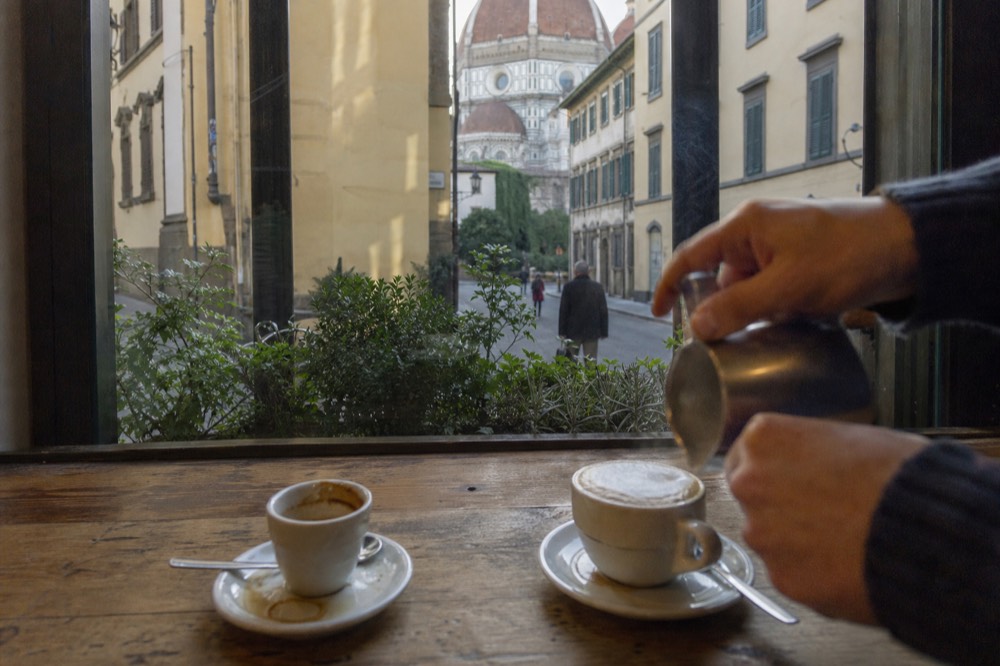
So the honest answer for a visitor is: order the cappuccino whenever you want it, accept that a traditional Florentine barman may raise an eyebrow in the afternoon, and know that the "rule" is disputed loudly and publicly inside Italy itself. What you should not do is build your day around it. The meal timing conventions matter far more, and if you are still calibrating when Florentines actually sit down to dinner, the answer is later than most visitors expect.
Does parmesan on fish actually break an Italian rule?
No cheese on fish is a genuine, widely held Italian convention, and the stated rationale is flavour: aged cheese is said to cover the delicacy of fresh fish. What is not sourced is the list of exceptions people repeat, from pasta con le sarde to Ligurian dishes. No documented regional exception could be verified, so treat the rule as convention rather than law.
Of the four, this is the one with the clearest Italian backbone. The trade source that documents it states the rationale in Italian: aged cheese, Parmigiano or pecorino, is never put on fish dishes, because tradition holds that its flavour covers the delicacy of fresh fish. That is a flavour logic, not a superstition, and it is the reason a traditional Florentine waiter will hesitate if you ask for grated cheese on your spaghetti with clams.
What the internet adds, and what you should not repeat as fact, is the list of exceptions. English-language pages confidently claim that pasta con le sarde, baccalà with parmigiano and various Ligurian dishes are documented regional exceptions. None of those exceptions can be pinned to an Italian institutional source, so treat them as folklore rather than rule. Modern chefs experiment with cheese and seafood, and Italian food writing acknowledges that, but no traditional, documented exception exists in the verified record. The honest line is: the convention is real, the exceptions are folklore until someone sources them.
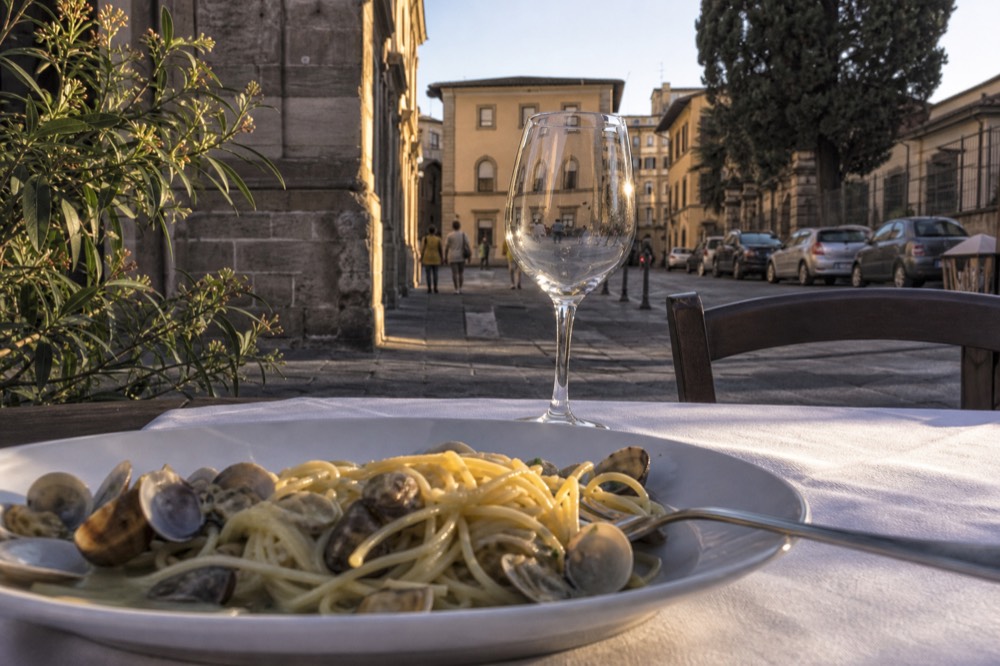
Is scarpetta rude in Italian restaurants?
Scarpetta, wiping the last sauce from the plate with a piece of bread, is not rude. Italian sources describe it as the most Italian gesture there is and perfectly polite, even in elegant restaurants. It is accepted rather than tolerated, and the only people who call it bad manners are repeating a foreign assumption. The other two spaghetti rules are plain table etiquette.
The same Italian trade source that documents the no-cheese convention addresses scarpetta directly: bread is for making the scarpetta, gathering the sauce left in the plate, and it calls this the most Italian gesture there is, perfectly well-mannered even in elegant restaurants, grandmother's objections notwithstanding. That inverts the anxiety many visitors bring to the table. The thing you were told not to do is, in Italy, a compliment to the cook.
The two spaghetti rules that fill out the viral list, never cut spaghetti with a knife and never twirl it with a spoon, are ordinary galateo rather than food rules with any rationale. They appear in the same Italian etiquette material as posture and waiting for everyone to be served. Nobody in a Florentine trattoria will comment on your technique, and no Italian source groups these with cappuccino timing or cheese on fish as a set. The grouping is the anglophone invention; the manners themselves are unremarkable.
There is a real lesson in this for the Florence visitor. The conventions that actually affect your meal are the local ones: when service starts, what the cover charge on the bill means, and how tipping works, which is to say minimally and in cash. If you want a fuller treatment of the bill, the coperto is explained in detail elsewhere on this site. The four rules, by contrast, will change almost nothing about your evening except your confidence at the table.
Which food rules does Florence itself break?
Florence breaks the cappuccino rule at its wine windows: the association that catalogues the buchette states that restored windows serve wine, coffee, cappuccino, aperitifs and even gelato on request, and Vivoli, a gelateria, is on the official list. A city that hands you a cappuccino through a Renaissance wall hole is not enforcing a four-rule canon.
This is the part of the story no listicle has, because it requires reading the Italian sources rather than repeating each other. The Associazione Culturale Buchette del Vino, the body that catalogues Florence's famous wine windows, states in its own legend that the venues marked on its list have restored their buchetta and, on request, serve wine, coffee, cappuccino, aperitifs and, in its words, gelati according to the ancient custom. One of the serving venues on the official list is Vivoli, the historic gelateria near Santa Croce. Florence is a city where the cappuccino can arrive through a hole in a Renaissance wall, and where a "wine" window will hand you ice cream.
The association's own framing is even more deflating to the rules industry. It notes that wine sales today follow other channels, and that only in particular cases do you actually receive what you ordered through the opening in the wall. Most places just have one on the wall. The full story of the buchette, including the association's warning about fake windows, is covered in the site's dedicated guide to Florence's wine windows.
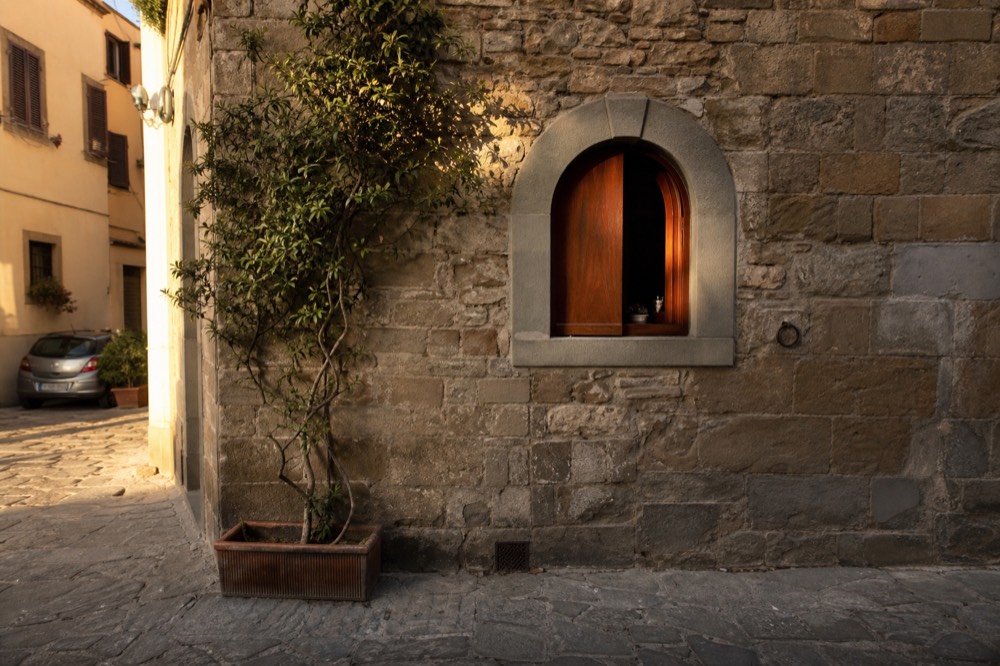
Florence also softens the cappuccino convention simply by being a modern tourist city (see Avoiding Tourist Traps). Bars that face international customers all day serve cappuccino at every hour without commentary, and the Florentine institutions that do hold to the morning norm hold it with an eyebrow, not a refusal. The city that invented the bistecca, a steak served deliberately rare because that is how it is meant to be eaten, is not a city of rigid food law. It is a city of strong food opinions, which is a different thing, and the gap between those two is exactly where the four-rules listicle falls apart.
Whichever format you choose, the underlying point of this page holds: the four-rules list is packaging, and the contents inside it are softer than the packaging promises. A visitor who knows the cappuccino convention is disputed inside Italy, that the cheese-on-fish rationale is about flavour, and that scarpetta is a compliment, has everything the listicle pretends to teach and nothing it invents. If you would rather compare the three formats side by side before deciding, the selection below covers the full-meal walk, the shorter foodies tour and a hands-on pasta and tiramisu class, which is the cheapest of the three and the one where you build the dishes yourself.
The four rules usually cited are no cappuccino after 11am, no cheese on fish, never cutting spaghetti and never twirling it with a spoon, but the four-item framing itself is an English-language construct with no Italian source behind it. The questions below cover what is actually convention, what is disputed inside Italy, what is plain etiquette, and which of the supposed rules Florence itself breaks at its own counters and wine windows.
Common questions about the four food rules in Italy
What are the four food rules in Italy?
The four usually listed are no cappuccino after 11am, no cheese on fish, never cut spaghetti with a knife, and never eat spaghetti with a spoon. The four-item framing is an English-language internet construct; no Italian source presents a canonical set of four.
Is the four-rules list actually Italian?
No. Italian searches for table etiquette return general galateo guidance from newspapers and cooking magazines, not a fixed four-rule canon. The English-language pages that rank for the phrase do not even agree on which four rules to include.
Will a bar in Florence refuse to serve cappuccino in the afternoon?
Almost certainly not. The convention is real, but Corriere frames it as a raised eyebrow rather than a refusal, and Gambero Rosso has said cappuccino can be drunk all day. Traditional barmen may question you; tourist-facing bars will not.
Why do Italians say no cheese on fish?
The stated rationale is flavour: tradition holds that aged cheese like Parmigiano covers the delicacy of fresh fish. It is a genuine, widely held convention, though the list of supposed regional exceptions that circulates online is not documented in Italian sources.
Is it rude to do scarpetta, wiping the plate with bread?
No. Italian sources call scarpetta the most Italian gesture there is and perfectly polite, even in elegant restaurants. It is treated as a compliment to the cook, not a breach of manners.
Which of the four rules does Florence itself break?
The cappuccino one. The wine windows association states that restored buchette serve wine, coffee, cappuccino, aperitifs and gelato on request, and one of the official serving venues is a gelateria. A city that serves cappuccino and ice cream through Renaissance wall openings is not enforcing a rigid food code.
Choose Your Florence Food Experience
Initial editorial recommendation
Full Tuscan Meal Walk
Eat the equivalent of a full meal across at least four stops, with a local guide explaining the dishes. Check your travel date before arranging your other meals.
3.5 hours, English and Italian. Food, water and at least one alcoholic drink for adults included; gratuities excluded.
Compare The Formats And Adjust Your Choice
Treat food customs as context, not a test. Coffee walks, tasting routes and cooking classes let you explore the habits behind the advice.
Private Coffee And Sweets Walk: Discover coffee, pastries and artisan chocolate, ending with gelato or affogato. 2 hours, English available. All tastings included; hotel pickup excluded. This is a tasting walk, not a Vivoli reservation.
Pasta Or Lasagna Cooking Class: Make fresh pasta, or choose the longer market, lasagna and tiramisu option; then eat what you prepared. Pasta option: 3 hours. Market, lasagna and tiramisu: 5 hours. English instruction, meal and equipment included. Market closed Sundays; not suitable for coeliac guests.
No verified recommendation meets these choices. Adjust the time or experience, or reset. For dietary, age or access requirements, obtain the operator's confirmation before booking.
Choose a date to see Viator's scheduled departures. Availability and final price are confirmed on Viator.