Florence Wine Tours and Chianti Tastings: What to Book and What You Can Walk Into
Florence splits cleanly into two wine experiences: the in-city bars where you can walk in off the street, and the Chianti day trips where everything runs on a booked seat. Knowing which is which is the whole game.
Short answer
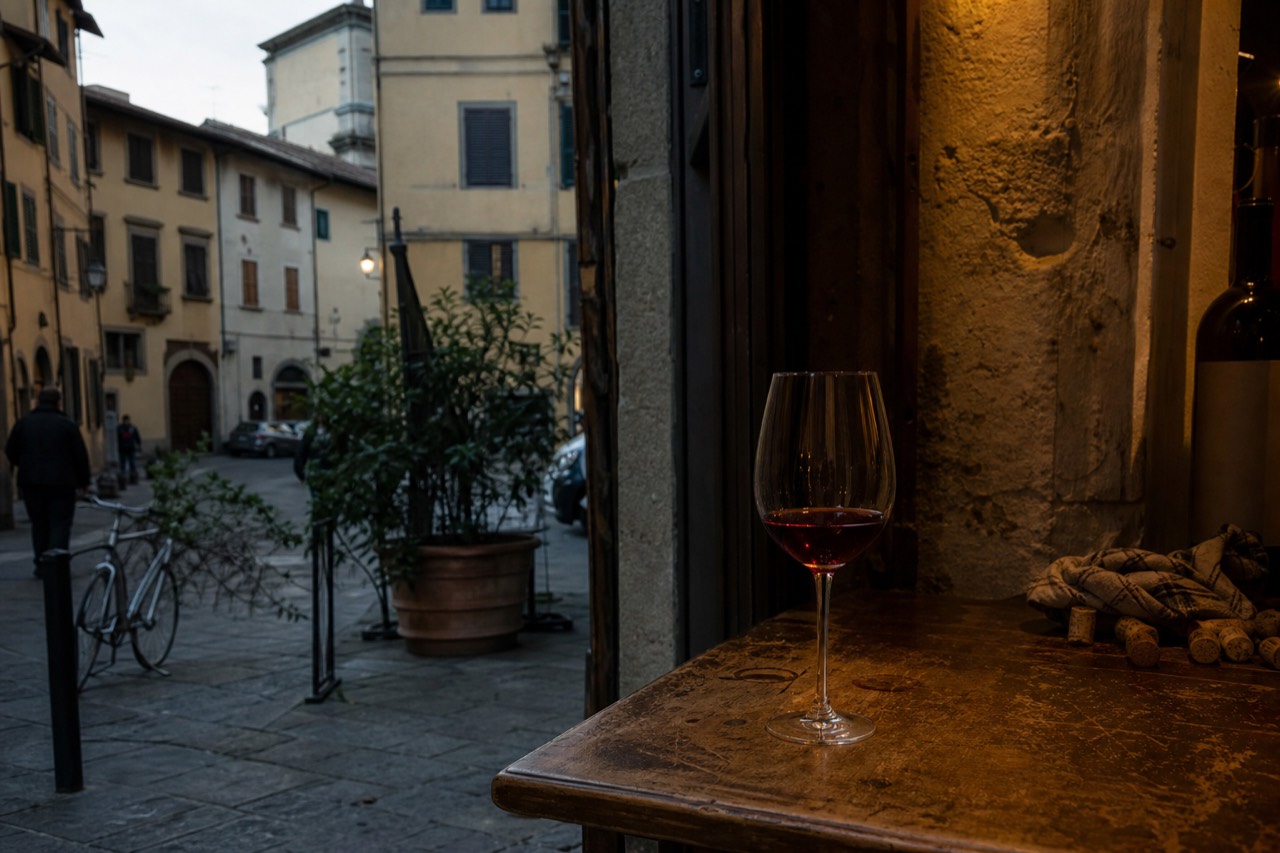
In Florence itself you can taste wine without booking: enoteche like Le Volpi e l'Uva and the Falorni-style card systems need no reservation. Chianti estates mostly want an appointment, but the 365 bus reaches Greve in about 1h10 and Enoteca Falorni there is walk-in self-service tasting. Guided tours run from about $46 to $152.8 per person.
Florence is a wine city with a split personality. Inside the old walls you can taste Chianti Classico, Brunello and Vernaccia at a counter ten minutes from the Duomo, with no appointment, no car and no plan. Twenty kilometres south, the estates that make those wines operate on a completely different logic: gates, booking confirmations and set tasting times. Most guides blur the two and leave readers thinking everything needs a tour, or nothing does. Neither is true.
The honest split is this: the in-city enoteche and wine bars are overwhelmingly walk-in, while the Chianti estates are overwhelmingly appointment-first, with two documented exceptions we will name. A seat on a guided tour solves the appointment problem for you, which is the real reason to book one, not the wine itself. And the persistent claim that you cannot reach Chianti without a car is simply false: a public bus runs to Greve in Chianti, and a walk-in tasting room, Enoteca Falorni, sits on the main square, as the Best Restaurants in Florence guide explains.
What does a Florence wine tour actually include?
A typical Florence wine tour is a 3 to 4 hour guided experience that bundles several tastings, usually with food, into one booked seat: prices on this site's roster run from about $46 (checked September 2026) for a one-hour Ponte Vecchio tasting to about $152.8 for a four-hour food and wine tour, and the common formats are a walking tasting tour in the centre, a seated tasting with an expert, or a day trip into the Chianti hills. What the price buys varies more than the price itself. The cheap seats are short and stationary: the Ponte Vecchio wine-tasting experience is about an hour and costs from $46 per person (checked September 2026). The mid-band is a walking tour with food stops, and the top of the local market is a full meal with wine pairings spread across an afternoon.
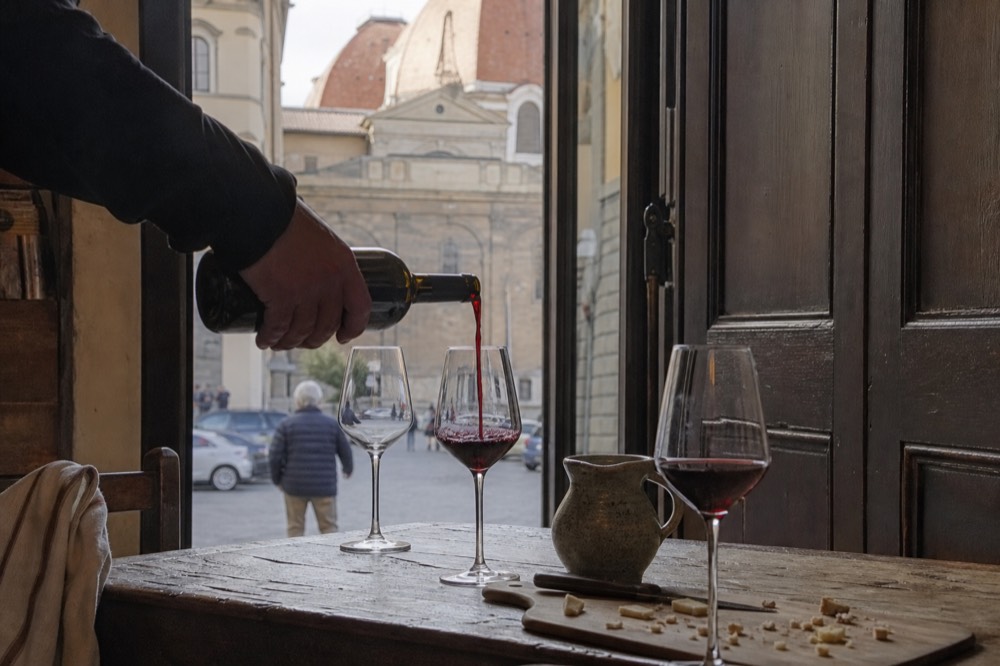
What almost none of these tours include is the estate visit. A Florence city tour tastes wine in Florence. If what you want is the vineyard, the cellar and the view, you are shopping for a Chianti day trip or an independent estate booking, which is a different product with different logistics. Our Florence food tours guide covers the general food-tour landscape, and the wine-specific formats are below.
Which wine bars and enoteche in Florence can you walk into?
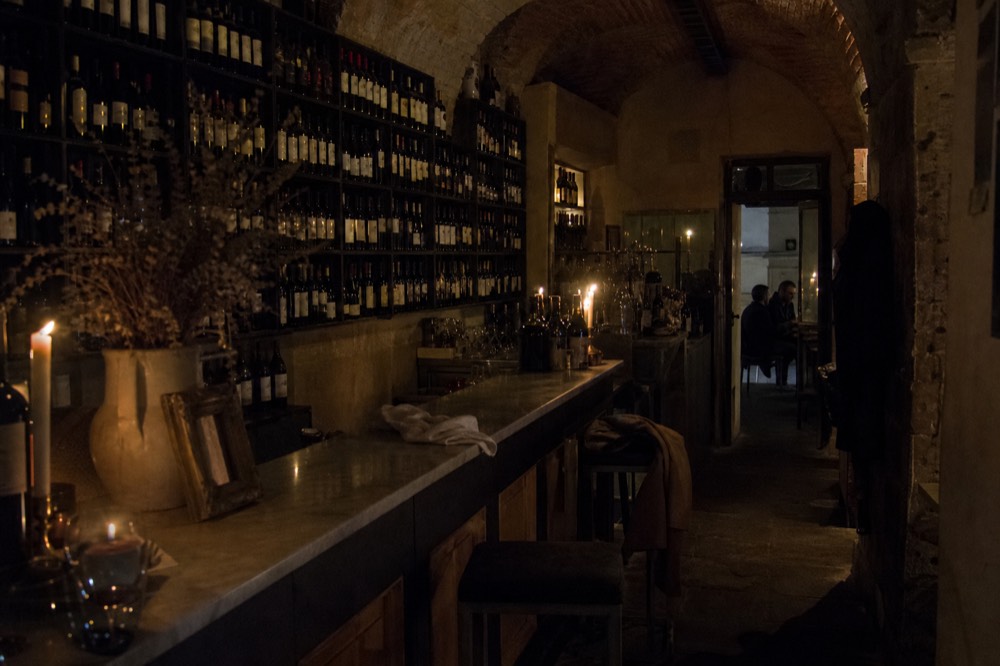
Most of them. The classic Florence enoteche and wine bars operate first-come, first-served at the counter: Le Volpi e l'Uva in Oltrarno takes phone bookings only for its limited outside tables, the wine-window venues serve whoever walks up, and the short tasting experiences in the centre are booked by the hour rather than weeks ahead. This is the half of the Florence wine scene that needs no planning at all, and it is the half most visitors underuse.
Le Volpi e l'Uva, on Piazza dei Rossi near Santa Trinita, is the model: bar stools and a counter first-come, with phone reservations possible only for the few outdoor tables, and an evening queue that local guides say often forms by 19:30. It closes Sundays and posts an August closure on its own site. A cheese-and-salumi tagliere with a glass or two runs about EUR 10 to 20 per person (checked September 2026), which makes it one of the better value wine stops in the centre.
The wine-window bars are the other walk-in category. The association that catalogues them counts 164 surviving buchette inside the old city walls, 28 outside them and 121 more elsewhere in Tuscany, but only 21 public venues actually have an authentic one on the premises, and just 15 of those have restored it and will serve you through it. That 15 includes Babae in Oltrarno, Il Latini, Vivoli and Osteria delle Belle Donne. The full census and map are on the association's own site, which also warns, in its own words, to watch out for the fake ones. Our dedicated Florence wine windows guide goes deeper.
Here is how the main walk-in and short-book formats compare:
| Format | Where | Booking reality | Price signal |
|---|---|---|---|
| Classic enoteca counter (Le Volpi e l'Uva) | Oltrarno | Walk-in; phone only for outside tables | about EUR 10-20 pp for wine and a plate (checked September 2026) |
| Wine-window venues (Babae, Il Latini, Vivoli) | Centre and Oltrarno | Walk-up, 15 serving venues citywide | pay per glass at the counter |
| Seated tasting by the Arno (ponte-vecchio-wine-tasting) | Ponte Vecchio | Book by the hour, about 1 hour | from $46 pp (checked September 2026) |
| Guided wine-windows walk (wine-windows-walk) | Centre | Book ahead, 2.5 hours, sells-out badge | from $115 pp (checked September 2026) |
How do Chianti day trips work, and what needs booking?
Chianti day trips run on booked seats, whether that seat is on a guided tour van or in an estate's tasting room: Castello di Ama requires reservations for all its tour and tasting experiences, Badia a Coltibuono runs its guided visits on reservation, and Antinori nel Chianti Classico books its tours while leaving the shop and restaurant open to walk-in visitors when turnout allows. The appointment-first norm is real, and the strongest proof is Ama's own wording on its site: reservations are required for all tour and tasting experiences, to guarantee what it calls a punctual and personalised service.
The two documented exceptions matter because they are the honest answer to "can I just show up". Castello di Brolio's own site states that its gardens are open every day without reservation for most of the year, roughly mid-March to the end of December, even though the castle interior, guided tours and tastings all need booking. And at Antinori's Chianti Classico estate, the entry, shop and restaurant for visitors without a reservation are possible, though the estate warns access could be limited when turnout is high or events are private. Neither is a walk-in tasting, strictly speaking. Both are walk-in access to a wine estate, which is rarer than it sounds.
The estate-by-estate picture, from the estates' own sites:
| Estate | Walk-in access | Tastings and tours |
|---|---|---|
| Castello di Ama | None stated | Reservation required for all tour and tasting experiences |
| Castello di Brolio (Ricasoli) | Gardens open daily, no reservation, mid-March to 31 Dec | Tours, tastings and castle interior booked; groups of 10+ always booked |
| Badia a Coltibuono | None stated | Guided visits and tastings on reservation |
| Antinori nel Chianti Classico | Shop and restaurant possible without booking, limited at busy times | Winery tours booked in advance |
| Castello di Volpaia / Verrazzano | No explicit policy published | "Book a visit" and guided-tour wording on their sites |
The practical translation: if you want a cellar, a guided tasting and a story, you book, either directly with the estate or through a day-trip tour that bundles several stops. If you just want to stand in the Chianti hills with a glass in reach, Brolio's gardens and Antinori's shop are the two documented ways to do it unbooked.
Can you actually do Chianti without a car?
Yes, with limits. Autolinee Toscane's 365 bus and its variants run from Florence to Greve in Chianti in about 1 hour 10 minutes, some continue to Panzano, Radda and Gaiole, and in Greve itself the Enoteca Falorni runs walk-in self-service tasting through Enomatic dispensers on a prepaid card, so the honest claim is that the bus takes you to the town and not to the vineyard. The car myth survives because it is half true: no Chianti Classico estate could be documented as within walking distance of a bus stop, so anyone promising "bus plus a short stroll to the winery" is inventing that stroll. The bus is real, the walk-in tasting is real, but they meet in Greve's main square, not at a cellar door.
The bus details come from the operator: Autolinee Toscane's own line pages list the 365 A, B and D variants, and the Florence-to-Greve journey time of about 1h10 is corroborated by local transport guides. The catch is the schedule: the 365 A is a weekday service, and Sunday service is reduced or absent on some variants, so check the timetable for your exact date before committing a day to it. There is no train: Greve, Panzano, Radda, Gaiole and Castellina have no railway station at all.
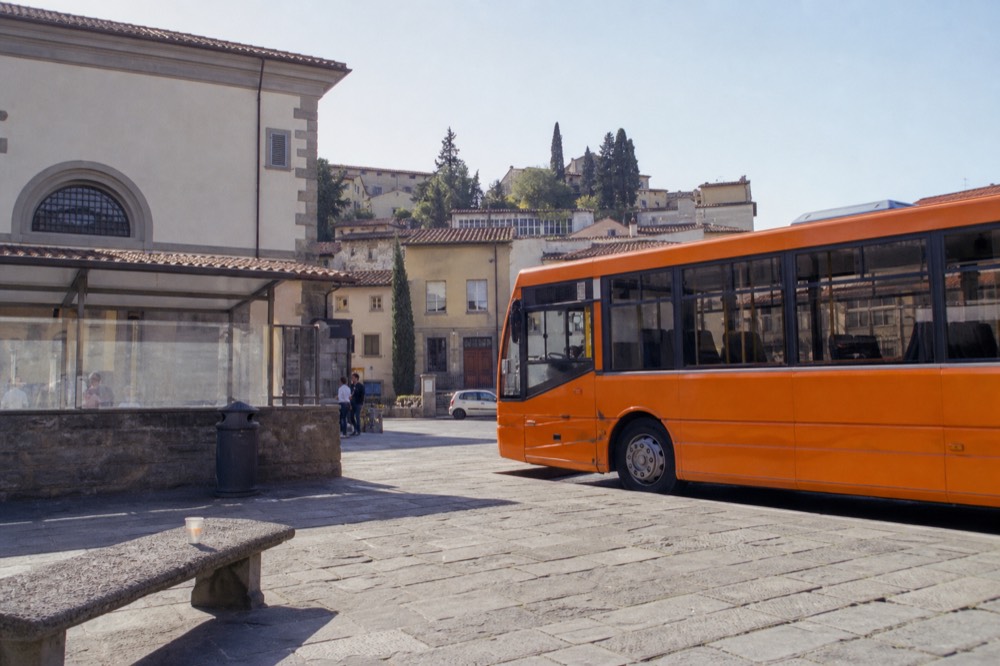
Enoteca Falorni, on Piazza delle Cantine in Greve, is what makes the bus trip work. Its own site describes a self-guided tasting route using Enomatic dispensers, in its words a path of tastings in complete relaxation, and advertises more than 100 wines available for tasting. You buy a card, you pour, you pay for what you tasted. No appointment, no minimum group, no guide. It is a walk-in self-service tasting, no reservation needed, and it is worth being precise about that rather than pretending the whole region is open to drop-ins.
What do Florence wine tours cost, and what justifies the price gap?
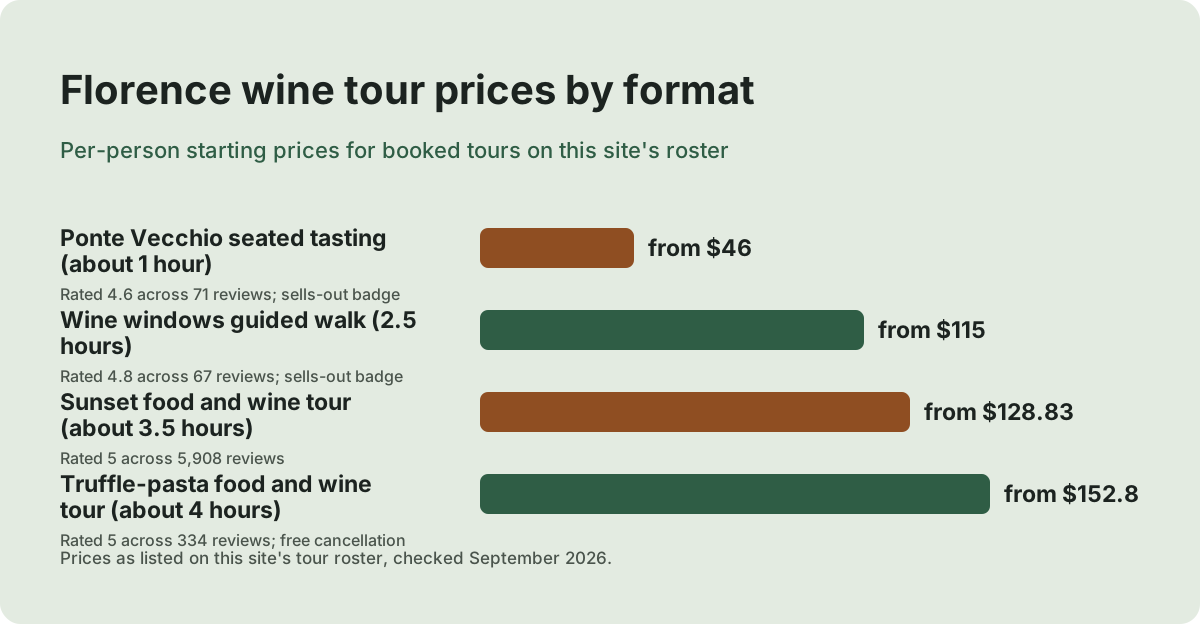
The spread on this site's roster runs from about $46 (checked September 2026) to about $152.8 per person, and the gap is explained by three variables: hours, food volume and group cap. The $46 seat is one hour of standing tasting; the $152.8 seat is four hours with a full meal and a truffle-pasta course; and the tours with hard caps of 6 to 15 travellers price higher per head than the open-group formats. Duration is the biggest driver. One-hour tastings cluster at the bottom of the band, 2.5 to 3 hour walking tours sit in the middle, and the four-hour food-and-wine combinations sit at the top.
Here is the roster's wine-relevant band, with the variables laid out:
| Tour | Length | Rating | From (per person) | Cap or urgency |
|---|---|---|---|---|
| Ponte Vecchio wine tasting | ~1 hour | 4.6 (71 reviews) | $46 (checked September 2026) | Likely to sell out |
| Evening food tour with Florentine steak & Tuscan wine | ~3.5 hours | 4.8 (669 reviews) | $79.45 (checked September 2026) | Small group, free cancellation |
| Wine windows walk with tasting | ~2.5 hours | 4.8 (67 reviews) | $115 (checked September 2026) | Likely to sell out |
| Sunset food & wine tour | ~3.5 hours | 5 (5,908 reviews) | $128.83 | Small group, free cancellation |
| Food and wine tour with truffle pasta | ~4 hours | 5 (334 reviews) | $152.8 | Small group |
How far ahead should you book, and when is Florence busiest?
Book Chianti estates and small-cap tours one to several weeks ahead, and treat April and May as the hardest window, because the city's own figures show those two months had the highest overnight stays of 2025, ahead of the summer: official data recorded more than 4 million arrivals in the first ten months of the year, up 7.1 percent on 2024. The counter-intuitive part is the season. Everyone plans for August crowds, but the city's own tourism release names April and May as the peak months for overnight stays. Spring, not high summer, is when the small tasting rooms, the 8-seat cellar tours and the capped departures fill first.
The caps do the rest. A tour limited to six travellers sells through its inventory faster than an open group, and the one listing that shows a hard cap, the gelato class at 6 spots per session, is structurally scarcer than its review count suggests. The rest run as small-group departures, which still means finite seats on any given date. The Sant'Ambrogio market tour led by a local chef is the honest extreme: free cancellation keeps it low risk, and a local chef leads the walk, the same insider hand a hard-to-book restaurant demands, stated plainly on the listing itself.
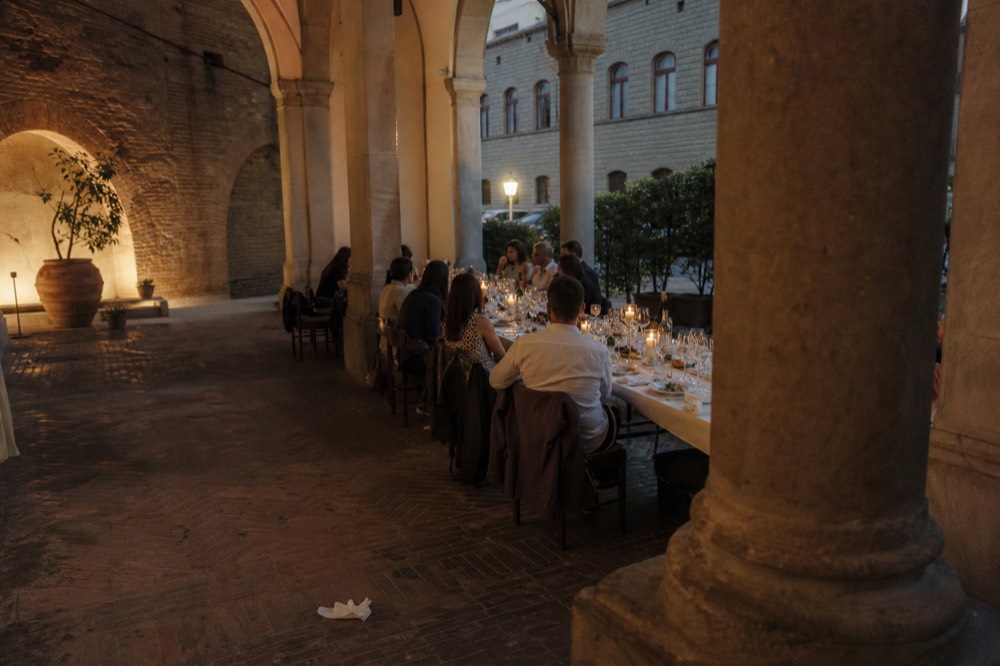
For the walk-in half of the scene, timing works differently. The enoteche fill in the evening, and the wine-window venues are daytime stops. Florentines eat late, around 20:00 to 21:00, and the aperitivo crowd builds from about 18:30, so a counter seat is easiest before 19:00 or on a weekday. Our what time do people eat dinner in Florence piece covers the evening rhythm in detail.
Which format should you choose for your trip?
Choose a walk-in enoteca evening if you want wine without commitment, a 2.5 to 3.5 hour guided tasting tour if you want the city's wine culture explained, and a booked Chianti day trip only if the vineyard itself is the point, because the bus-and-Falorni route covers the hills for the price of a bus ticket if a cellar tour is not essential. The decision tree is short. If your trip is two or three days and wine is one dinner among many, walk in somewhere and spend the booking effort on restaurants instead, using our do you need reservations for restaurants in Florence guide.
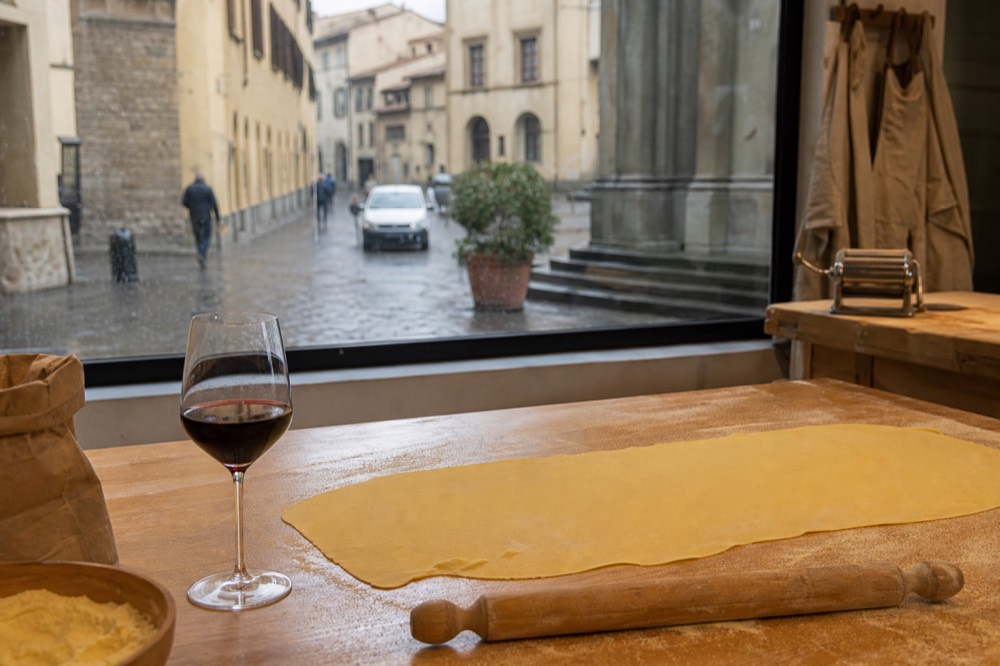
If Chianti is the goal, decide between the booked estate day and the independent bus day honestly. The estate day gives you the cellar, the story and the view, at the cost of a booking made weeks ahead and a tour or transport price. The bus day gives you Greve, Falorni's 100-wine card system and Brolio's unbooked gardens if you time it right, at the cost of flexibility and no cellar door. Neither is the wrong answer; they are different trips.
The short answers: city wine bars need no booking, guided tastings and Chianti estates do, the roster's price band runs from about $46 to about $152.8 per person, and the car-free route to Chianti exists but ends in Greve's town square rather than at a cellar door. (checked September 2026) The questions below cover the details travellers ask most, with the booking reality, the price logic and the seasonality spelled out from the same verified sources used throughout this guide.
Common questions about Florence wine tours and Chianti tastings
Do you need to book a wine tasting in Florence in advance?
Not for the city's wine bars and enoteche, which are overwhelmingly walk-in. You do need to book the short guided tasting experiences, the capped tours and any Chianti estate visit, and the small-cap formats on the roster carry sell-out badges and lead times of days to weeks.
Can you visit Chianti wineries without a car?
Yes, with limits. The 365 bus reaches Greve in Chianti in about 1h10 from Florence, and Enoteca Falorni in Greve offers walk-in self-service tasting on a prepaid card. But no estate is documented as walkable from a bus stop, so cellar visits still need a booked tour, a taxi or an estate appointment with transport arranged.
How much does a Florence wine tour cost?
On this site's roster, from about $46 per person for a one-hour seated tasting to about $152.8 for a four-hour food and wine tour with a truffle-pasta meal (checked September 2026). Length, food volume and group caps explain the gap.
Are Chianti estates appointment-only?
Mostly, but not all. Castello di Ama requires reservations for all tours and tastings, while Castello di Brolio's gardens are open without reservation for most of the year and Antinori's estate keeps its shop and restaurant open to unbooked visitors when turnout allows.
What is the best month for wine tasting around Florence?
Shoulder months, not August. The city's own 2025 figures show April and May had the highest overnight stays, so those are the months when small tasting rooms and capped tours are hardest to book. Autumn brings the harvest and more availability outside peak.
Is a guided wine tour worth it in Florence?
If you want the wine explained and the logistics handled, yes: a guide compresses several venues, histories and translations into one afternoon, and the capped formats keep groups small. If you only want a glass of Chianti in good company, a walk-in enoteca does that for the price of the glass.
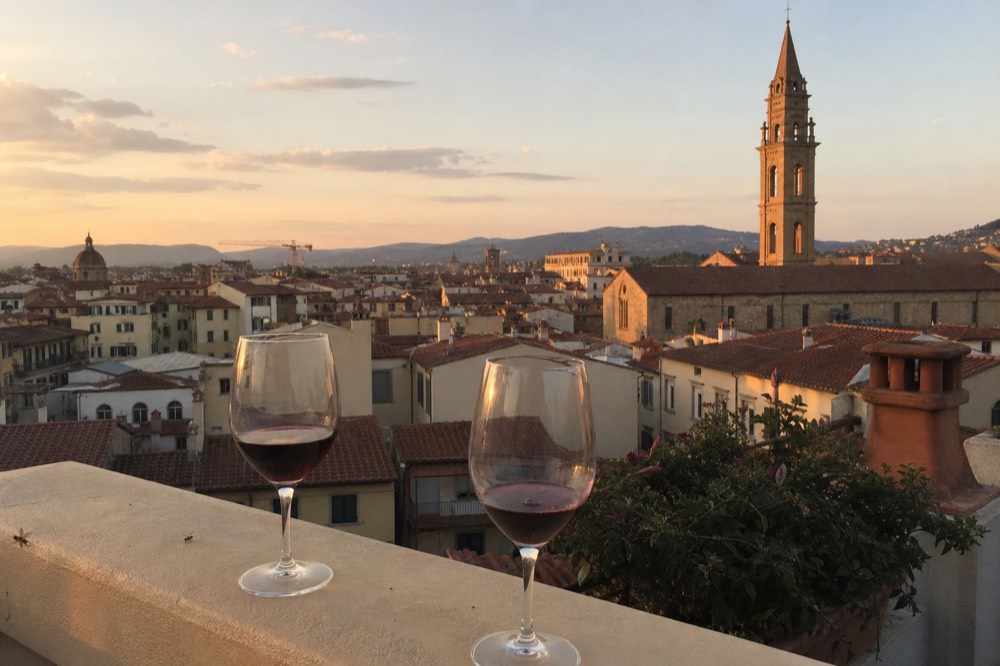
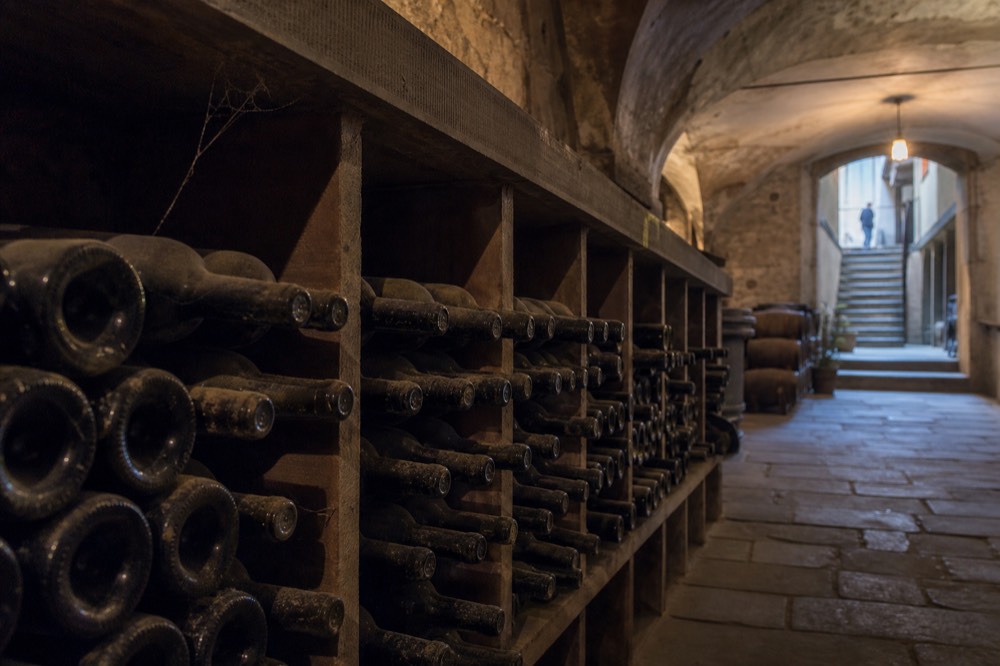
Whichever half of the split you choose, the one mistake worth avoiding is booking nothing and expecting the vineyard. The walk-in half of Florence will reward spontaneity every night of the week. The Chianti half will not, and the bus that makes the hills reachable still drops you in a town square, not at a cellar door. Book the seat that matters, and let the rest happen at the counter.
Choose Your Florence Food Experience
Initial editorial recommendation
Two Chianti Wineries From Florence
Visit two wineries with guided cellar visits, wine and olive-oil tastings, and Tuscan snacks while someone else drives. Check your travel date before arranging your other meals.
4 hours 45 minutes, English driver-guide. Transport and tastings included; lunch, dinner and hotel pickup excluded. Choose the 25-person or 8-person option.
Compare The Formats And Adjust Your Choice
City tastings stay in Florence. Winery trips visit the countryside with transport; the bus-and-town option remains a separate independent plan.
Two Wineries And A Tuscan Lunch: Meet producers at two Chianti wineries and enjoy a home-cooked Tuscan lunch, with a wine professional driving. 5.5 hours, English guide, maximum eight people. Transport, tastings and lunch included. Confirm meeting point and dietary requirements on the listing.
Chianti Wineries And Cecchini Lunch: Visit two organic wineries and eat a steak lunch at Dario Cecchini in Panzano. 7 hours, English, maximum eight adults (18+). Meet at Via dei Renai 19, 15 minutes early. Hotel transfers and tips excluded. A personal meeting with Dario is not promised.
Sunset Food And Wine Walk: Taste Tuscan dishes across Oltrarno, including wine-window stops and a Negroni lesson. 3.5 hours, English guide. Tastings and listed drinks included; extra drinks and tips excluded. Stops can change.
No verified recommendation meets these choices. Adjust the time or experience, or reset. For dietary, age or access requirements, obtain the operator's confirmation before booking.
Choose a date to see Viator's scheduled departures. Availability and final price are confirmed on Viator.